
5 Keys To Overcoming Your Mistakes

If you’re not making mistakes, then you’re not doing anything. I’m positive that a doer makes mistakes.
John Wooden
If you were paying attention last week, you may have noticed that I made a mistake.
Yes. I am not perfect.
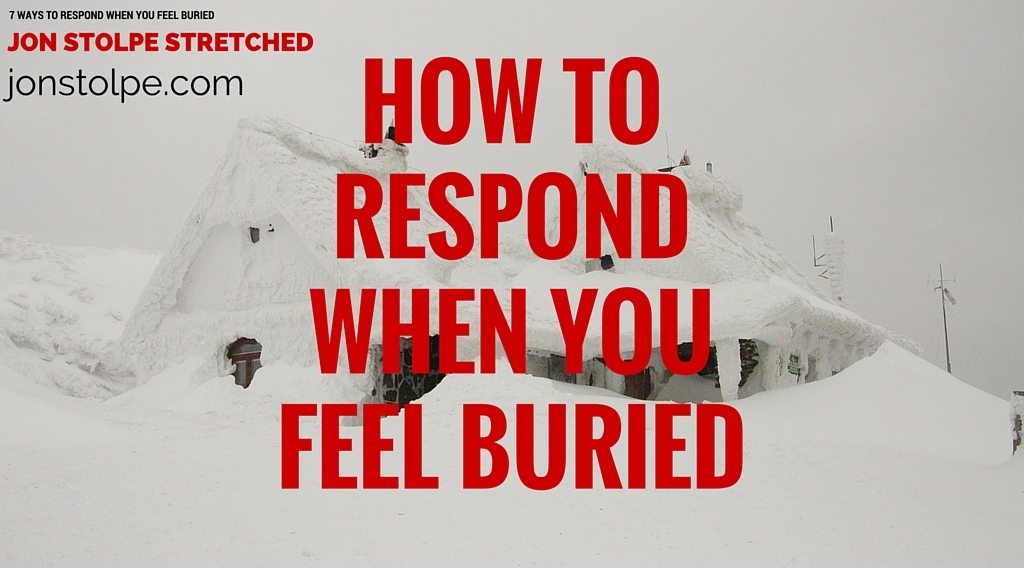
Last Sunday morning, I was working on my Monday morning post (How to Respond When You Feel Buried). After working on the post for nearly an hour, I put the final touches on the post by working the a graphic to go with what I had written. I picked my background using Pixabay.com (a site offering beautiful, free graphics). I found a house buried in snow. Perfect. I downloaded the file, and moved over to Canva.com where I do my final graphic editing. I cropped the photo. I added my text elements. I saved the graphic, and I pasted it into my post.
As I was inspecting my post, I noticed I spelled a key word on the graphic incorrectly. Instead of writing FEEL on my graphic, I wrote FELL. I quickly made the changes, and I thought for sure I saved everything correctly as I scheduled the post for the next day.
Monday morning came, and my post went live at 5AM EST. I was mortified a couple of hours later when I received a Facebook message from one of my friends pointing out the spelling error on my graphic.


I quickly went back into the post. I made the necessary correction, and I updated the post. Then I responded to my friend to thank her and to let her know of the fix.
I tried to let the mistake go, but I continued to be haunted by my error as people promoted the post on Twitter. For some reason, the uncorrected graphic showed up on my Tweets.
Mistakes happen.
How we respond to mistakes is what really matters.
Here are five keys to responding when mistakes happen:
- Acknowledge your mistake. We all make mistakes. Accept it. Admit your mistakes. This is the first critical step in overcoming your blunder.
- Correct your mistake (if possible). Do everything you possibly can to fix your mistake. This requires humility and a resolve to make things better.
- Give yourself some grace. We are our own worst critics. We give others grace when they mess up, and we must learn to give ourselves a break from time to time.
- Learn from your mistake. What can you learn from your mistake? This is the question you should be asking yourself. Mistakes and failures help us learn how not to do things.
- Move on. You have a choice. You can live in the past as you dwell on your errors, or you can move ahead making forward progress towards your goals. What’s your choice? I’m sure you can guess the better choice.
When was the last time you made a mistake? How did you respond to your mistake? What did you learn from your mistake?
Don’t forget to sign up for the 7 Week Stretch Challenge. You can sign up right here:
How to Respond When You Feel Buried
Blizzard of 2016 – Snow Storm Jonas
I live right in the path of the major snow fall that took place along the east coast this weekend. I don’t know the exact number, but I’m fairly certain we had over 2 feet of snow fall in our area.
We have a long driveway.
How will I move all that snow?
This is the thought that went through my head when I woke up to the reality of the work ahead of me. I felt overwhelmed.
How often do you have this feeling – the feeling of being buried?
We add too many things to our responsibility list. We start out with the best intentions, but we get behind. Before we know it, we are buried by a long list of things we need to address. We quickly move to a level of paralysis that is the result of not knowing where to start.
What should we do when we get to this point – when we feel buried?
Today, I want to help you answer this question. I’ve identified seven essentials to moving ahead when you feel buried. Here they are:
7 Ways to Respond When You Feel Buried
- Take a deep breath. Actually, you may need to take many deep breaths. Studies show that deep breathing actually helps to alleviate feelings of stress. I recently downloaded a new application to my phone called Calm that helps users learn the deep breathing and meditation techniques. Taking a deep breath gives you the opportunity to re-center yourself. Before I went out to shovel, I took a deep breath.
- Do a brain dump. When you feel buried, you need to get all that stuff out of your head. Take time to write down the list of things that are causing you to feel buried. Keep the list handy, so you can add to it later. I use Wunderlist and Notability to help get the stuff out of my head. You don’t need a fancy software application to make this work. Go get a piece of paper and a pen, and get that stuff out of your head.
- Prioritize your list. Look at the list you created when you did your brain dump. Prioritize this list. What things are important? What things aren’t so important? What things are urgent? What things aren’t so urgent? Determine which things really need to be addressed, and determine what things can wait or be forgotten all together. You may want to assign a number to each item on your list – a 1 for the most important things and a 5 for the things that can wait.
- Schedule your list. Use the list you created and assign a deadline for each item. Plan out your days over the next week or two or three to tackle your list. I’d recommend spending 15 minutes each day to plan your day. Obviously, you have things you need to address for your work and for your family. When you plan your day, you can see the gaps in your schedule. Use these gaps to intentionally tackle the items on your list.
- Focus on one thing at a time. Don’t try to do it all at once. John Lee Dumas uses tells the listeners of his podcast to F.O.C.U.S. – Focus on One Course Until Success. When you focus on too many things, you end up focusing on nothing. The feeling of being buried returns, and you settle back into paralysis. Get more traction on your list by focusing on one thing at a time. Shoveling out from the storm, I had to focus on one area of snow at a time. Once I completed that area, I could move to the next. Overtime, my driveway was cleared.
- Get ‘er done. Just do it! You can’t accomplish anything on your list by sitting around. You have to get up and get moving. Decide today to tackle your list, and take action today.
- Get help. Help comes in many forms. My kids helped me shovel the snow, and I hired someone to run their snow plow up the driveway. The snow plow couldn’t get everything, but this was a huge help. Get someone to hold you accountable to take the above steps. You don’t need to tell the world, but you may need a friend or two to check in with you to make sure you are making progress. If you need help prioritizing your list and scheduling your list, I’d love to help. Don’t be too proud to get the help you need to dig yourself out!
How do you respond when you are overwhelmed, buried, or stressed? When was the last time you experienced this feeling? Leave your thoughts in the comments below.
Don’t forget to sign up for the 7 Week Stretch Challenge. You can sign up right here:
What Are You Pursuing?

It is not in the pursuit of happiness that we find fulfillment, it is in the happiness of pursuit.
Denis Waitley
What is pursuit?
When I looked it up on Google, this is what I found:
Pursuit is “the action of following or pursuing someone or something.”
Synonyms include: striving toward, quest after/for, search for
What are you pursuing?
Better yet, are you pursuing anything?
People pursue happiness, success, and wealth. They pursue the American Dream. Or they pursue inner peace. Are these the right things to pursue? I suppose you could argue either way.
A few weeks ago, I wrote a note to myself in my journal:
“Am I pursuing safety, or am I willing to take risks and to be dangerous to live a life that matters?”
If I’m honest, I pursue safety, and this has been my pursuit most of my life.
When I was a little kid, I was the cautious one. My brother and my best friend (both named David) were the adventurous ones. They were willing to go off the high dive. They were willing to swim to the bottom of the pool. They weren’t afraid to do anything. Me on the other hand, I was chicken. I remember crying when my swim teacher tried to get me to go off the low diving board. I was absolutely terrified I would drown in the deep end of the swimming pool.
Sometimes I wonder if my childhood tendencies to avoid danger traveled with me down the road into adulthood.
I still seek the safe choice more often than I take a chance on doing something that might be dangerous.
I pick the safe choice when it comes to my investments, my career steps, and in other areas of my life.
Am I missing out because of this tendency – this desire – to stay safe?
I don’t know about you, but I want to live a life that matters. I want to make a difference, and I want to bring glory to God by the choices I make and the actions I take each and every day.
On this day when we celebrate the life of Martin Luther King Jr., I thinks it’s safe to say that MLK did not pursue safety, and he lived a life that matters.
The only place we will really find safety is when we are in the arms of God and when we are following Him.
Chuck Swindoll said it well, “The world has changed and it’s going to keep changing, but God never changes; so we are safe when we cling to Him.”
Finding safety in God doesn’t mean we were meant to avoid taking risks. In fact, I think there is a certain aspect to risk taking that gives us the opportunity to fulfill our purpose. I’ve mentioned it here before, and it’s worth mentioning again. Several years ago, sociologist Tony Campolo responded to a survey taken by people in their nineties. Campolo concluded that the survey respondents which they had taken time to reflect more, to risk more, and to take actions that would leave a legacy.
I’m not in my nineties yet. There is still time for me to live differently. I want to make a difference even if it means doing something a little dangerous.
In his commencement speech to the class of 2014 at Maharishi University of Management, Jim Carrey challenged graduates to take a risk:
“Fear is going to be a player in your life, but you get to decide how much. You can spend your whole life imagining ghosts, worrying about your pathway to the future, but all there will ever be is what’s happening here, and the decisions we make in this moment, which are based in either love or fear.
So many of us choose our path out of fear disguised as practicality. What we really want seems impossibly out of reach and ridiculous to expect, so we never dare to ask the universe for it. I’m saying, I’m the proof that you can ask the universe for it — please! (applause) And if it doesn’t happen for you right away, it’s only because the universe is so busy fulfilling my order. It’s party size! (laughter)
My father could have been a great comedian, but he didn’t believe that was possible for him, and so he made a conservative choice. Instead, he got a safe job as an accountant, and when I was 12 years old, he was let go from that safe job and our family had to do whatever we could to survive.
I learned many great lessons from my father, not the least of which was that you can fail at what you don’t want, so you might as well take a chance on doing what you love.”
I love these words. If you’re like me, your fear of failure is keeping you on the safe path. Perhaps, it’s time to take a leap of faith so you can do something that matters.
(One thing worth noting, pursuit implies going after something or someone with all you have. Whatever you are pursuing won’t just be handed to you. You have to go get it!)
Are you missing out on something because your pursuit is too safe? What can you do about it today?
 Don’t forget to sign-up for the 7 Week Stretch Challenge. You can sign up right here:
10 Ways to Develop a Positive Attitude


A positive attitude is something everyone can work on, and everyone can learn how to employ it.
Joan Lunden
“Always look on the bright side of life….” If you are a fan of Monty Python, you may remember this line from the closing song in The Life of Brian. The song is sung by Brian and several others who are hanging on crosses as they sing the song. Some may consider the movie to be sacrilegious, and they are probably right. But the song from this movie reminds me to find the bright side to the challenges that life throws are way.
Last week, we spent time talking about negative attitudes and positive attitudes. Understanding the benefits of a positive attitude and the downsides of a negative attitude is great, but it doesn’t mean much if we don’t take steps to improve our attitude. Here are several tips that will help you become more positive.
10 Ways to Develop a Positive Attitude
- Turn away from the negative. Becoming a more positive person starts with a decision. Decide today to be more positive and less negative. Stop reading and watching things that cause you to have a negative attitude.
- Fight the power of negativity. Despite your decision to be more positive, you will run into people who will drag you down with their negativity. Stand up to the people who are negative in your life.
- Look for the silver lining. In life, we will experience difficult circumstances. Intentionally, look for the blessings in these circumstances.
- Practice positivity. In Philippians 4:4, Paul challenges readers to be positive again and again, “Rejoice in the Lord always. I will say it again: Rejoice!” Becoming more positive is not a once and done event. Becoming more positive requires practice over and over and over again.
- Fill your mind with positive. In Philippians 4:8, Paul continues to instruct readers on the topic of becoming more positive, “Finally, brothers and sisters, whatever is true, whatever is noble, whatever is right, whatever is pure, whatever is lovely, whatever is admirable—if anything is excellent or praiseworthy—think about such things.” Read things that are positive. Watch things that are positive.
- Surround yourself with positive people. Jim Rohn said, “You are the average of the five people you spend the most time with.” If you want to develop a positive attitude, hang out with positive people.
- Practice positive activities. Exercise. Get outside. Write thank you notes. Hold the door open for people. The more time you spend on positive activities the less time you will have for negativity to creep into your life.
- Get help if necessary. Some of us are predisposed to negativity, and sometimes life circumstances make it very challenging for us to become positive. You may need some outside help. I few years ago, I was going through some really big challenges. I sought out a trained counselor to help me work through my challenges. My counselor was instrumental in me developing a more positive attitude. Help may also come in the form of a close friend or accountability partner. If you’re struggling with a negative attitude, get help!
- Encourage others to be positive. I try to be positive here on my blog. I try to be positive at work. If you want to make the world a more positive place, you must first lead by example. Then you can speak into the lives of others.
- Serve others. Serving others has the amazing ability to put things in the proper perspective. Whenever I serve others, I naturally become more positive about my current situation. I feel better about myself. And I want to keep serving. Serving others has the potential of perpetually pumping up your positivity.
What helps you overcome a negative attitude? What tips do you have for developing a positive attitude? Share your thoughts in the comments.
For more great tips on becoming a more positive person, check out my post – How I Maintain A Positive Attitude (When Negativity Surrounds Me).
8 Things You Need To Know About A Positive Attitude


Virtually nothing is impossible in this world if you just put your mind to it and maintain a positive attitude.
Lou Holtz
When you think of someone with a positive attitude, who comes to your mind?
The first person to come to my mind is my Grandma Miller. Grandma passed away several years ago, but her positive attitude still impacts me. Grandma struggled with multiple sclerosis for most of her life. Her knees failed her. She suffered from seizures. And towards the end of her life, she could barely hold her head up. Despite her physical ailments, she remained positive. She often had a song on her lips, and she was friendly with every single person who crossed her path. If there was someone I know who had a positive attitude, it was my Grandma Miller.
A positive attitude amazing benefits for creating a better life for you and the people around you. Yesterday, we learned about the impact of having a negative attitude. Today, we look at the impact of having a positive attitude. Here are some things you need to know about the power of a positive attitude:
8 Things You Need To Know About A Positive Attitude
- A positive attitude lifts others up. Ask anyone who knew my Grandma. They will tell you what an encouragement Roma Miller (that was her name) was to them. People often came to visit my Grandma, and I bet they left her feeling more enthusiastic and thankful for the day. If you want to make a difference for others, practice having a positive attitude.
- A positive attitude helps you see the good things of life. Grandma often looked out the back window in her kitchen while she ate her breakfast, and she talked to the squirrels in the back yard. When the snow came in the winter (which it always did in Minneapolis), Grandma saw the beauty of God’s creation instead of the freezing cold of the blizzard conditions. When you take off the blinders of negativity, you begin to see all the great things happening around you.
- A positive attitude restores your energy. Especially in the last years of Grandma’s life, she had to sleep more. And the seizures she suffered from time to time knocked the wind out of Grandma’s sail. Despite this, I can remember sitting with my Grandma while she was awake. She seemed to discover a hidden supply of energy, and I’m certain it flowed as a result of her positive attitude. I am more energetic when I allow a positive attitude to stick with me throughout the day.
- A positive attitude improves your health. Maybe this isn’t fair when it comes to my Grandma. After all, she suffered physically for a good portion of her life. I could argue that her positive attitude kept her pushing on well past the expectations of the doctors. If you want to live a happier, healthier life, you have to find a way to be positive.
- A positive attitude opens the doors to new opportunities. Grandma had friends everywhere she went – in the neighborhood, at church, at the hospital, and even in the hospice center where she spent her final days. Grandma also wasn’t afraid to try new things. I remember her going for a lengthy swim against my Grandpa’s wishes when our family vacationed together in New Hampshire. Grandma took off from the shore line and slowly paddles out several hundred yards to an island in the middle of Baptist Pond. When you have a positive attitude, you will see doors opening for you.
- A positive attitude multiplies hope. Hope is a key ingredient for life. Hope provides a reason for living. Grandma always held onto hope.
- A positive attitude is contagious. If you want to positively impact the culture around you, put on a smile and learn to say thank you. Before you know it, you will witness the rapid spread of positivity across the landscape of your life.
- A positive attitude fosters positive relationships. No one could stay angry at my Grandma for very long. Her positive attitude was the catalyst for positive relationships through her community, church, and family. If you desire friendship, restoration, and unity, put on a positive attitude and see what happens next!
When was the last time you had a positive attitude? How did it impact you and others around you? Share your thoughts in the comments.
8 Things You Need To Know About A Negative Attitude

You cannot have a positive life and a negative mind.
Joyce Meyer
I was in the locker room at the gym last week when I overheard two men talking about the ongoing construction at the gym. As I listened, I heard them both complaining about the amount of time it was taking to do the work. They were also complaining about the inconvenience caused by the construction. And they voiced their dismay at the lack of visual difference part of the project was making. All this complaining was happening at 6AM.
I found myself angered by their poor attitude. I wanted to walk over and tell them to shut up. I wanted to tell them about the realities of construction projects. I wanted to remind them to be thankful for the blessing of our gym. Instead, I gathered by belongings and walked out to my car.
On my way to the office, I couldn’t stop thinking about the conversation in the locker room. Negativity drags you down and brings others with you. A negative attitude has many negative impacts. In today’s post, I provide some of the ways a negative attitude adversely effects you:
8 Things You Need To Know About A Negative Attitude
- A negative attitude brings others down. When I left the gym, I found myself struggling with a negative attitude towards the men in the locker room. Just like a virus, a negative attitude is contagious, and it will ultimately cause others to have a negative attitude.
- A negative attitude causes you to miss out on the good things of life. The men in the gym missed out on the blessing of having a gym and excellent workout facilities. They missed out on the blessing of a new day. And they missed out on the opportunity to lift encourage each other. When you put on the blinders of negativity, you miss out on the great things happening all around you.
- A negative attitude drains your energy. I don’t know how the men in the locker room did the rest of their day, but I know from my own experience that I am less energetic when I allow a negative attitude to stick with me throughout the day.
- A negative attitude compromises your health. A negative attitude adversely impacts our physical, emotional, and mental health. A negative attitude often prevents people from taking positive steps which could overcome health obstacles.
- A negative attitude impedes your career development. I wasn’t interviewing the men in the locker room for a job, but I would be unlikely to hire them if I came across them at a job fair. I want people on my team who are positive and encouraging. A negative attitude often prevents people from achieving the career advancement they desire.
- A negative attitude misses out on hope. Hope is a key ingredient for life. Without hope, there is little reason for living. A negative attitude overlooks the blessings of the past, the importance of being present, and the hope for the future.
- A negative attitude fails to take responsibility. The men in the gym could cancel their membership. They could seek to understand the current status of the construction project. Or they could determine to be a positive voice in the discussion. Instead, they blamed others for failing to meet their expectations. We live in a world where blame is too easily passed along to others. If you want to have a negative attitude, blame everyone else for your problems.
- A negative attitude destroys relationships. I didn’t really have a relationship with the men in the locker room prior to their conversation, but I’m pretty our relationship would be destroyed if we did have one. Negativity breeds disharmony, derision, and deceit. These things lead to broken promises and shattered friendships.
When was the last time you had a negative attitude? How did it impact you and others around you? Share your thoughts in the comments.
Made For This

When you have a sense of calling, whether it’s to be a musician, soloist, artist, in one of the technical fields, or a plumber, there is something deep and enriching when you realize it isn’t just a casual choice, it’s a divine calling. It’s not limited to vocational Christian service by any means.
Charles R. Swindoll
Last week, my family traveled up to Morristown, NJ to watch our most recent Seeing Eye Puppy, Rio, go through his Town Walk. The Town Walk is like a final exam for puppies in training with The Seeing Eye. When dogs are ready to work with a visually impaired person, puppy raisers like my family are invited up to Morristown to watch the Town Walk. During the Town Walk, a puppy guides its trainer through the streets of Morristown, and puppy raisers follow behind at a distance. During our Town Walk, a volunteer with The Seeing Eye walked with us and answered our questions.
Watching Rio, it was clear he liked what he was doing, and he was doing his job well. He kept his trainer safe when oncoming traffic or uneven sidewalks presented a hazard. When we last saw Rio in June, he was still a “crazy” puppy. Over the past few months, he has gone through a transformation. Our volunteer escort commented “Rio is doing what he was made to do, and he loves it.”
Have you ever had this feeling?
Have you ever felt like you were doing what you were made to do?
The past two or three weeks, I have had this feeling several times. This feeling came each time I had the chance to speak to people.
First, I spoke at my Toastmasters club at our Open House event a few weeks ago. It wasn’t my favorite speech, but I definitely felt charged up by the experience.
Next, I spoke four times at my company’s annual management meeting. The opportunity to speak in front of the top managers of my company was a little scary, and it was a lot of work to prepare and to present. But I left the experience very encouraged. I felt nervous, but I also felt comfortable presenting in front of this group.
Finally, I had the privilege and honor of presenting last week for a public speaking class at Penn State University – Abington Campus. In addition to the presentation, I had the opportunity to share encouragement and tips about public speaking to the students. When I arrived home at 10 PM, it took me a while to settle down. I loved speaking and helping the students.
These experiences have confirmed I was made to speak. I still have a lot of work to do to train and grow. And that’s okay! In the meantime, I will keep looking for opportunities to speak and to do what I was made to do!
Have you discovered your calling? What were you made to do? What are you doing about it?
Are You Having An Identity Crisis?

In the social jungle of human existence, there is no feeling of being alive without a sense of identity.
Erik Erikson
Identity.
How do you define your identity? What is your identity?
According to dictionary.com, identity is:
condition or character as to who a person or what a thing is
Do you have a problem with your identity? Are you having an identity crisis?
Many of us find our identity in our careers, our positions, our family, our friends, our sports teams, and our personal pursuits.
I am an engineer, an operations manager, a father, a son, a husband, a writer, a speaker, a reader, a runner, a Cubs fan, a Phillies fan, a Bears fan, and an Eagles fan. These are a few of the things that describe me.
Is this my identity?
I’m currently reading H3 Leadership: Be Humble. Stay Hungry. Always Hustle.
“We must remember that we don’t find our identity; we receive our identity from God. We are made in God’s image and likeness.”
The list I used to describe myself above is not who I am – these “titles” are not my identity. Instead, I must learn to look at my identity from a different perspective:
- I earned an engineering degree and license. I AM A CHILD OF GOD.
- I manage in the operations department at my company. I AM A CHILD OF GOD.
- I parent my two teenagers. I AM A CHILD OF GOD.
- I love my wife. I AM A CHILD OF GOD.
- I write. I AM A CHILD OF GOD.
- I speak. I AM A CHILD OF GOD.
- I read books and blogs. I AM A CHILD OF GOD.
- I run. I AM A CHILD OF GOD.
- I cheer for the Cubs, the Phillies, the Bears, and the Eagles. I AM A CHILD OF GOD.
My identity is not what I do, what I earned, or what I achieved. MY IDENTITY COMES FROM GOD.
When I begin to grasp this, I can face the challenges and uncertainties of life with confidence.
This is the same for you too.
Who are you? Share your thoughts in the comments.
5 Steps To Creating A Personal Success Plan That Works

If you fail to plan, you are planning to fail!
Benjamin Franklin
Earlier this summer, I was elected to be president of my Toastmasters International club. It was an honor to be selected for this position, but it also comes with a lot of work. I have to kick-off and close our club’s bi-weekly meetings. I have to plan and lead our club’s executive committee meetings. And I have to interface with fellow officers, club members, and guests.
One of my responsibilities as the club president and member of the club executive committee is to create a Club Success Plan. Essentially, this is a document to record the club’s current status, challenges, and goals for the coming term. And the Club Success Plan provides a place to write down a plan for overcoming obstacles and achieving our goals.
This week spent time completing the Club Success Plan, and I’m excited for the results when we look back at the plan throughout the term and at the end of the term in June.
As I was working on the plan, I reflected on the importance of writing a success plan for other areas of our lives.
What do you want to accomplish this year? What goals do you want to achieve?
Do you have a plan to get there?
Typically, we talk about goals at the beginning of the year. Everyone gets hyped up on New Year’s Resolutions. The enthusiasm lasts for a few weeks or even a few months before we settle back into our normal existence trying to survive the pushes and pulls of our busy lives.
By the time we get to this time of year, our resolutions and goals are long forgotten, and we are trying to make it to the next weekend.
As Benjamin Franklin said, many of us fail to achieve our goals because we fail to create a plan for getting where we want to go.
I don’t know about you, but I don’t like to fail. I like to succeed. I like to achieve. I like to make progress towards my goals.
Writing a personal success plan doesn’t have to take forever. You can write a success plan for yourself using these simple steps:
5 Steps To Creating A Personal Success Plan That Works
- Evaluate your current condition. Self-assessment is critical to creating a personal success plan that works. What is working well? What isn’t working so well? What changes do you need to make in your life? Take time to evaluate you. This may require time away from the things that normally distract you, and it may require feedback from those who know you best.
- Determine your goals. Where do you want to be in one year? What do you want to achieve? There is no point in completing a success plan if you don’t take time to determine your goals. If you don’t know where you want to go, you can be certain you will get there – no where that is.
- Recognize the obstacles and challenges in the way. What is keeping you from achieving your goals? Is it time? Is it skill? Is it lack of knowledge? We all face challenges. When creating your personal success plan, you have to know your weaknesses and challenges. Being aware of these will help you make changes to get around, get over, or get through the obstacles in the way of achieving your goals.
- Write down a map for overcoming these obstacles and challenges and for achieving your goals. Create a SMART roadmap to reaching your goals. Be specific. Have measurable check points along the way. Make sure your goals are attainable and realistic. Finally, determine the timetable for reaching your goals. When you write down your road map, be as detailed as possible. Who is responsible for reaching your goals? What help do you need to meet your goals? What specific steps will you take to make sure you succeed? Write it down!
- Work your plan. Finally, a plan does nothing without action. Once you’ve created your plan for success, follow through. Take the necessary steps to succeed. Stop along the way to evaluate your progress. Then keep going. Don’t stop until you reach the end – SUCCESS!
What do you want to succeed in the next year? What is your plan to succeed?
What measures have you taken to achieve your success goals?
How I Maintain A Positive Attitude (When Negativity Surrounds Me)

A positive attitude causes a chain reaction of positive thoughts, events and outcomes. It is a catalyst and it sparks extraordinary results.
Wade Boggs
Is the glass half empty? Or is it half full?
I work in the construction industry in the Philadelphia area. The industry is known to be fairly rough. The language and conversation content is often very “colorful.” And sometimes it seems like people only know how to communicate with each other by yelling and screaming. Philadelphia has a reputation for being somewhat negative. If you don’t believe me, it was Philly fans who threw snowballs at Santa Clause. And if you are still not convinced, try listening to Philly sports radio for an hour. You would think the everyone does everything wrong, and there is no hope for positive change. So much for being the City of Brotherly Love.
Despite these circumstances, I am known in my office for having a positive attitude (most of the time). In fact, I have repeatedly been asked the following question: “How do you stay so positive all the time?”
Some people seem to be naturally disposed to having a positive attitude, but I think there may be a bit more to it. Today, I’m giving you practical ways for you to develop and maintain a positive attitude even when negativity seems to surround you. Here’s how I stay so positive all the time:
7 Ways To Develop And Maintain A Positive Attitude
- Recognize the positive side of having a positive attitude. A positive attitude sees hope even in challenging circumstances (negativity only sees despair). A positive attitude saves energy (negativity wastes energy). A positive attitude is positively contagious (negativity spreads like cancer). A positive attitude paves the way for future opportunity.
- Decide to pursue a positive attitude. You have a choice to make every morning when you wake up. Do you really want to have a positive attitude? If so, you have to be intentional. You have to pursue a positive attitude.
- Practice being positive. In a recent blog post, Seth Godin talked about attitude. He said attitude is a skill. In order to improve our skills, we have to practice. This is the same for our attitudes. If we want to have a positive attitude, we have to practice having a positive attitude. This may not always seem easy at first – especially when life throws us lemons. We must practice turning lemons into lemonade. The more we practice having a positive attitude, the more it will become a natural part of who we are and how we interact with others.
- Remove negative influences. Negativity will drag you down. It is important to stay informed, but we need to be careful with the “news” we ingest. News media generally capitalizes on sensationalizing the negative. There are a lot of “bad things” happening in the world every day, but there are a lot of “good things” that happen as well. From a friend standpoint, learn to get rid of friends who are always negative. They drag you down. In today’s social media driven world, you may have to unfollow people who are always bring the negative to their Facebook or Twitter pages. Turn the television off (or turn the channel) to avoid shows that negatively represent marriages, families, friendships, and work relationships. When you come across something negative in your life, determine if it really needs to stay in your life. If not, remove it!
- Surround yourself with positive influences. Read blogs and books that are uplifting. Listen to podcasts that come from a positive perspective. Watch television shows and movies that reinforce the positives. Intentionally seek out relationships with people who will influence you positively.
- Remember the positive. Forget the negative. Write down the positive things you encounter on a daily basis. Use a journal to help you remember the positives. The more you do this, the easier it will be to maintain a positive attitude.
- Become a “positive attitude” evangelist. Develop a positive vocabulary. Use words like: fabulous, terrific, fantastic, and magnificent. Your words are contagious. By using a positive vocabulary, others will begin to reconsider their vocabulary and their attitude. Smile. Smiles are also contagious, and they promote a positive attitude. (Learn to smile more by reading this great post by Matt McWilliams.) Write thank you notes. Gratitude is one of the easiest ways to promote positive attitudes. Help others see the positive in the challenges they face. Mentor others, and teach them to develop and maintain a positive attitude.