Love Works Wednesday Linkup Week 7 – Forgiving
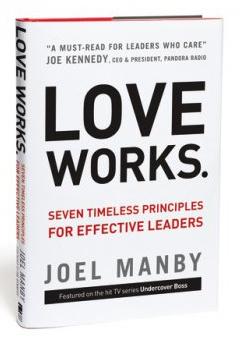
We continue the Wednesday series based on Love Works by Joel Manby.  In today’s post, Bill Grandi (The Cycleguy) and I are discussing the eighth chapter (Forgiving:  Release The Grip Of The Grudge).  Check out Bill’s take by clicking here.

As a reminder, Manby’s premise is that leadership is best when it comes from a position of agape love based on I Corinthians 13 (“…[love] keeps no record of wrongs”).  Since I already read the book, I thought it would be interesting to highlight some of the sentences I underlined when I read the book initially:

  • “I am not suggesting that we toss out our organizational standards and goals – simply that we keep our hearts soft enough to be open to forgiveness.”  (p. 140)
  • “Forgiveness releases you, not the person you are forgiving.”  (p. 146)
  • “An act of forgiveness is a pebble in the pond, and the ripples can continue far beyond our ability to know.”  (p. 146)

Forgiveness is an interesting topic when it comes to the marketplace.  So much of the corporate world is cut-throat and leaves little time for forgiveness and restoration.  If something or someone isn’t working out, they are quickly discarded.  And if someone wrongs the company, they are removed and their reputation is run through the mud.

As a manager in the corporate world, I see both sides of the forgiveness fence.  I have a responsibility to be a good steward of the company’s resources, and I am tasked with making decisions for the betterment of the company.  I am sometimes faced with employee issues that require tough decisions, disciplinary action, and removal from the company.  I also have a responsibility to my team.  I need to support them, to help them succeed, and to push them to improve performance.

I’m proud to work at my company and in my department.  Within the department management team, I have seen a desire for restoration whenever possible.  In the restoration process, forgiveness happens to the extent that an employee is encouraged to progress past previous lapses.  When an employee is open to personal changes, it is often possible to retain an employee, to forgive them, and to restore them to good standing.

Obviously, there are times when this isn’t possible.  If an employee is intentionally harming the company or threatening the well-being of fellow employees, it may be necessary to release an employee from the company.  Even when this happens, we can learn to forgive.

Failure to forgive can leave us crippled by the past.  How we respond with forgiveness impacts our own leadership in the office, at church, or in the home.  As leaders, we are an example.  I want to model forgiveness for those I lead.
Over the next two weeks, Bill and I will continue to explore love based leadership.  I hope you’ll read along, jump into the comments, and maybe even change the way you lead.  Until then, consider getting a copy of Love Works for yourself, and see how this book might change you and your leadership.

What is one thing you can do differently this week to become a more forgiving leader?  How have you been led with forgiving, love-based leadership?

Scars And Stretch Marks Revealed – Why Scars Are Meant To Be Exposed

SCARS AND STRETCH MARKS REVEALED

Some people may think scars are cool, but if we’re honest no one really likes their ugly spots, blemishes, and scars left exposed for others to see.

When I was a teenager, my complexion was fairly clear, but I did deal with a few zits from time to time.  I was always self conscious of my “big” nose (thanks to the teasing of some of my peers), and it didn’t help went one zit left a scar right on the middle of my nose for a good portion of my high school days.  I couldn’t cover it up.  It was right there for everyone to see like a Dallas Cowboys fan in the middle of the stands at Lincoln Financial Field (home of the Philadelphia Eagles).

We all have scars.  Some are physical blemishes like the spot on my nose or the two-inch gash on my left leg.  Most of our scars run much deeper.  They’re emotional scars created by personal blunders, dysfunctional relationships, and by some things outside of our control.  (I wrote about some of these scars in my own life about a year and a half ago – Less Like Scars.)

We run away.  We cover up our blemishes with make-up, masks, and masquerades.  We put on an act.  We pretend that nothing ever happened, and we hide our real selves.  We go into denial, and we don’t deal with the pain.

Maybe our scars and stretch marks were meant to be revealed.

Here are 5 reasons I believe scars are meant to be exposed:

  1. Our scars and stretch marks need exposure to accelerate the healing process.  [Click to Tweet]  If we keep a bandage on our wound, it will not heal.  The wound needs air and light.  Letting others see our hurts gives others a chance to be a part of the healing process.
  2. Our scars and stretch marks tell a story.  [Click to Tweet]  They testify to the junk we’ve dealt with in our lives, and they speak to the healing that is possible.
  3. Our scars and stretch marks bring glory to God.  [Click to Tweet]  If we truly believe that God is the Healer and Great Physician then we have to believe that God can work through the painful parts in our lives to create something far more beautiful than we could ever imagine.
  4. Our scars and stretch marks represent hope for others.  [Click to Tweet]  Our blemishes help others relate to us.  When people see us living life after we’ve been wounded, it will show them that life can go on.
  5. Our scars and stretch marks help us identify with Christ.  [Click to Tweet]  “From now on, let no one cause me trouble, for I bear on my body the marks of Jesus.”  Galatians 6:17  Jesus Christ died on the cross and was wounded for you and me.  He was wounded and scarred for you and for me.  My blemishes are a reminder that Christ bears scars for me.

What scars do you have?  How has it helped to reveal your scars?

For other articles on this topic, check out these posts:

The Stretched Oscars

Stretched Oscars

Did you watch The Academy Awards last night?.  Other than a few minutes, I didn’t watch.  Our family watched The Amazing Race, and I had to get some sleep in preparation for a busy week.  I did see a few movies this year – Lincoln, Les Miserables, The Hobbit, and The Amazing Spiderman.  I enjoyed each of these for several reasons.  Since I’m not up on most of the movies from this year, I thought it would be fun to come up with my own Stretched Oscars which pay tribute to my favorite movies.  Here are my winners (from my favorite movies):

  • Best Actor in a Leading Role:  Cuba Gooding Jr. in Radio
  • Best Actor in a Supporting Role:  Dustin Hoffman in Rainman
  • Best Actress in a Leading Role:  Sandra Bullock in The Blind Side
  • Best Actress in a Supporting Role:  Anne Hathaway in Les Miserables
  • Best Animated Feature:  Cars
  • Best Animated Short Film:  Partly Cloudy (Pixar)
  • Best Director:  Hugh Hudson – Chariots of Fire
  • Best Foreign Language Film:  Nacho Libre
  • Best Makeup and Hairstyling:  Star Wars – Episode 1
  • Best Original Score:  John Barry – Dances With Wolves
  • Best Original Song:  Eye Of The Tiger – Rocky III
  • Best Picture:  Field of Dreams

There are several other categories, but I can’t imagine that most people know or even care about them.

Who would get your lifetime Oscar awards?  Did you watch The Academy Awards last night?  What was your favorite movie from this past year?

Truth: Recap

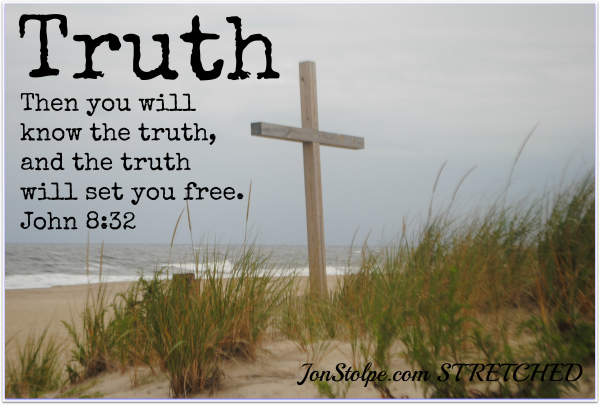
Truth

This has been a STRETCHING week as we have focused on TRUTH.  To recap, here are the posts from this week:

Check out these posts from this past week, and then jump over to the places I’m linking up with today, so you can see what else is going on.

 What TRUTH have you found this week?

SUNDAY STILLNESS

Today, I’m hooking up with The Sunday Community, The Weekend Brew, and Sunday Stillness.  Hop on over here, here, and here to see what I’m talking about.


Truth: Walking The Tightropes of Life – Balancing Truth and Grace

Truth Week continues here on the Stretched Blog.

This past fall, my Foundations class talked about groups.  The main focus of the discussion was how a solid group setting can be a great place to experience both truth and grace.  Many of us lean one way or the other.  We’re either grace-givers or truth-tellers.  I’m sure I lean more towards the “grace-giver” side.

The reality is that we need both grace and truth in our lives in order to grow and stay balanced.  My friend, Diane Karchner, helped explain this to me one time.  If we have a relationship that doesn’t have truth or grace, the relationship is one that is non-involved.  It’s a relationship where nobody cares.  If we have a relationship that has truth without grace, it’s a graceless relationship.  There is no margin for mistake or error in a relationship like this.  If we have a relationship that has grace without truth, it’s a truthless relationship.  These relationships are solely based on what I want to hear and not what I may need to hear.  Finally, we hit our sweet spot when grace and truth are both existent in a relationship.  This is where true agape love happens.

There are many times where I regret that I haven’t kept this balanced.  I have friends and even family who have needed both, and I have typically failed to bring truth to the table.  I don’t like confrontation.  It’s a lousy excuse, but it’s true.  I sometimes fail to speak up, because I don’t want to rock the boat and I certainly don’t want to be rejected.

It can also be easy to runaway from relationships where I know I’m going to get a little bit of both – truth and grace.  It doesn’t always feel good if the relationship is more based on truth than grace.  I guess that’s why a balance is important.  We need people in our lives who love us enough to tell us the truth and who love us enough to give us grace and a second chance when we screw up.  That’s where I want to be!

Instead, speaking the truth in love, we will grow to become in every respect the mature body of him who is the head, that is, Christ.  Ephesians 4:15

Where /when/how have you experienced truth and grace?  How would a little more truth have been beneficial to something you experienced in the past?  How would a little more grace have been beneficial to something you experienced in the past?

Truth: Ice Breaker – Lies

Each week on The Stretched Blog, we ask an ice breaker question.  The questions are designed to help us get to know each other here in The Stretched Community.  I’ll provide my answer to the question here in the post, and then you can leave your response in the comments.  While you’re in the comments section, see how others answered the ice breaker question.

This week, we’ve been talking about truth.  The opposite of truth is falsehood.  When we lie, we misrepresent the truth.  The ninth commandment is “Thou shall not lie.”  But if we’re all honest, we’ve all lied somewhere along the way.  So this week’s ice breaker is a chance to confess – to come clean.

Question:  Tell us about a time when you told a lie.

My Answer:  As a kid, I used to play in the woods and in the local corn fields with my friends.  After school, we would literally play for hours – building forts, making paths, and battling it out with sticks, dirt bombs, and toy guns.  When it came to the corn fields, all the kids knew it was dangerous territory.  There were stories amongst my gang of friends that the farmer would should kids with rock salt if he caught them in his field.

One day when we were playing, I found myself in the corn field face to face with the farmer.  (Actually, we were probably 30 feet apart.)  I remember him yelling at me, “Hey kid, what’s your name?”  Instead of saying “Jon Stolpe,”  I called back to the farmer with a name of a different kid from the neighborhood.  I honestly don’t remember how the confrontation ended, but I seem to remember turning around and running as fast as I could with my heart beating a million miles a minute.

There you have it – my answer.  Now, it’s your turn.  Answer this week’s ice breaker question by leaving a comment.  I look forward to reading your response!  (Feel free to share links.)

Truth: We Hold These Truths To Be Self-Evident…

We hold these truths to be self-evident, that all men are created equal, that they are endowed by their Creator with certain unalienable Rights, that among these are Life, Liberty and the pursuit of Happiness.

The Declaration of Independence

Today is Day Four of Truth Week here on The Stretched Blog.  This week has STRETCHED me in new ways as I’ve forced myself to focus on this topic.  As I’ve gone through this week, it’s been interesting to reflect.  I want all my posts to be full of truths, and I hope that a week that focuses on truth doesn’t negate the truth of other Stretched posts.

Truth

I’m not a constitutional expert, and it’s been a long time since I studied The Declaration of Independence back in junior high school.  But when I thought about the word TRUTH, this sentence from a founding document of our country popped into my mind.  While this document has come to represent the United States of America.  I get the feeling that our founding fathers meant it for the whole world.

From there my mind goes to the book of James:

Religion that God our Father accepts as pure and faultless is this: to look after orphans and widows in their distress and to keep oneself from being polluted by the world.  James 1:27

And then I go to Philippians:

Finally, brothers and sisters, whatever is true, whatever is noble, whatever is right, whatever is pure, whatever is lovely, whatever is admirable—if anything is excellent or praiseworthy—think about such things.  Philippians 4:8


We are challenged by Paul to think about whatever is true.  And then James commands us to look after orphans and widows.  They share the same rights of life, liberty, and the pursuit of happiness that we do.  Unfortunately, sometimes their position in this world prevents them from ever experiencing the life, liberty, and happiness that our founding fathers talked about.

As our family plans for our trip to Guatemala this summer, we think more and more about widows and orphans, because much of our attention during our missions trip will be focused on the widows and orphans of the small village of Xenacoj.  It’s true that it may have been poor decisions that has left them to fight an up hill battle.  It’s true that it may be a pattern that has been passed down over the past few generations.  With these truths in mind, many might say “It’s their fault; let them take care of themselves.”  But I believe this would deny the truth proclaimed in James.  As believers, we need to look after the widows and orphans.

Look around you in your towns and nearby cities.  There are people around you who simply need a helping hand.  As individuals, we have the privilege, the honor, and the responsibility, to extend a hand to help those in our communities and around the world who cannot help themselves.  This doesn’t need to be the responsibility of government or other organizations.  It starts with you and me.  And this is truth we all need to hear and remember.

How can you help others in your community and around the world to know and experience truth?  What does this sentence from The Declaration of Independence mean to you?

(If you’re interested in finding more out about how you can help the widows and orphans in Xenacoj – Guatemala, click here.)

Truth: Love Works Wednesday Link Up Week 6 – Truthful

Today is Day 3 of Truth Week here on The Stretched Blog, and we continue the Wednesday series based on Love Works by Joel Manby.  In today’s post, Bill Grandi (The Cycleguy) and I are discussing the seventh chapter (Truthful:  Define Reality Corporately And Individually).  Check out Bill’s take by clicking here.

As a reminder, Manby’s premise is that leadership is best when it comes from a position of agape love based on I Corinthians 13 (“…[love] rejoices with the truth”).  Since I already read the book, I thought it would be interesting to highlight some of the sentences I underlined when I read the book initially:

  • “If we love our team, it is critical that their talented voices are heard and their opinions considered.” (p. 118)
  • “Most people don’t leave because of poor performance; they leave because they don’t feel valued.” (p. 118)
  • “Leading with love also means doing the best thing for the organization to protect or add as many jobs as possible for those we care about.”  (p. 118)
  • “A healthy organization does the most good for the greatest number of people.”  (p. 118)
  • “[People] need truthful, direct feedback and follow-up to help them refine their performance and attitude to become fantastic – not just good – leaders.”  (p. 121)
  • “Leading with love means caring enough about an individual or a team to give and solicit truthful feedback.  When leaders provide their teams with the truth about their performance as well as the tools to be successful, regardless of personal feelings, this is a sure sign of leading with love.”  (p. 122)
  • “There is almost no greater gift in life than honest friends, and all leaders need to hear the truth about who they are and the nature of their strengths and weaknesses.”  (p. 130) [Great follow-up to yesterday’s post – Truth:  Truth Or Dare.]
  • “Leading with love begins with an honest assessment of yourself, and self is the one person you can never be absolutely honest with.”  (p. 130) [Ties into Monday’s post – Truth:  You Can’t Handle The Truth.]

Getting truthful feedback and giving truthful feedback is essential to leading well.

Leaders who hole themselves up in their “ivory” offices or cubicles without mingling with their team will soon lose touch with the truth they need to hear, and they’ll fail to get their messages of truth across with any kind of effectiveness.

Honestly, I have felt this way at times in my own leadership in the corporate world.  Policies and procedures easily become the focal point instead of people.  Our leadership loses its way when policies push aside people.  This is the same for companies, schools, churches, and government.

When it comes down to it, leaders must open their ears to hear what their employees have to say.  They must open their mouths to extend truthful feedback to their team members.  And they must take action in a way that demonstrates they have listened and in a way that models desired behavior.

Here are five simple suggestions for encouraging truth in your organization:

  1. Provide a platform for team members to voice their ideas, concerns, and questions.  This could be an employee survey, a department meeting, a suggestion box, or a one-on-one meeting.  As Manby shares in this chapter, this step is absolutely critical so our team members know that they are valued.
  2. Be truthful with your team members.  On a broader level, share details that impact the whole team.  This could be done at a Town Hall meeting, a department meeting, or through an e-mail.  On an individual level, meet with team members on a regular basis. Use this time to provide updates on performance progress and to address any specific corrections.  Don’t shy away from these opportunities as they provide an opportunity to help team members grow and develop.
  3. Take action and draw team members into the solution.  When ideas or problems come up that require action, get your team involved to brainstorm ideas and to implement steps for correction or improvement.  This will show the team that you care and it will help team members to embrace the solution.
  4. Don’t rest on your laurels.  Just because something worked at one time doesn’t mean it will continue to work without attention.  Being true to our organizations, team members, and to ourselves requires continuous monitoring and continuous improvement.
  5. Document.  Document.  Document.  It’s so important to document feedback to and from team members.  This is one method for holding each other accountable to actions required of the truths uncovered along the way.  Following up with e-mailed meeting minutes is a great way to capture truth and to make sure everyone is in agreement.

Part of leading with love involves leading with truthfulness.  As leaders, we have a tremendous opportunity and responsibility to make sure truth prevails in our organizations.

Over the next three weeks, Bill and I will continue to explore love based leadership.  I hope you’ll read along, jump into the comments, and maybe even change the way you lead.  Until then, consider getting a copy of Love Works for yourself, and see how this book might change you and your leadership.

What is one thing you can do differently this week to become a more truthful leader?  How have you been led with truthful, love-based leadership?

Truth: Truth Or Dare

Truth

Yesterday, we kicked off Truth Week with a post about uncovering our the hidden truths in our lives (Truth:  You Can’t Handle The Truth).  Today, we continue the discussion with a look at truth from a different angle.

You’ve probably heard of the game Truth or Dare.  I can’t recall ever playing this game, but it’s my understanding that it’s especially popular at girls’ sleepover parties.  In this game, kids are given a choice of telling a truth or following through on a dare.

Here are the rules according to Wikipedia:

One player starts the game by asking another to choose “Truth or Dare?” If the player chooses “truth”, then the first player poses a question, usually an embarrassing one, which the second player must answer truthfully. If the player instead chooses “dare”, then the first player sets them a task, often an embarrassing or dangerous one, which player two must perform. After answering the question or performing the dare, that player asks “Truth or Dare?” of another player, and the game continues.

A player cannot choose truth more than twice in a row, and dares cannot be repeated. Also, a player’s dare cannot be to take back a previous dare. In some games player use a random method such as in Spin the Bottle to select a player to question, or cue cards marked “truth” and “dare” to choose which question to ask. Should a player refuse to answer a question or fail to complete a dare, they may be given an even more challenging dare or question. In one variant of the game, players must always start by asking a “Truth” question – if the other player refuses to answer, only then can they be given a “Dare”.

From what I gather, Truth or Dare is typically played among good friends.

In yesterday’s post, we talked about the importance of handling truth in our lives.  For many of us, this is easier said than done.  How do we move past the skeletons of our past?  How do we make sure we don’t slide back into the lies that consumed us for so many years?

Truth or Dare is a game of bringing truth to light.  And the game involves friendships.

Dealing with truth in our own lives also involves friendships.  In order to make sure truth prevails, we must find accountability.  We need people in our lives who will ask us the tough questions – who can look us in the eyes and know whether or not we’re telling the truth.  We must have people in our lives who know the true condition of our hearts.

Truth doesn’t have to be a road traveled alone.  Truth can be a road walked with others and bolstered through this wisdom, honesty, and boldness of true friends.  Do you have this kind of friend in your life?  If not, seek it out.  Find someone who will help you live in truth.

It won’t be easy.  It will require vulnerability and transparency.  It will require trust.  But I think you’ll discover that the risk is worth it.  So don’t continue to live in the lies.  Go out and find a friend who will help you find truth.  I dare you.

Is there someone in your life who knows the true condition of your heart?  If not, what’s stopping you from searching out this type of accountability?  What suggestions do you have for others who are seeking this type of relationship?

Jesus answered, “I am the way and the truth and the life. No one comes to the Father except through me.”  John 14:6

Truth: You Can’t Handle The Truth

Seek not greatness, but seek truth and you will find both. – Horace Mann

This week, The Stretched Blog will focus on TRUTH.

Truth

What is truth?

According to the Merriam-Webster on-line dictionary, truth is:

the state of being the case :fact(2): the body of real things, events, and facts :actuality(3)often capitalized: a transcendent fundamental or spiritual reality

a judgment, proposition, or idea that is true or accepted as true <truths of thermodynamics>

the body of true statements and propositions

We live in a time when truth is often questioned, compromised, ignored, and simply made relative.

“Well, that’s okay for you, but not for me.”

Psychologists argue that truth is relative.  They argue that what is true for you, isn’t necessarily true for everyone else.  They say that there is no such thing as absolute truth.  In his Psychology Today article, The Truth Will Not Set You Free, psychotherapist William Berry argues,

“Truth” is merely a product of perceptions; perceptions are colored by experience, which is then filtered through the current state of mind and altered even further. By the time the neutral event is processed in this manner, it is little more truth than fiction.

I’m not a philosopher, a preacher, or a psychologist (and I don’t play one on TV), but I shudder at the thought of psychologists teaching students that there is no absolute truth – and that truth in general is fiction.

I believe truth is more than just a story.  I believe that truth is an important on a myriad of levels.  And I believe there is absolute truth.  This week we’ll explore several different angles of truth.  I hope you’ll stick with me and join in the conversation, so we can all learn from each other.

Running Away From Reality

Many of us simply run away from reality.  As Jack Nicholson said in A Few Good Men, [We] “can’t handle the truth.”

Maybe its an addiction.  Maybe it’s a tainted past.  Maybe it’s abuse.  Maybe it’s the fear of being responsible – financially, emotionally, spiritually, parentally, maritally, or relationally.

For many of us, we simply don’t want to deal with the truth of these and other issues in our lives.  Before we can examine truth further though, we must look inside and deal with the truth of our own lives.

What truth are we ignoring?  What reality are we running from?  What do we need to bring to light in our lives so we can move forward with honesty?

These are questions we all must ask ourselves from time to time.  Failure to wrestle with truths such as these can leave us living a fairy tale lie.  It also prevents us from making progress towards healing.  And it can be immature and irresponsible to live as if the truth just doesn’t matter.

“Let’s just live as if the truth doesn’t matter.  Let’s keep lying to ourselves about needing a budget, needing marital counseling, or needing parenting advice.”

These are the lies we tell ourselves, so we don’t have to take responsibility.

Let’s stop this today.  Let’s admit that we have problems.  Let’s decide today to get the help we need.  Let’s start being truthful with ourselves.

How have you handled truth in your own life?  How has it helped you to deal with things honestly?  What suggestions do you have for those who are struggling to face personal realities?