
Truth: Ice Breaker – Lies
Each week on The Stretched Blog, we ask an ice breaker question. The questions are designed to help us get to know each other here in The Stretched Community. I’ll provide my answer to the question here in the post, and then you can leave your response in the comments. While you’re in the comments section, see how others answered the ice breaker question.
This week, we’ve been talking about truth. The opposite of truth is falsehood. When we lie, we misrepresent the truth. The ninth commandment is “Thou shall not lie.” But if we’re all honest, we’ve all lied somewhere along the way. So this week’s ice breaker is a chance to confess – to come clean.
Question: Tell us about a time when you told a lie.
My Answer: As a kid, I used to play in the woods and in the local corn fields with my friends. After school, we would literally play for hours – building forts, making paths, and battling it out with sticks, dirt bombs, and toy guns. When it came to the corn fields, all the kids knew it was dangerous territory. There were stories amongst my gang of friends that the farmer would should kids with rock salt if he caught them in his field.
One day when we were playing, I found myself in the corn field face to face with the farmer. (Actually, we were probably 30 feet apart.) I remember him yelling at me, “Hey kid, what’s your name?” Instead of saying “Jon Stolpe,” I called back to the farmer with a name of a different kid from the neighborhood. I honestly don’t remember how the confrontation ended, but I seem to remember turning around and running as fast as I could with my heart beating a million miles a minute.
There you have it – my answer. Now, it’s your turn. Answer this week’s ice breaker question by leaving a comment. I look forward to reading your response! (Feel free to share links.)
Truth: We Hold These Truths To Be Self-Evident…
We hold these truths to be self-evident, that all men are created equal, that they are endowed by their Creator with certain unalienable Rights, that among these are Life, Liberty and the pursuit of Happiness.
The Declaration of Independence
Today is Day Four of Truth Week here on The Stretched Blog. This week has STRETCHED me in new ways as I’ve forced myself to focus on this topic. As I’ve gone through this week, it’s been interesting to reflect. I want all my posts to be full of truths, and I hope that a week that focuses on truth doesn’t negate the truth of other Stretched posts.
I’m not a constitutional expert, and it’s been a long time since I studied The Declaration of Independence back in junior high school. But when I thought about the word TRUTH, this sentence from a founding document of our country popped into my mind. While this document has come to represent the United States of America. I get the feeling that our founding fathers meant it for the whole world.
From there my mind goes to the book of James:
Religion that God our Father accepts as pure and faultless is this: to look after orphans and widows in their distress and to keep oneself from being polluted by the world. James 1:27
And then I go to Philippians:
Finally, brothers and sisters, whatever is true, whatever is noble, whatever is right, whatever is pure, whatever is lovely, whatever is admirable—if anything is excellent or praiseworthy—think about such things. Philippians 4:8
We are challenged by Paul to think about whatever is true. And then James commands us to look after orphans and widows. They share the same rights of life, liberty, and the pursuit of happiness that we do. Unfortunately, sometimes their position in this world prevents them from ever experiencing the life, liberty, and happiness that our founding fathers talked about.
As our family plans for our trip to Guatemala this summer, we think more and more about widows and orphans, because much of our attention during our missions trip will be focused on the widows and orphans of the small village of Xenacoj. It’s true that it may have been poor decisions that has left them to fight an up hill battle. It’s true that it may be a pattern that has been passed down over the past few generations. With these truths in mind, many might say “It’s their fault; let them take care of themselves.” But I believe this would deny the truth proclaimed in James. As believers, we need to look after the widows and orphans.
Look around you in your towns and nearby cities. There are people around you who simply need a helping hand. As individuals, we have the privilege, the honor, and the responsibility, to extend a hand to help those in our communities and around the world who cannot help themselves. This doesn’t need to be the responsibility of government or other organizations. It starts with you and me. And this is truth we all need to hear and remember.
How can you help others in your community and around the world to know and experience truth? What does this sentence from The Declaration of Independence mean to you?
(If you’re interested in finding more out about how you can help the widows and orphans in Xenacoj – Guatemala, click here.)
Truth: You Can’t Handle The Truth
Seek not greatness, but seek truth and you will find both. – Horace Mann
This week, The Stretched Blog will focus on TRUTH.
What is truth?
According to the Merriam-Webster on-line dictionary, truth is:
the state of being the case :fact(2): the body of real things, events, and facts :actuality(3)often capitalized: a transcendent fundamental or spiritual reality
a judgment, proposition, or idea that is true or accepted as true <truths of thermodynamics>
the body of true statements and propositions
We live in a time when truth is often questioned, compromised, ignored, and simply made relative.
“Well, that’s okay for you, but not for me.”
Psychologists argue that truth is relative. They argue that what is true for you, isn’t necessarily true for everyone else. They say that there is no such thing as absolute truth. In his Psychology Today article, The Truth Will Not Set You Free, psychotherapist William Berry argues,
“Truth” is merely a product of perceptions; perceptions are colored by experience, which is then filtered through the current state of mind and altered even further. By the time the neutral event is processed in this manner, it is little more truth than fiction.
I’m not a philosopher, a preacher, or a psychologist (and I don’t play one on TV), but I shudder at the thought of psychologists teaching students that there is no absolute truth – and that truth in general is fiction.
I believe truth is more than just a story. I believe that truth is an important on a myriad of levels. And I believe there is absolute truth. This week we’ll explore several different angles of truth. I hope you’ll stick with me and join in the conversation, so we can all learn from each other.
Running Away From Reality
Many of us simply run away from reality. As Jack Nicholson said in A Few Good Men, [We] “can’t handle the truth.”
Maybe its an addiction. Maybe it’s a tainted past. Maybe it’s abuse. Maybe it’s the fear of being responsible – financially, emotionally, spiritually, parentally, maritally, or relationally.
For many of us, we simply don’t want to deal with the truth of these and other issues in our lives. Before we can examine truth further though, we must look inside and deal with the truth of our own lives.
What truth are we ignoring? What reality are we running from? What do we need to bring to light in our lives so we can move forward with honesty?
These are questions we all must ask ourselves from time to time. Failure to wrestle with truths such as these can leave us living a fairy tale lie. It also prevents us from making progress towards healing. And it can be immature and irresponsible to live as if the truth just doesn’t matter.
“Let’s just live as if the truth doesn’t matter. Let’s keep lying to ourselves about needing a budget, needing marital counseling, or needing parenting advice.”
These are the lies we tell ourselves, so we don’t have to take responsibility.
Let’s stop this today. Let’s admit that we have problems. Let’s decide today to get the help we need. Let’s start being truthful with ourselves.
How have you handled truth in your own life? How has it helped you to deal with things honestly? What suggestions do you have for those who are struggling to face personal realities?
Plans For Hope And Future

How does it change your life and perspective knowing that God has plans to give you hope?


Today, I’m hooking up with The Sunday Community and The Weekend Brew. Hop on over here and here to see what I’m talking about.
Love Works Wednesday Link Up Week 5 – Unselfish
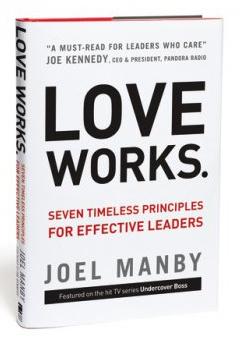
Today, we continue the Wednesday series based on Love Works by Joel Manby. In today’s post, Bill Grandi (The Cycleguy) and I are discussing the six chapter (Unselfish: Think Of Yourself Less). Check out Bill’s take by clicking here.
As a reminder, Manby’s premise is that leadership is best when it comes from a position of agape love based on I Corinthians 13 (“…[love] is not self-seeking”). Since I already read the book, I thought it would be interesting to highlight some of the sentences I underlined when I read the book initially:
- “Being unselfish doesn’t mean thinking less of yourself – it means thinking of yourself less.” (p. 88)
- “If we are unable to be selfless in our personal life, we are unlikely to be unselfish as a leader, and unselfishness is a key component of leading with love.” (p. 93)
- “The crazy thing about giving is this: when we give, we never know what might happen. Often giving provides the giver with unexpected blessings – as well as making the world a better place.” (p. 95)
- “Being unselfish isn’t just for individuals – it’s for organizations too. As leaders we’ve been blessed with resources, and part of our responsibility is to pass it on or “share it forward.” The gift of leadership brings with it the awesome responsibility of giving properly of our time and resources but also of being a steward of giving for the organization.” (p. 98)
- “Giving time and talent to develop internal leaders is another important reflection of being unselfish in an organization.” (p. 100)
- “If we become numb to the needs of our employees, their performance and ability to satisfy our customers will diminish over time, compromising the very “numbers” we were obsessed with.” (p. 101)
- “’Do for one what you wish you could do for everyone.'” (p. 102)
- “Unselfishness sometimes means letting others lead.” (p. 106)
This is a tough one. I don’t know many people who aren’t at least a little self-centered. We live in a “look at me” culture. Most of us have tunnel vision on what is best for ourselves.
We don’t put others first. It takes focus and discipline to look past our own desires to the needs of others.
And it doesn’t take long to see this in the world around us. Sports stars on the field or on the court pound their chests after a play as if to say “Look at me; I’m the man.” Most politicians are looking out for their own interests instead of finding ways to compromise for the betterment of society as a whole. And in the business world, it’s a dog eat dog world where people climb over one another to get to the top even if it means stepping on someone or even ruining someone’s career.
I probably shouldn’t state this as a blanket statement as I have met tremendous people who clearly have the interest of others in mind, but this doesn’t seem to be the norm.
I’m guilty of being selfish, and I bet if you’re honest with yourself, you’re guilty of selfishness as well. I don’t want to be this way. I want to be known for thinking of others first. I want to treat others the way I would want to be treated. So how do we do this? Instead of coming up with a seven step process for becoming unselfish, I think it really comes down to one thing:
Follow Jesus.
That’s it. You see he was a servant. He put others first. He put the interests of others ahead of his interests. He was unselfish.
Therefore if you have any encouragement from being united with Christ, if any comfort from his love, if any common sharing in the Spirit, if any tenderness and compassion, then make my joy complete by being like-minded, having the same love, being one in spirit and of one mind. Do nothing out of selfish ambition or vain conceit. Rather, in humility value others above yourselves, not looking to your own interests but each of you to the interests of the others.
In your relationships with one another, have the same mindset as Christ Jesus: Who, being in very nature God,
did not consider equality with God something to be used to his own advantage;rather, he made himself nothing by taking the very nature of a servant, being made in human likeness. And being found in appearance as a man, he humbled himself by becoming obedient to death—even death on a cross! Therefore God exalted him to the highest place and gave him the name that is above every name, that at the name of Jesus every knee should bow, in heaven and on earth and under the earth, and every tongue acknowledge that Jesus Christ is Lord, to the glory of God the Father. Philippians 2:1-11
And this is how we should lead and live our lives. If we follow Jesus in selfless living, we will change our homes, our schools, our places of employment. And we will change the world.
Over the next four weeks, Bill and I will continue to explore love based leadership. I hope you’ll read along, jump into the comments, and maybe even change the way you lead. Until then, consider getting a copy of Love Works for yourself, and see how this book might change you and your leadership.
What is one thing you can do differently this week to become a more unselfish leader? How have you been led with selfless, love-based leadership?
When The Treadmill Stops Suddenly – 5 Tips For Handling Life Stopping Experiences

I’ve been logging running mileage again, and it feels great. Most of my miles these days are happening on the treadmill at the gym thanks to the cold weather and early morning darkness that blankets our area at this time of the year.
The other day, I was up early running a quick 4.5 miles at our local YMCA. I had the treadmill ramped up to 7.8 miles per hour (which for me is a pretty decent pace). While I’m on the treadmill, I listen to podcasts and glance up at the televisions to see the latest sports highlights and news updates. About a mile into my run as I was lost in my own world, the treadmill suddenly stopped.
Imagine driving your car at 65 miles an hour and it suddenly stops completely. Or imagine riding your bicycle at 15 miles an hour when someone jams a stick in your spokes.
This is how it felt when the treadmill stopped for me. I somehow managed to catch myself before a complete catastrophe occurred. The guy running next to me commented, “Wow! Nice catch.” I tried to get the treadmill back up and running, but it wouldn’t power up and restart. I switched treadmills and continued my workout.
Sometimes life is like this. We are coasting along when something happens in our lives that brings things to a screeching halt. It’s happened in my life a few times – like the time I crashed my car two weeks before my wedding, like when my wife was rushed to the hospital shortly after our son was born, and like the moment I learned that my grandfather had passed away six years ago.
I certainly don’t have all the answers, but I’ve learned a few things through life events like these.
- Hang on. Sometimes this is all we can do. When we don’t understand, when we don’t know the plan, we can trust God and hang on to His hand. I remember asking during these times, “Why?” Even in the toughest moments, we must remember that He will never leave us.
“No one will be able to stand against you all the days of your life. As I was with Moses, so I will be with you; I will never leave you nor forsake you.” Joshua 1:5
- Trust God. In times like this, I’ve gone back to Proverbs 3:5-6 as a promise that God will make my paths straight even when life doesn’t make sense.
Trust in the Lord with all your heart and lean not on your own understanding; in all your ways submit to him, and he will make your paths straight. Proverbs 3:5-6
- Lean into family and friends. I can’t tell you how much family and friends have meant to our family when life’s train seems to have derailed. It helps to know that someone is praying for me, is willing to talk or listen as I wrestle through the challenges of life, and is willing to be there when I can’t fully focus on my daily needs. If you’re missing this in your own life, I’d encourage and challenge you to seek out this kind of friendship. Our church small group experience has provided many of these types of friendships.
- Consider a change. Sometimes a life stopping experience can be the catalyst to positive change in our lives. This week, I switched treadmills. Maybe these experiences are a call to change direction.
“See, I am doing a new thing! Now it springs up; do you not perceive it? I am making a way in the wilderness and streams in the wasteland.” Isaiah 43:19
- Learn and grow. Life halting experiences can be life altering experiences if we take time to learn and grow. This is why I recommend a journal or even a blog as a way to record life’s happenings. I have learned so much through the major speed bumps of life and the blog and my journal have become great places to record and process these experiences.
I returned to the gym this morning to run more on the treadmill. I’m sure I was a bit more cautious, but I’m ready to keep going. I’m thankful for the reminder that a simple treadmill experience can provide. I have no idea what the rest of the day holds, but I look ahead with confidence knowing that it will be okay no matter what transpires.
What have you learned from a life stopping experience? What other tips do you have for handling these kinds of times?
Love Works Wednesday Link Up Week 3 – Kind
Last week, I continued a Wednesday series based on Love Works by Joel Manby. (Click here to read my first post in this series, and click here to read last week’s post based on Patient Leadership). A blogging friend of mine, Bill Grandi (The Cycleguy), recently challenged readers to consider linking up with him for several weeks with posts related to this excellent leadership book. To read Bill’s introductory post for this series, click here. And to read his post from last week, click here.
For today, Bill and I (and anyone else who’s linking up with us) will be posting about the fourth chapter (Kind: Show Encouragement and Enthusiasm). Check out Bill’s take by clicking here.
If you recall from last week, Manby’s premise is that leadership is best when it comes from a position of agape love based on I Corinthians 13. Since I already read the book, I thought it would be interesting to highlight some of the sentences I underlined when I read the book initially:
- “Kindness doesn’t mean being nice all the time; leaders must hold people accountable. However, kindness does mean that encouraging and leading are two sides of the same coin and that words of affirmation and support can be infectiously effective.” (p. 52)
- “Making someone’s day better is contagious and increases the energy, effectiveness, and productivity in any organization. Even when leaders feel concern for what lies ahead, we must give off positive impressions and encouragement if we want our teams to thrive.” (p. 55)
- “’Loyalty today is no longer a function of rote or duty, but rather passion. You must do things so astonishingly well that customers become not merely loyalists, but rather outright apostles.'” Skip LeFauve – CEO of Saturn (p. 58)
- “’Treat the customer as if it was your own mother buying'” Skip LeFauve (p. 58)
- “Make their day better – not because you have a mushy need to be liked or to be softhearted, but because it works!” (p. 59)
- “The enthusiasm of the guest experience can never rise any higher than the enthusiasm of your own employees.” (p. 60)
- “Kindness is about intentionally creating and maintaining the right environment in your organization so that frontline employees can deliver an enthusiastic guest experience. Management is kind to employees, employees are kind to customers, and customers are loyal and enthusiastic.” (p. 60)
- “Kindness isn’t an add-on – it’s a critical component of any well-run organization.” (p. 61)
- “Money can never buy contentment at home; nor can it buy passion at your job. Working with an enthusiastic team and being supported by kind, loving coworkers is priceless.” (p. 64)
- “Spend part of ever day actively encouraging behavior you want to reinforce!” (p. 66)
- “Kindness in the context of leading with love begins with you – encouragement and enthusiasm start at the top whether you run the local PTA or a Fortune 500 company.” (p. 67)
- “Being kind starts with you and is a key attribute of leading with love.” (p. 67)
I don’t know anyone who doesn’t like to be treated with kindness. Yet, there are so many unkind words and actions exchanged by leaders, co-workers, colleagues, and even customers. Wouldn’t it be much better if we all practiced the golden rule? Treating other people the way we would like to be treated is such a simple idea, but it often seems to be forgotten. Maybe it’s the hustle and bustle of the busy schedules we all keep. Maybe it’s the scars left by wounds of the past. Maybe it’s a complete numbness to the reality around us.
Whatever the reason, kindness isn’t put into practice as often as it should. We run over each other on the way to the next meeting or on our way to the next rung of the corporate ladder. When will it stop?
Here’s an idea: It can start TODAY with you and me. That’s right, whether you hold a leader position or not, you can decide today to be kind to those around you – in your workplace, in your church, or in your home. Don’t wait for others to be kind first. It may never happen. Instead, take a step of kindness today, and watch what happens. Kindness is contagious. Be the start of something amazing!
Over the next six weeks, Bill and I will continue to explore love based leadership. I hope you’ll read along, jump into the comments, and maybe even change the way you lead. Until then, consider getting a copy of Love Works for yourself, and see how this book might change you and your leadership.
What is one thing you can do differently this week to lead people with more kindness and love than before? How have you been led with kindness and love-based leadership?

Love Works Wednesday Link Up Week 1
“Love isn’t a feeling but an action, an action by which leaders and entire organizations can experience almost unimaginable success and personal fulfillment.”
Joel Manby – Love Works
A couple of months ago, I read and reviewed Love Works by Joel Manby. (Click here to read my overall review). A blogging friend of mine, Bill Grandi (The Cycleguy), recently challenged readers to consider linking up with him for several weeks with posts related to this excellent leadership book. I thought I would give it a try. To read Bill’s introductory post regarding this series, click here.
For today, Bill and I (and anyone else who’s linking up with us) will be posting about the first two chapters (A Hard Day’s Night and The Jedi Masters). Check out Bill’s take by clicking here.
Since I already read the book, I thought it would be interesting to highlight some of the sentences I underlined when I read the book initially:
- “I wanted, in short, to be the same person all the time: at work, with my family, at my church, and when I was alone.” (p. 21)
- “Love isn’t a feeling, but an action, an action by which leaders and entire organizations can experience almost unimaginable success and personal fulfillment.” (p.22)
- “Profits are a product of doing the right thing – over and over again.” (p. 22)
- “Leadership is about the bottom line AND…and loving the people you work with. and making your community a better place. and feeling a sense of satisfaction at the end of every day. and leading employees who can’t imagine working anywhere else…. The bottom line is best served when leaders lead with love.” (p. 23,24)
- “It’s not okay to achieve profit growth and destroy our culture as a ‘great place to work for great people.’ It is also not okay to focus on being a ‘great place to work’ without achieving our financial objectives.” (p. 29)
- “For the culture to survive, it must be defined AND adhered to or the organization could lose its way.” (p. 29)
- “Treating someone with love regardless of how you feel about that person is a very powerful principle.” (p. 31)
- “Agape love is the foundation for the best and noblest relationships that humans are capable of. It is deliberate and unconditional love that is the result of choices and behaviors rather than feelings and emotions.” (p. 32)
I am a leader. I’m definitely in a leadership position in my company as an operations manager. My team members include project managers, engineers, technicians, union pipe fitters, and miscellaneous support staff. I’m in various leadership roles in my church. I’m a youth leader, I co-lead a small group with my wife, and I lead a Foundations class once or twice a year. I’m in a leadership position at home. As a parent, my wife and I have the responsibility to lead our children.
Leadership is an interesting thing. It takes energy, thought, and action. When you hear the word leadership, what comes to your mind? Power? Fame? Notoriety? Influence? Wisdom? Many words probably come to mind, but love is not the word we usually think of when we hear the word leadership. However, when you see how Joel Manby frames love and leadership in the first two chapters and in the quotes above, you get the sense that love is essential in order for leadership to be truly successful.
As we kick-off Love Works Wednesday, I want to challenge you to think about your leadership from a whole new perspective. Whether you lead in the business world, the church world, or in another pocket of the world, try leading with love. Not love the feeling, but with love the action. Lead in a way that puts other first. Lead in a way that represents how you’d honestly like to be treated by others. Over the next eight weeks, Bill and I will continue to explore love based leadership. I hope you’ll read along, jump into the comments, and maybe even change the way you lead. Until then, consider getting a copy of Love Works for yourself, and see how this book might change you and your leadership.
What is one thing you can do differently this week to lead people with more love than before? How you have you been led with leadership by others?
Building Something Bigger Again – The Big Ask

Yesterday, I mentioned about another leap of faith decision that my family and I have made to return to Xenacoj in Guatemala this summer. I wanted to share some more details about how you can help make our trip possible. And I’m also excited to share about an opportunity to build something bigger.
If you recall from last year’s trip, The Stretched Community joined together to pay for the construction of a house that we built in Guatemala. It was an amazing experience to see how we could join together to change the lives of one family in Guatemala.
Guatemala is a beautiful country, but it deals with incredible poverty. Guatemala has the fourth highest malnutrition rate for children under five in the entire world.
As I’ve been communicating with Dave Sgro from GO Ministries, we came up with another idea for a way that The Stretched Community could have an impact in the town of Xenacoj. Together we can feed children in Xenacoj. Dave’s family is trying to set up a feeding program for 200 children in the town. While we are in Guatemala this summer, we will have the opportunity to be a part of this feeding program.
Here’s where you come in. Imagine with me. GO Ministries is trying to feed 200 children lunches five days a week. Lunches cost about $0.35 per child. They are talking about running the feeding program for 50 weeks per year. I’m a math/engineering guy, so I love to put this into numbers, so it makes more sense to me. Here are the figures:
- 200 children
- 5 lunches per week
- 50 weeks per year
- $0.35 per meal
- 50,000 total meals per year
- 25,000 total meals per half-year
- $17,500 to feed 200 children lunches for a year
- $8,750 to feed 200 children lunches for half a year
- $350 to feed 200 children lunches for a week
- $70 to feed 200 children lunches for a day
- $1.75 to feed one child lunch for a week
- $87.50 to feed one child lunches for a year
- $43.75 to feed one child lunches for half a year
- $17.50 to feed 10 children lunches for a week
I’d like to do something crazy. Last year, we raised $8,000 to build a house. I’d like to see if we can raise $8,750 to feed 200 children lunches for half a year. And I’d like to set a STRETCH goal. Wouldn’t it be amazing if The Stretched Community could buy lunches for 200 children for a whole year? I know that sounds crazy to me, but I believe that all things are possible through God.
And so here’s my challenge: I’d like to ask you to consider making a difference for the children of Xenacoj. Maybe it’s paying for one child’s meals for a month. Maybe it’s paying for a day’s worth of meals for all 200 children. I’d love for you to consider how you can get involved with reaching this goal to feed children in Xenacoj.
If you are interested in giving, it’s pretty simple. To give to the “Stolpe Feeding Program Challenge”, go to goministries.info. At the bottom of the page, choose option 3. After you enter your payment information, enter a special note to the seller. The note should read “Stolpe Feeding Program Challenge”. This will ensure that your donation is counted towards the goal. It will also ensure that your donation is registered as a tax-deductible donation. (You can also give money to us, which we would turn over to GO Ministries towards this target.)
Once we start seeing money donated towards this challenge, I will post a target “thermometer” on the side of my main page to give you an idea of where we stand in meeting the goal (and the STRETCH goal).
As I shared yesterday, our family is also looking for support in funding our trip. This trip will cost us approximately $5,000. Of this, $2,600 goes to GO Ministries to pay for our meals, our lodging, and our transportation in the country. (We are estimating that it will cost approximately $2,400 for our airfare.) To give towards our trip expenses, go to goministries.info. At the bottom of the page, choose option 1. After you enter your payment information, enter a special note to the seller. The note should read “Stolpe Family Mission Trip”. This will ensure that your donation goals towards our GO Ministries expenses. It will also ensure that your donation is registered as a tax-deductible donation. (You can also give money to us, which we would utilize for our airfare or we’ll turn over to GO Ministries to pay for our expenses in Guatemala.)
I know this is a lot to ask, but it’s also exciting to imagine what God can do through our family, through GO Ministries, and through The Stretched Community. Thank you in advance for your generosity and prayer support.
What are you doing to leave a legacy in 2013? When was the last time you missed a meal?