
Ice Breaker – R-Rated Movie

Each week on The Stretched Blog, I ask an ice breaker question. The questions are designed to help us get to know each other here in The Stretched Community. I’ll provide my answer to the question here in the post, and then you can leave your response in the comments. While you’re in the comments section, see how others answered the ice breaker question.
I saw this question earlier this week on a blog post by Brogdan Kipko, and I couldn’t resist. This is a great ice breaker question.
(I’m always looking for Ice Breaker question ideas. If you have an idea, send me an email at jon@jonstolpe.com. If I use your question, I’ll give you credit and share your links.)
Question: What is your favorite R-rated movie and why?
My Answer: I don’t think I’ve seen all that many R-rated movies, but I’m sure I’ve seen a few.
One of my favorite movies of all time though is an R-rated movie. My answer is Shawshank Redemption starring Tim Robbins and Morgan Freeman. The movie has some interesting twists and turns. My favorite part about the movie is the hope that is represented throughout the movie – a hope for a better world (even inside the walls of a prison), hope for a future, and hope for freedom.
We all need hope, and Shawshank Redemption might give you a little different perspective on the word. (By the way, I wouldn’t recommend this movie to kids. It is R-rated for a reason. There are some graphic and disturbing scenes including rape, suicide, and violence.)
Answer this week’s ice breaker question by leaving a comment. I look forward to reading your response! (As always, feel free to share links.) And keep STRETCHING!
On Track – Life Lessons from the Track & Field is now available on Amazon in paperback and for Kindle. Click the link below to get your copy today.
As a reminder, I am offering a FREE pdf copy of the interior of the book to subscribers of The Stretched Newsletter. Head over to the main page of the blog and sign up on the right hand menu bar to get your copy today for FREE!
No More Buts – Another Lesson from the Track & Field

I spent most of the day on Saturday at the track helping out at the 7th Annual Viking Track & Field Invitational hosted by my daughter’s track team. The day was absolutely beautiful and perfect for a track meet.
I was recruited to help out with checking in runners and handing out lane assignments before each of the races. With twenty-five teams participating, it was a pretty busy job. I had a great time working with the other “clerks” who had also volunteered in an effort to support their kids and the track team.
A minor mix-up happened at the end of the day that resulted in a relay team being assigned a heat and lane that didn’t necessarily match up with their seeding time. The coach of the team came over to express his frustration with the situation, and I initially jumped in to explain what may have happened.
Eventually, I sent the coach to the officials tent at the finishing line. I did not hear from the coach again, but our team’s track coach came over to find out what have happened at check in. I told the coach how I made a mistake checking in the team after the team was late in checking in for the race. I took partial blame for the problem, but I pushed it back at the team for failing to check in on time. After I explained the story, our coach said something like, “That was our fault. We screwed up.”
The coach didn’t push blame on the other team. He took responsibility. And he moved on.
What a great example!
So often when confronted with a problem, we seek to shift blame. We don’t want to take responsibility. We are typically looking to blame someone else. We say things like, “I didn’t check them in correctly, BUT they were late checking in.”
It’s time we took responsibility. We must learn to take the BUT out of our responses. My story should have simply been, “I didn’t check them in correctly.” Period. No BUT….
I should have apologized to the coach and sent him to the officials tent (the officials were the only ones who could change the lane assignments). Mistakes happen. We need to take responsibility for our mistakes. And we need to move on.
Hopefully, this didn’t ruin the day for the coach and his team. It was a beautiful day for a track meet, and the rest of the meet seemed to go very well.
Do you struggle with shifting blame? How can you take responsibility today? What suggestions do you have for taking the BUT out of your responses?

8 more days until the release of On Track – Life Lessons from the Track & Field!
On Track – The Proof Copy Has Arrived!
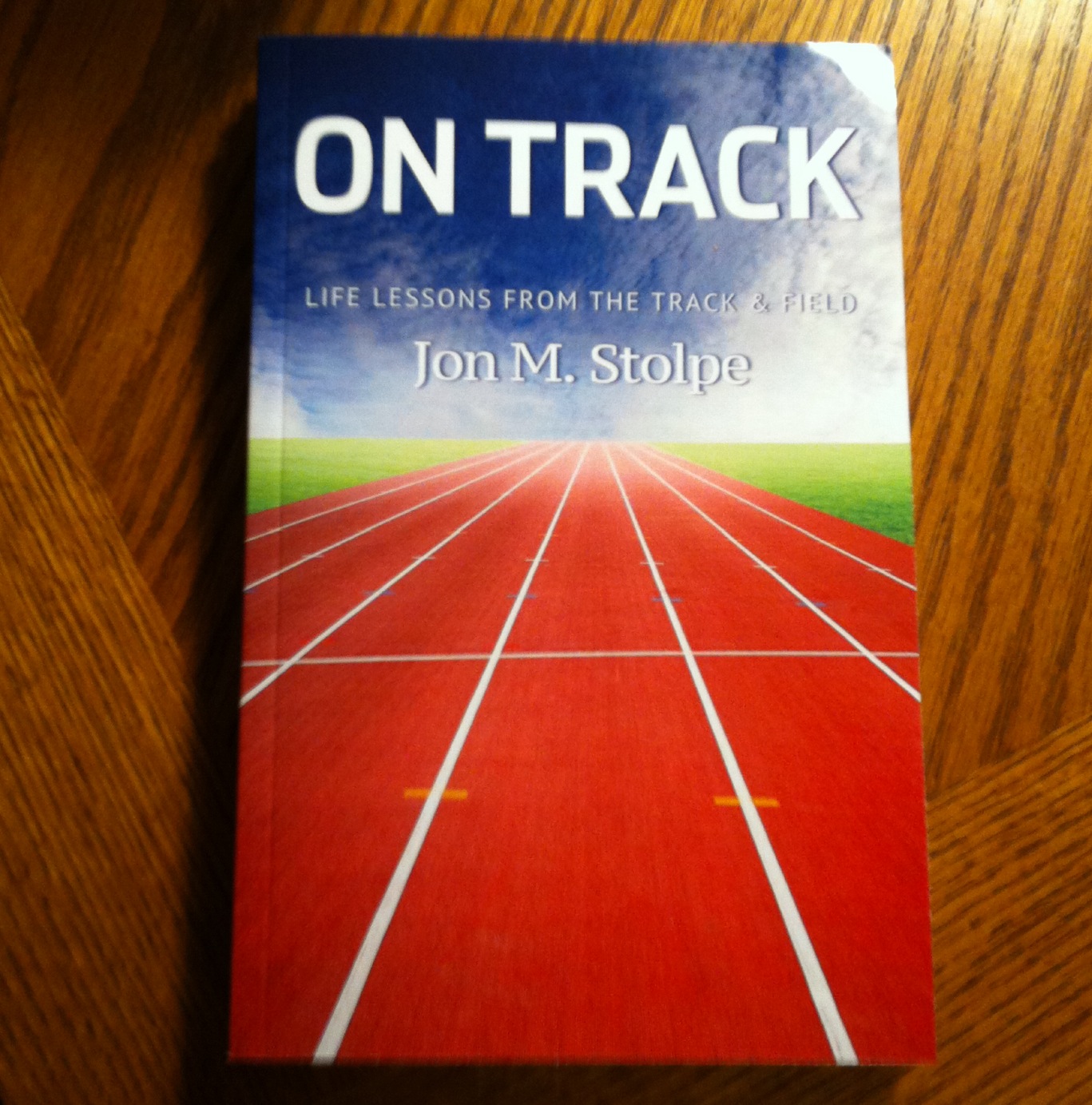
I arrived home tonight to find the prof copy of my first book, On Track – Life Lessons from the Track & Field! Pretty exciting!
March 2014 – Top Posts and Commenters (Plus BOOK GIVEAWAY)

Here are the highlights from March 2014. Thanks to everyone who read along and commented. Your readership and participation in the daily discussions are what make The Stretched Community. Thank you!
Overall, traffic was up dramatically from February (25.15%). Traffic was up 8.41% compared to a year ago. The top 10 posts included two posts from 2012, one post from 2011, and one post from 2013. If you missed any of these posts, I hope you’ll go and check them out now by clicking below. The post with the most engagement was a post related to my book project from March 6, 2014 – Help Me Book A Book Cover Design.
Top 10 Posts:
- Help Me Book A Book Cover Design March 6, 2013 (225)
- Ten Things Every Small Group Leader Should Know March 7, 2012 (125)
- Ten Reasons To Attend FamilyLife Weekend To Remember February 27, 2012 (90)
- I’m Losing My Patients – 6 Ways To Rediscover Patience April 2, 2013 (88)
- Second Chances – Does Pete Rose Deserve A Second Chance? March 11, 2014 (75)
- I’m Turning Into My Dad March 10, 2014 (73)
- Book Release – Learning To Release / A Call For Your Help March 12, 2014 (70)
- The Power of the Next Question May 20, 2011 (69)
- On Track Book Launch Update March 24, 2014 (67)
- Ten Things I’ve Learned About Writing A Book March 25, 2014 (66)
Top 10 Commenters:
- David Paul Stolpe (30)
- Larry Carter (21)
- Steve Y (21)
- Matt McWilliams (14)
- David (7)
- Heidi Bender (6)
- Leah Adams (5)
- Coach Brown (4)
- TNeal (4)
- Lily Kreitinger (4)
As promised at the beginning of the month, I have randomly chosen someone from the top commenters list to receive a copy of Packing Light: Thoughts on Living Life with Less Baggage
For the month of April, I’ll be giving away a copy of Love Does: Discover a Secretly Incredible Life in an Ordinary World
Thanks to each and everyone for reading and for commenting. I’m looking forward to April with The Stretched Community! The month of April will include more STRETCHING posts. If you’re interested in guest posting here, leave a comment to connect with me. April should be another great month!
How was your month? If you’re a blogger share a link to your top post in the comments? What was your favorite Stretched post this month? How were you STRETCHED in March?
In case you’re interested, here are a few other interesting stats about March (based on Google Analytics):
- Visits – Increased 20.15%
- Unique Visitors – Increased 25.04%
- Pageviews – Increased 22.92%
- Pages Per Visit – Increased 1.80%
- Average Visit Duration – Decreased 23.38%
- Bounce Rate – Decreased 3.18%
- New Visits – Increased 0.90%
Don’t forget to sign up for the Stretched newsletter. Check out this post to find out how to sign up. On April 22, 2014, I plan to release a book called On Track – Life Lessons from the Track & Field. All subscribers to the Stretched newsletter will get it for a discount on the eBook of On Track which will also be available in paperback. So sign up, if you’re not already on the subscriber list. The newsletter goes out periodically with extra STRETCHED content.)
Ice Breaker – Middle Name

Each week on The Stretched Blog, I ask an ice breaker question. The questions are designed to help us get to know each other here in The Stretched Community. I’ll provide my answer to the question here in the post, and then you can leave your response in the comments. While you’re in the comments section, see how others answered the ice breaker question.
This week’s Ice Breaker question is pretty basic. Some people have several names. Personally, I have one first name, one middle name, and a last name. Someone told me recently that Dikembe Mutombo had nine different names. According to Wikipedia, his full name is Dikembe Mutombo Mpolondo Mukamba Jean-Jacques Wamutombo. I man at my office has two middle names which is apparently common for those with English heritage. I’ve also heard of some people who don’t have a middle name. And there many people today who have just one name like Prince, Cher, Bono, and Sinbad. Today’s question is all about middle names.
(I’m always looking for Ice Breaker question ideas. If you have an idea, send me an email at jon@jonstolpe.com. If I use your question, I’ll give you credit and share your links.)
Question: What is your middle name?
My Answer: Mark is my middle name. I’m fairly certain my parents picked this name based on its Biblical connection. Interestingly, there is a person mentioned several times in the book of Acts named John Mark. And he is known as Mark the Evangelist. I’ll have to talk to my parents a little more about this. I wonder if they were anticipating I would be an evangelist like John Mark from the Bible. Or maybe they just thought I’d leave a “mark” on the world.
Answer this week’s ice breaker question by leaving a comment. I look forward to reading your response! (As always, feel free to share links.) And keep STRETCHING!
Also don’t forget to sign up for the Stretched newsletter. Check out this post to find out how to sign up.
5 Suggestions For Handling Disruptions To Your Routine (#2 Is My Favorite)
I’ve been challenged this week to keep up with my routines. Coming back from a weekend away where sleep came at a premium, I have been somewhat slow in getting back to my exercise routine. The past several weeks (since well before Christmas), I have run 30 miles per week. This requires me to run 4-6 days per week. So far, I haven’t made it to the gym or to the trail this week. If all goes well, I’ll be back at the gym on the treadmill early this morning. It will certainly be a challenge to meet my weekly mileage target this week. And I’m okay with it.
Do you know why I’m okay with missing my mileage goal this week?
I need a break.
From time to time, we need to take a break. Our goals cannot become our idols. As a very disciplined, goal-oriented person, it’s easy for me to let my targets or resolutions become a god. I want to accomplish the things I said I was going to accomplish. I want to achieve – or even over achieve. But sometimes, I need to stop. I need to take time to rest, to re-evaluate, and to be restored.
So how do I get back on track with my reaching my targets?
Here are 5 suggestions for handling disruptions to your routine.
5 Suggestions For Handling Disruptions To Your Routine
- Recognize the disruption to your routine. In my case, a youth conference (PCTC) interrupted my routine. This was an important event in my weekend plans. I didn’t plan to have my routine disrupted, but it happened. When the wheels come off of your routine, it’s important to understand why. It could be any number of reasons – a family emergency, a surprise visit from a friend, a big project deadline. Understanding the why of your routine disruption is critical to accepting the disruption.
- Embrace the disruption to your routine. I’ve been going strong for several weeks without a break. I probably needed a break from my running routine. A disruption in our routine can provide rest and a new outlook on things. Learn to embrace the disruption and to enjoy the time away from your routine.
- Reevaluate your routines. I intend on getting back on track with my running routine next week. I have running goals for the year. Besides this, I believe my running helps provide balance for thriving and coping with the rest of my life. If your routine has been disrupted, I recommend using the time of disruption to analyze your priorities. Does this routine need to be altered somewhat to be more realistic? Or does it need to be erased all together? Why is this routine important to keep? Should you be focusing on something else instead? These are all questions worth considering when your routine is disrupted.
- Get back on the horse as soon as possible. For me a few days off from running has been healthy, but I’m ready to get going again. The sooner I get back on track, the sooner the other parts of my life will feel balanced. Honestly, I’ve missed running the past four or five days. Running gives me an opportunity to think and to be active. If you have healthy, balanced routines, it’s important to get back into the swing of things as soon as you can. The longer you wait to get back into your routine, the harder it will be to get moving again.
- Give yourself grace. Sometimes it takes a little while to settle back into a routine. Maybe you need to start slowly and add more things back into the routine as the days unfold. There’s a tendency to want to get right back to where you left off. For me, it would be easy for me to try to get 9 or 10 miles in this morning. While this is possible, I must recognize the importance of returning to my routine gradually. A gradual increase in mileage back up to my regular running regimen will prevent me from growing tired or getting injured. It will also ensure I get back to my weekly target as quickly as possible.
How do you handle disruptions to your routines? How are you doing with your New Year’s goals?
Junk In The Trunk
 We all have junk in the trunk.
We all have baggage from our past. This baggage weighs us down. It influences our decisions and interactions moving forward.
Over the weekend, Leanne and I visited the Walnut Street Theater in Philadelphia, PA. Right now, they are featuring Other Desert Cities, a play written by Jon Robin Baitz. The play tells the story of the Wyeth family (a daughter, a son, a mom, a dad, and an aunt) as they deal with junk in their trunk.
I really did not have any expectations as I went to the play. Other Desert Cities was simply the third show in the five show season we are currently enjoying as subscribers to the Walnut Street Theater, and I was looking forward to a night out with my wife.
The play left me thinking quite a bit. The daughter in the play (Brooke Wyeth) comes home to Palm Springs, CA to spend Christmas with her family. She brings a couple of copies of the manuscript for a book she is getting ready to publish about her family. The manuscript reveals some dark details about her brother and his death. It exposes some deep, dark secrets her politically connected parents would rather keep quiet. The play which takes place in the living room of the Wyeth home is the dialogue which happens around Brooke’s manuscript. The parents don’t want it published. And we find out there is more to this story than initially meets the eye. Many aspects of this play hit a little too close to home.
Other Desert Cities reminded me there is more to the story than meets the eye. We are all coming at life from a slightly different angle. We have baggage. We have experienced things differently than those around us. We react differently because of different life experiences. Before we jump to conclusions, it’s important to listen to the stories of others.
Sharing our junk with other people takes courage, wisdom, and trust. We need courage to expose ourselves. We need wisdom to know how much to share and with whom to share it. And we need to trust those who hear about our junk will respond appropriately.
There is power in sharing our junk to help others. The play reminded me how common my junk is. When people share their junk, they give others a sense of belonging, and they provide a sense of hope. By sharing your junk, you have the opportunity to give someone hope and a new perspective.
There is freedom which comes from sharing our junk. When we share our junk, we are no longer carrying it by ourselves. There are others to help us along the way. This can provide tremendous freedom. One word of advice here…not all junk should be shared openly. Confidential counseling is a great place to release some of your junk. A few years ago when I was going through a tough time, I sought out the confidence of a paid, professional counselor. This was really helpful in helping me process what I was experiencing.
I’m not sure what junk is in your trunk. But I would encourage you to share it with someone.
How have you dealt with the junk in your trunk? How has it helped you and others to share your junk?
10 Steps To Make Your Dream A Reality
What do you dream about?
Not at night. What do you dream about during the day?
If you’re like me, you have many thoughts, ideas, and dreams that come and go without becoming real. What’s stopping you from making your dreams a reality?
I’m working on a book project (my first book project), and I’m learning a lot along the way. This weekend, my project took an important step as I move towards realizing this dream. I finished an outline for the book idea. For me, this was important because it meant getting thoughts out of my head and onto paper in an organized structure. Hitting this milestone has taught me a lot about processing our dreams and getting feedback. Whether you’re writing a book, building a business, or chasing another dream, it’s helpful to process and to get feedback. In today’s post, I offer some ideas worth following as you chase your own dream.
10 Steps To Make Your Dream A Reality
- Process your idea first. It’s important you have put some thought into your idea before you do anything else. Part of this could involve prayer. And a major part this involves time. I’ve been thinking about the idea for a book for a while. This month I finally put some solid time into praying and processing my idea. I wrote down a lot of notes. I talked it over with myself before I shared it with anyone else. Before you waste someone’s time with your idea, make sure you put in time of your own.
- Talk about your idea with some close friends and advisers. Share your idea with them. Does your idea make sense to them? Can you explain your idea fairly easily. You should be able to describe your main idea in a few sentences without going into all the detail. For my book project, I talked to my wife, to a good friend, and to a couple other select people to see if my idea made any sense to them. In each of these cases, they gave me things to think about in taking my project more seriously.
- Process your idea again. This is important. What did you learn through the first two steps? Take time to write it down. For my project, this is when I wrote an outline for my book idea. The end product make look very different, but an outline provides an opportunity to get into more detail, to determine your potential structure, and for discovering any roadblocks. For my book project, I spent a couple of solid afternoons adding to my outline. I wanted to do this before I sent the outline out for more feedback.
- Develop a review team list. This shouldn’t be real long. The list should contain people who you trust to give you honest feedback. They should be people who have some expertise in the area of executing your idea. For my project, I chose ten people who have experience in book writing and/or short-term missions.
- Ask a select few to review your idea. Before you assume those on your review team list will have the time to look at your idea (or outline, in my case), you should ask them. This could involve an email or a phone call. Your message or conversation should include a brief description of your project, an explanation of what you need from them, and a deadline for when you want their feedback. For my book outline review team, I sent out an email message to my list. I explained what I was working on and how they might fit into the project. And I asked them if interested and available to provide feedback in one week. I did not include the book outline with my message. I only sent the book outline to those who replied with a willingness to help.
- Be open to the feedback. This may be one of the hardest parts. You send your idea to others for feedback. Now, you have to accept the feedback. People will have all kinds of ideas. Keep a record of these thoughts and ideas. They will help you! You must remember this. Iron sharpens iron. So far, I’ve gotten some great feedback on my book outline. I’m so thankful for people in my life who are willing to step in an constructively critique.
- Process again. It seems like this is a common theme here. Once you get the feedback, you need to process (and pray) again. What will you do with the feedback. Filtering is a healthy aspect to this. You may use the feedback or you may not use the feedback. You have the choice. In my case, I’m still reviewing the feedback and processing. I’m realizing I have a lot to think about. What is my expectation for my book project? Why am I writing the book? Who do I want to read my book? I’d appreciate your prayers as I journey through this step.
- Move forward. Once you’ve processed the feedback, make a decision on the direction you are going and keep moving. One of the reasons I asked for feedback within a week is that I do not want to lose momentum. I want to keep moving ahead with my project. Don’t give up (unless the feedback tells you too)! I know there’s a lot of work ahead in executing my idea, but I’m excited to keep writing and to move ahead.
- Thank your feedback team. It goes without saying that people who help you process an idea deserve some thanks. I plan to do this through hand-written thank you notes (of course) and a mention in the final product.
- Go back to step 1 and do it again. Our ideas and projects involve several iterations of processing, review, and feedback. Keep leaning into these steps. I’m excited to see where this journey leads me in realizing the dream of a book. I know I will need to process again, and I’ll definitely need the feedback of others.
What steps would you add to this list? What has helped you make your dreams a reality?
Learning To Lead Is A Stretch (Guest Post by @JoshuaWRivers)
Today, I have the privilege of presenting guest blogger Joshua Rivers. Joshua is a blogger, podcaster, and author. He recently released a new book about Joshua (from the Bible). In his post, Joshua (Rivers) shares some thoughts about how Joshua (from the Bible) was stretched to become a better leader. Enjoy the post. At the end, I’ll tell you how you can enter to win a FREE Kindle copy of Joshua’s (Rivers) book, Leave Nothing Undone: 13 Key Lessons from the Life of Joshua
Learning To Lead Is A Stretch
The Bible is full of examples of people who grew spiritually. The greatest examples of these, I believe, are the ones that showed the struggles that they went through. One example I love is Joshua.
When Joshua was introduced in Exodus, he was given the responsibility of leading the children of Israel into battle. The Bible gives no indication as to what his credentials were prior to this time, but my belief is that he must have been the slave to a military leader in Egypt – a military leader that became a point of reference for years to come. So, how did this slave become one of the greatest military leaders in history?
1. Joshua had to stretch himself to grow and reach his potential.
We know that God had much more planned for Joshua, and, at some point, Joshua had to realize that potential as well.
Growing up as a slave, and the fact that his ancestors had been slaves for hundreds of years, would have given the average person little to no hope of a future beyond slavery. Joshua apparently had a more positive outlook. He worked at applying himself, even in a difficult situation. Perhaps he looked at the example of Joseph, who happened to be his great, great, great-grandfather – who went from slavery to second in command under Pharaoh.
2. Joshua had to stretch himself to learn patience.
Learning patience is hard. By definition, patience is the result of going through a difficult or trying situation without being irritated or annoyed. Surely as a slave, he experienced many times when this was tested.
But don’t forget the fact that he had to wander around the wilderness because of other people. Joshua was on fire for following God’s plan to march into the Promised Land, but the others (except for Caleb) cowered back in fear of the giants in Canaan. The result was that no one got to go into the land and claim their inheritance. Joshua had to wait for 40 years, and it wasn’t his fault.
3. Joshua had to stretch himself by learning the importance of prayer.
Joshua was generally a man of prayer, but there was a time that he failed to pray as he should have. As a result, he learned some very hard lessons. First, he failed to pray and ask God’s guidance when they came to Ai – and they lost the battle. After he finally went to God and gained the victory at Ai, men from Gibeon tricked the Israelites into signing a treaty. This led to an extra burden on Joshua and the Israelites.
It doesn’t matter if the situation seemed small or insignificant, Joshua learned that seeking God in prayer was vital to his growth and success.
Joshua grew into a great man of God and achieved such a level of success, that God made this statement about him: “he left nothing undone.” This statement led me to a study of his life and eventually to the writing of a book based on that phrase: “Leave Nothing Undone: 13 Key Lessons from the Life of Joshua
Joshua has also agreed to give away a copy of the kindle version of his eBook to a Stretched reader. Click on the Rafflecopter link below to enter.
How have you been stretched to become a better leader?
ADVENTure Day 2

Yesterday, we kicked off a new ADVENTure series, and we talked about hopes and expectations. I hope you took advantage of the ADVENTure activity. Did you create a list of all your hopes and expectations for this season? (If not, take a few minutes to make your list – see yesterday’s post for more instructions.) It can be easy to be overwhelmed by our lists. We want to accomplish so much. It’s not that our hopes and expectations are bad, but they can cause us to have blinded vision to what is really important.
Today is an important day in your ADVENture. Today, you must make a big decision about where your hope will lie this holiday season. You can hope to get everything done – your Christmas shopping, your Christmas baking, your Christmas cards.
I’d like to challenge you to refocus your hope.
Put your hope in the Lord. The prophet Isaiah reminds us (see below) that those who put their trust in God will find new strength.
But those who hope in the Lord will renew their strength. They will soar on wings like eagles; they will run and not grow weary, they will walk and not be faint. Isaiah 40:31
ADVENTure Activity: Take a look at your list from yesterday. Separate you list into three categories – Me focused hopes and expectations, Others focused hopes and expectations, and God focused hopes and expectations. Now select one of the hopes and expectations (preferably from the God focused list). Write down three actions you can take this week to move closer to this hope and expectation.
ADVENTure Question: How is your life different when you put your hope in God? Share one of your action items in the comments.
Don’t forget to sign up for the weekly Stretched newsletter. Check out this post to find out how to sign up.