
Marcos Gets His New Eyes TODAY!

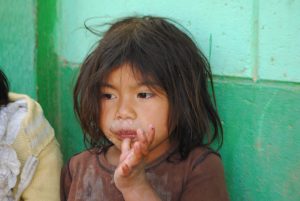
Last night, my friend, James Cook, sent me this photo along with the message: “Tomorrow, Marcos gets his new eyes.”
If you recall, Marcos is a special young man our family met last time we were in Guatemala. We built his family a new home. While we were building the home, we learned that Marcos needed new glass eyes. Some people might call it a coincidence, but I think James Cook and his exploratory team from Liberty University was there for a reason.
Through essential contacts, collaborative prayer, and the grace of God, today is the day (nearly 16 months later) Marcos will get his new eyes.
He will still be blind, but this will give him more freedom to maneuver through the village of Xenacoj without the worry of losing his smaller glass eyes. Also, James and his team are working to provide a tutor to teach Marcos to read Braille.
Interestingly, today is the day our family is heading to Morristown, NJ to witness the “town walk” (or final exam) of our most recent Seeing Eye Puppy. Assuming Rio passes, he will be matched with a blind person to help them maneuver through their activities.
God is good.
As I reflect on these happening today, I am reminded of Psalm 121 which talks about placing our focus on the Lord, the Maker of heaven and earth. Today, I rejoice knowing God has orchestrated such a beautiful story being told in the lives of Marcos and Rio. May God use them both in a mighty way to bring glory to His name.
Psalm 121
A song of ascents.
1 I lift up my eyes to the mountains—
where does my help come from?
2 My help comes from the Lord,
the Maker of heaven and earth.
3 He will not let your foot slip—
he who watches over you will not slumber;
4 indeed, he who watches over Israel
will neither slumber nor sleep.
5 The Lord watches over you—
the Lord is your shade at your right hand;
6 the sun will not harm you by day,
nor the moon by night.
How To Live A Meaningful Life

“Grapple with finding ways to serve God’s children.”
Quote from a recent unknown podcast
Do you want to live a meaningful life?
Do you want to do things that matter?
Do you want to make a difference in this world?
Do you really want to know the answer to these questions?
I think I may have the answer, and it’s actually pretty simple.
Are you ready?
Here it is:
SERVE.
S-E-R-V-E.
If you want to live a meaningful life, serve others.
If you want to do something that really matters, serve others.
If you want to really make a difference in this world, serve others.
Be like my friend, Camela, who decided to serve her husband by giving him one of her kidney’s last week.
Be like my co-worker, Bob, who stopped to serve me by holding open the door as I was coming into the office the other day with my hands full.
Be like my friend, Mark, who is giving up his day off this Saturday to serve a family in our area as they move from one house to another.
Be like my friend, James, who is serving the poor and broken in Guatemala by providing medical care for the poor and powerless.
Be like my friend, Dave, who is intentionally serving widows and orphans in the village of Santo Domingo Xenacoj.
Be like my friends, German and Susie, who despite having little find ways to serve by opening up their home to feed the hungry in and around Xenacoj.
Be like my brother, David, who serves the inner-city youth of Milwaukee by providing discipline, guidance, and a caring shoulder to lean on at Frank Lloyd Wright Middle School.
Be like my friend, Sean, who serves my church week in and week out by setting out our signs early in the morning and picking them up at the end of our Sunday services.
Serving others can take a few seconds, a few minutes, a few hours, a few days, or the rest of your life. Serving others doesn’t require special training, a certificate, a specific formula, or an invitation. It simply requires a willingness on your part to focus on others instead of yourself. Along with the willingness, it takes a little action. Serving others can happen through a phone call, an email, a walk across the street, a drive across town, and a plane ride to a far away land.
If you want to change the world, serve others.
Who do you know who is serving others? How has serving others made a difference in your life?
Guatemala Photo of the Day – Game On

After the teams are selected, the game begins. It’s serious and fun at the same time. Isaac hasn’t played soccer for several years, but he fits in despite his towering size. He quickly learns what soccer is really like. These Guatemalan boys can really bring it.
This is the first of many instances on our trip when I just watched and was inspired by Isaac’s adaptability and sincere care for the people of Xenacoj. He really loved conversing with the other kids. And he often came to meal time or down time with questions and comments.
Many people have asked me why a short-term missions trip like this is necessary. I have many responses. One response is this: our kids saw a much different part of the world. They experienced a small part of how most kids live in the world. And it was different than their comfortable lives here in America. They were transformed by this trip differently than going to the shore for a week or just hanging around home.
Can you get this experience in the United States?
Perhaps.
But I would argue it’s much different outside our borders, and we all need our eyes opened to the world outside our comfort zone. Going to Guatemala was an opportunity to get in the game on a whole different level.

A Chance To Make A Difference


It’s easy to make a buck. It’s a lot tougher to make a difference.
Tom Brokaw
I received a Facebook message this week from James Cook. James is a connection I made in Guatemala this past summer. We have a few things in common: a funny sense of humor, a love for our wives and kids, and a big heart for the people of Xenacoj. James proposed to me an opportunity to make a difference in the village of Xenacoj.
James was recently back in Xenacoj for a medical missions trip. As he explained the trip to me, it was his hardest trip so far and his best trip so far. When you are in Xenacoj, it’s easy to fall in love with the people who live there and the people who serve there. Our mutual friend, Dave Sgro, is one of those people we both love as a brother. Dave lives in the United States, but he returns to Xenacoj about once a month to continue missions through GO! Ministries.
GO! Ministries brings the gospel message to Xenacoj through practical service, connection, and teaching. GO! doesn’t require a lot of on the ground resources, but there are a few indispensable tools. One of those tools is the van. Currently, GO! has a white Chevy 15-passenger van that is used to transport short-term missionaries into and around the village of Xenacoj. Dave drove the van from the United States through Mexico and down to Xenacoj when his family with 13 children lived in Xenacoj. When the family returned to the United States a few years ago, he left the van there to be used for the ministry. The van has traveled many miles and has many stories. The van has seen its better days, and the costs to repair the vehicle and to keep it road-worthy are becoming too much to be truly practical. In other words, it’s time for a new van.

If you’ve been to Xenacoj the last couple of years to serve with GO! Ministries, you probably have a van story or two. One of my favorite van stories surrounds my first visit to the village of San Antonio. This is a small mountain village three miles and forty-five minutes outside of Xenacoj. We took the van up to San Antonio. The first two miles where fairly easy as the van navigated the windy paved roads outside of Xenacoj. Then things took a bumpy turn when we turned off the payment and onto a dirt road. Before we went to far, the van stopped and Dave invited us up on the roof to enjoy the views as we continued the journey. The ride was not comfortable at all, but the views were spectacular and the memories made were incredible.
When we arrived at the top, we had the opportunity to serve a meal to the children of this small village. We also served them frozen pops we brought up from Xenacoj. These were the poorest conditions we saw during our trip to Guatemala. The experience left a mark on me forever, and this would not have happened without the van.
The cost to replace the van is $21,000. When James reached out to me, he spoke about trying to find 21 organizations to donate $1,000 each. I don’t think he was necessarily thinking about The Stretched Community being one the 21 organizations, but I couldn’t help but imagine the chance to make a difference again for Xenacoj. Why not? I have seen the impact GO! Ministries is having for the people of Xenacoj first hand, and I know a new van could help make a big difference. Let’s see if we can be one of the 21 organizations to contribute. Let’s see if we can raise $1,000 together to make a difference.
Won’t you join me in supporting this cause? Won’t you take the chance to make a difference?
For more information or to give directly to this cause, click here.
To sweeten the pot, I’d like to make an offer: For anyone who gives $25, I’ll send you a copy of Traveling Nomads: (Black and White Version)


In order to get these books, you need to make a donation through the site (click here) and indicate “Stretched” as part of your donor information. (Then send me an email at jonstolpe at gmail dot com.) Once you’ve done this, I’ll find a way to get you these books.
Thank you! Thank you! Thank you!
Guatemala Photo of the Day – Right Where She Belongs

While I was “talking” to Lucinda, Hannah was playing Duck, Duck, Goose (in Spanish of course) with several young girls from Guatemala. I captured this moment, because it shows the level of comfort Hannah had being back here for the third time. Hannah is considering a career in Spanish, and I think her experiences in Xenacoj have been instrumental in guiding her down this path. In a year and a half, we’ll be sending Hannah to college. It’s a little scary for us as parents, but there is comfort knowing we’ve done everything we could to prepare her for this step. In fact, I think this is right where she belongs – serving God by serving others, using her gifts (including her Spanish), resting in the present. I can learn a lot by watching my own kids.

Guatemala Photo of the Day – A Million To One Shot

Before we headed to Guatemala, I picked up two t-shirts. One was a Superman shirt (my favorite superhero), and one was this Rocky shirt. I’m from the Philly area, and I always liked the Rocky story. In fine print on the shirt, it says “His whole life was a million to one shot.” Maybe this was just the right shirt to wear the day we arrived in Guatemala this past summer.
After we checked in at our new “home” for the week, we walked over to the central park in Xenacoj. Believe it or not, we kind of stuck out. After an exhausting day of travel, I found a bench to sit on while our kids started playing with other kids in the park. This young girl seemed to hang around me for some reason. If I remember correctly, her name was Lucinda. She was quiet. She was missing several of her teeth, and she had a beautiful smile. I remember leaving the park later that evening wondering more about her story. Did she still have a dad? Did she go to school? Did her parents even know where she was? Did she have any friends? And did she know the love of Jesus?
When you go on a short-term missions trip, you have all kinds of dreams and expectations. You want to build things. You want to “change” the whole world – or at least change the village. These are great hopes and dreams, but maybe a short-term missions trip is simply about interactions with kids like Lucinda. We had trouble communicating verbally, but it was clear we connected. We had a million to one shot of meeting each other (actually, it was more like ten billion to one shot), and yet, we met. I’m thankful for the “shot” to meet Lucinda.
I wonder what she’s up to today.

Guatemala Photo of the Day – A Gateway to Hope

On and off for the past couple of months, I’ve been featuring a Guatemala Photo of the Day on my Facebook page. I’d like to move these over here to The Stretched Blog. Here’s the first photo I posted back on January 12, 2014:

This is the gateway arch that welcomes visitors to Santo Domingo Xenacoj in Guatemala. This wasn’t here the first year I visited. It was under construction the second year. And it was fully functional this past summer during my visit. I’d love to drive back through this gateway again in 2015. How and when will it happen? I don’t know. But my hope goes on for this village I have come to love.
6 Ways To Help Orphans


There is an audio version below.
If only 7 percent of the 2 billion Christians in the world would care for a single orphan in distress, there would effectively be no more orphans. If everybody would be willing to simply do something to care for one of these precious treasures, I think we would be amazed by just how much we could change the world.
Stephen Curtis Chapman
I’m reading through the Bible this year as part of my morning quiet time. I don’t say this as a pronouncement of having it all together. In fact, the contrary is probably true. I need to spend regular time in God’s Word, because I am messed up and broken. The Bible helps me find healing, hope, and encouragement for the daily ups and downs I face in my life.
I’m using the Daily Audio Bible Podcast with Brian Hardin as a guide to walk me along this journey this year. Each day, Brian shares a passage from the Old Testament, a passage from the New Testament, a passage from the book of Psalm, and a couple of verses from the book of Proverbs.
I’ve read through the Bible a few times before. I feel like I know it fairly well, but I am struck each morning by how much I really don’t know. A theme that keeps coming back to me over and over again this year relates to the poor, the widows, and the orphans. Throughout the Bible, God speaks about orphans, widows, and the poor. He instructs us to look after the poor and the widows. And He doesn’t just say it once or twice. He says it again and again and again.
Here are a just a few of the passages that have struck me so far this year:
- Do not take advantage of the widow or the fatherless. Exodus 22:22
- He defends the cause of the fatherless and the widow, and loves the foreigner residing among you, giving them food and clothing. Deuteronomy 10:18
- Do not deprive the foreigner or the fatherless of justice, or take the cloak of the widow as a pledge. Deuteronomy 24:17
- I will not leave you as orphans; I will come to you. John 14:18
- Religion that God our Father accepts as pure and faultless is this: to look after orphans and widows in their distress and to keep oneself from being polluted by the world. James 1:27
- But you, God, see the trouble of the afflicted; you consider their grief and take it in hand. The victims commit themselves to you; you are the helper of the fatherless. Psalm 10:14
- A father to the fatherless, a defender of widows, is God in his holy dwelling. Psalm 68:5
- Defend the weak and the fatherless; uphold the cause of the poor and the oppressed. Psalm 82:3
When things are repeated, it is for emphasis, so the multiple mentions throughout the Bible should serve as a reminder – a wake-up call – to the readers that God wants us to pay attention and to take action for the cause of orphans, widows, and the poor.
Yesterday morning, I had the privilege of being in worship at our church as the Jordan Howerton Band led our congregation in worship. They were leading a song I have sung before, but the words hit me a little differently this time. The song is Phil Wickham’s This Is Amazing Grace, and the second verse starts like this:
Who brings our chaos back into order
Who makes the orphan a son and daughter
The King of Glory, the King of Glory
Did you catch that?
God, the King of Glory, makes the orphan a son and daughter.
This simple phrase in the middle of this song spoke to me and reverberated against the words I’ve been reading in the Bible this year. God cares for the orphans. And if God cares for the “least of these” then so should you and I.
How does one help orphans?
This is a great question. In America, it can be hard to initially identify with the cause of the orphans. After all, we are wealthy. We have it all together.
Before we can answer this question, it might be helpful to understand what it means to be an orphan. In Guatemala, a child is considered an orphan if his or her father is no longer in the picture. The dad may have died, but he may have simply skipped town leaving his wife a widow and his children orphans.
When you look at it this way, you may actually see that we have more orphans in our midst than we had initially thought. The children being raised by a single parent here in the United States would actually be considered orphans in Guatemala. They may not need an orphanage, but they need to know the presence of a loving father in their lives.
So how does one help the orphan?
Here are 6 ways for you to help orphans:
- PRAY. Don’t underestimate the power of prayer for the cause of the orphan. Pray God would protect and provide for the orphans of the world. Pray your heart and mind would be opened to helping orphans.
- GIVE. Orphans often are overlooked when it comes to basic necessities like food, clothing, and shelter. There are many organizations that take monetary donations and turn them into practical provision for orphans. Research organizations to determine where your money will be best spent for the cause of the orphan. Our family donates to Compassion International and CMF International. GO! Ministries, who we serve with in Guatemala, is directly serving orphans and widows in the village of Xenacoj. A donation to GO! Ministries would go far to help orphans.
- RESEARCH. Take time to understand the cause of the orphan. Don’t take my word for it. Find out for yourself. How many orphans are in the world? What happens to the typical orphan? What is being done to help orphans? You have the ability to jump in and learn more about orphans.
- ADOPT. This could mean physically bringing an orphaned child into your home, or it could be adopting a child through child sponsorship. You can establish a long-term relationship with an orphan that will not only provide for physical needs but will also provide for spiritual needs.
- SPEAK UP. What will you do with the knowledge you have? Will you hold it inside or will you speak up and defend the cause of the orphan? Orphans and widows often do not have a voice, but you do. You can use it to make a difference.
- GO. Get involved with orphans by serving at a boys and girls club in your area, by going to an orphanage, or by injecting yourself into the flow of a community where absent fathers are common. I like building things in Guatemala. It’s satisfying to build houses, stoves, and other things, but it’s even better to build relationships with the orphans and widows in Santo Domingo Xenacoj.
If you look at the breadth of this issue, it could be easy to become overwhelmed and discouraged. By taking one step at a time, we can all help to make a difference for a cause that matters – a cause that matters to God – the cause of the fatherless.
How are you helping orphans? What other ways can we add to the list above?
Facing Your Fears About Short-Term Missions

Why are you scared?
What drives you to paralysis?
What prevents you from taking action?
What would it take to get around the obstacles in your way?
Maybe you are fearless. If you are fearless, I’d love to get in your head for a bit. I’m not talking about a stupid kind of fearlessness – a fearlessness that would lead you to jump off a tall building without a parachute or another method of safety.
Perhaps being fearless is relative. Somethings scare me to death, but they don’t faze you.
Many of the questions I get about short-term missions – especially related to my experiences in Guatemala – are related to the fears people have:
Will I get sick?
Will I be safe?
What will I eat?
Where will I sleep?
How will I understand the people I am serving?
Will I make it home safely?
Will people at home think I’m strange for going to a strange land?
How will I get from one place to the other?
Will I be welcomed where I serve?
Will I really make a difference?
If we peal these questions back, we can see that they are really questions based on fear. I get it. I had many of these same questions before I went to Guatemala the first time. And to be honest, I would probably still have many of these questions if I went somewhere different from Guatemala in the future.
It’s okay to have questions. Here’s the problem though. At some point, we have to take action. It helps to get some of the answers to these questions ahead of time, but we may never get all our questions answered. At some point, we have to take a leap of faith. We have to trust that God will work upstream ahead of our fears and ahead of our unanswered questions.

I’m in the early stages of planning a multi-week return trip to Guatemala in 2016.
Maybe you are supposed to join me for some or all of this trip.
Just maybe, it’s time for you to put aside your fears so you can take a leap of faith that will change your life forever.
Are you in our out? Don’t let your fears stand in your way of doing something amazing with your life.
What scares you the most about going on a short-term missions trip? What will it take for you to overcome these fears?
Hope Rising From The Ashes – Rethinking The Impact Of Short-Term Missions


I received a phone call from my friend, David Sgro, Monday afternoon. Dave is the missionary I have been working with the past three years in the village of Santo Domingo Xenacoj in Guatemala. He broke down in tears as read this post to me written by Joshua Hunt. Joshua is in Xenacoj with a team from AIM World Racers for a month serving in and around the village. Joshua’s story below is a story of hope rising from the ashes.
Here’s what Joshua Hunt had to say on his blog:
“Hola Justin! Tienes tiempo para ir conmigo a Ayapan?” (“Hey Justin! Do you have time to come with me to Ayapan?”)
German, our local contact, poked his head through our open front window as we wound down the afternoon listening to some quiet indie music.
“Sure?” I responded, somewhat honored to be asked but bewildered as to what needed to be done in Ayapan.
I convinced Karissa to go along with us. Being as AIM technically requires us to travel in at least pairs, I was able to cover my lack of enthusiasm for this new, unknown, late-afternoon task.
As we wound up the ragged mountain roads, our 15-passenger van with only 3 seats in use bounced lightly and rebelliously over the potholes and loose stones. On two different occasions, we squeaked by colorful chicken busses, staring perilously down the mountainside as only fractions of inches separated us from either becoming a new paint job on a public bus or chicken feed at the bottom of the slope.
When we made it to Ayapan, the main schoolyard in the center of the village was empty, save for a handful of boys playing with a plastic ball and shielding themselves from frequent swirls of rising dust. Only a week ago we played fútbol for hours with the schoolchildren during recess. But now, during the approaching dusk, the field felt lonely and void. Walking around the side of what I thought was another educational building, we found a man sweeping a layer of fresh, green pine needles out of a chapel meeting room in to a pile on the portico.
German approached the small-statured man with purpose and intent. After introducing himself to the man and his companions still inside the dim meeting hall, it was clear we were to be introduced as well. I fail to recall the names of each of the six men, but German quickly explained these were the mayor and leaders, city council if you will, of the local community. I strained to maintain my composure; not one of these men stood taller than 5’4’’, and they appeared a perplexing mix of age and youth. Among the weathered and deep-ridges faces, the wisps of grey hair and the various silver-capped teeth, these representatives appeared no older than thirty, not much older than me.
In the minutes that followed, I struggled to keep up with a rapidly interchanging conversation in both Spanish (“Castellano” in the words of older Guatemalans) and Kaqchikel, the Mayan and native language of much of the population in the mountains here. The conversation continued as we took seats inside the hall.
After a short while, German suddenly turned to me and said, “voy a comprar algo para tomar, venga,” (“I’m going to buy something to drink, come with!”) as he headed to the door.
Karissa and I followed German out to the tienda across the street where we purchased glass bottles of 7UP and Mirinda for each of our group back at the chapel. German paid at the barred counter and popped the lids off one by one. We returned to the seated group, a solemn, yet polite gathering.
Please go to Joshua’s blog to read the rest of this story of hope rising from the ashes. You will understand why Dave was in tears when he called me on Monday afternoon. To get there, click here.
After Dave read Joshua’s post, he thanked me and said I was part of what is happening in this village near Xenacoj.
Many people think short-term missions don’t can make a difference.
Maybe it’s time to rethink this.
Short-term efforts coupled with long-term commitments can make a huge difference.
v v v v v v v v v v v