
On Track: Life Lessons From The Track & Field – Introduction – Audio Version

People learn and digest information in different ways. Some learn well by reading the written word. And some people learn better by listening to the written word.
I fall somewhere in between. I like to read, but I also love to listen to podcasts and audio books.
Several years ago, I released my first book, On Track: Life Lessons from the Track & Field. It’s a short paperback book available on Amazon. You can order your copy today by clicking here.
Since releasing this book and my second book (Rooftop Reflections), I’ve had several inquiries about the availability of my books in an audio format. The thought of recording an audio book scared me a little bit as I wasn’t sure of the technology to use to make this happen.
With the help of some good friends, I learned some important information about the tools I needed to record an audio book. I recently ordered these tools, and I have begun recording the audio version of On Track.
Today, I share with you the audio Introduction to On Track. I hope you enjoy! And with a little time and hard work, my audio book will be available for Audible.
Don’t Forget This Deal on Cyber Monday


The Monday after Thanksgiving has become a big day for shoppers. Last year, shoppers purchased nearly $2.7 Billion on-line on Cyber Monday. Cyber Monday was created by marketers to lure shoppers like you and me into purchasing on-line. Shoppers are enticed with “deals”, discounts, and the allure of avoiding the chaos of in-store shopping.
I don’t know about you, but my family has found it much easier to shop on-line. We get the things we want and need for the holidays without the pressure of the in-store experience.
Since it’s Cyber Monday and I know you are looking for that perfect gift for that special someone, I thought I should remind you of a gift that everyone wants and needs:
My book, On Track: Life Lessons from the Track & Field
Here’s what several reviewers had to say about On Track

The beauty in this book is the way in which the author sees lessons in the little things, like the way sprinters set up their starting blocks. You do not need to be a fan of track and field to appreciate these observations. I believe that the author is more hoping to arm the reader with a few tools to look for lessons in their own everyday events that are relevant to their lives. Intentional or not, the book certainly did this for me. “On Track” then ties these observations back to recognizable verses of scripture. Much as the author hopes we’ll draw on our own memorable stories in our lives, he provides these memorable scripture passages for us to draw on as well.
I wouldn’t read this book expecting to learn much about track and field. That’s not really the point. This is a great little book to have on hand for those times that you find life getting off track (pun very much intended). It is a quick read that I will be returning to from time to time to get back On Track. Brian S. Willem
This book is an easy read and well thought out. Jon writes life lessons in parallel with track and field events, he leads us from the starting blocks to the finish line. Whether you know track and field or not, this book is an inspiring work and leaves me wanting to read more and more of Jon’s writing. Bravo for leading the pack on your first book Jon!! Chris Vonada
Such a great read! Jon does a great job relating track and field concepts to our lives in this book. Whether coming out of the starting blocks, overcoming obstacles, or finishing strong, he incorporates stories from his own life and his kids’ lives and connects those with things that we face every day.
As a former hurdler and runner, I could especially identify with his stories and challenges and it took me back to my track days. On Track is a great book for anyone who wants to grow, be stretched, and be encouraged in their role at home, work, and in daily life. I highly recommend it. Great job Jon! Shawn Washburn
Love that Jon incorporates his faith into his passions in life – into his family, his running, his job. On Track demonstrates how learning good, strong habits and practices are a life learning not just compartmentalized into a sport. Great read for the whole family, and would be great as a small group discussion guide. Good job, Jon! Looking forward to lots more from this new author. Diane Karchner
Jon takes us on a journey with his love of God and his love of running. There are many lessons of life molding these two loves together. You really get a sense of Jon’s dedication to living life to the fullest and enjoying the gifts God has equipped each of us. S. Young
Jon offers a tidy little book, a parable if you will, comparing life to running at a track meet. Readers will enjoy sharing the author’s personal experiences and will find the extra boost they are looking for to get their life back on track. An easy, enjoyable and worthwhile read. Matt Appling
In this book, Jon does a fantastic job of teaching both about track and field (for those who are too familiar) and about life. Several key factors from the starting blocks to the finish line help to show you how to keep your life “On Track”. Joshua Rivers
Go on-line and order your copy of On Track TODAY.
(If you’d like an autographed copy, reach out to me to discuss details.)
Do you shop on-line? What’s the best deal you have ever found on-line?
Tired Of Running Away? Come Home!
Running away will never make you free.
Kenny Loggins
When I was a teenager, I could be pretty moody. I still have my ups and downs now, but I think I am fairly even keeled for the most part.
I really don’t remember what sparked this feeling one summer day, but I remember somehow feeling like I was being treated unfairly by my parents. (This seems pretty crazy to me now that I’m a parent to two teenagers, and I have incredible respect for my parents today.) Instead of working it out with my parents, I decided to run away.
I didn’t pack up my belongings or say good-bye. I didn’t leave a letter explaining my departure. I simply walked (or ran) out of the yard and down the street. I walked out of the neighborhood and turned towards the busy road at the edge of town. I kept walking and walking and walking. Eventually, I found myself walking the long way back home.
I wish I could remember all the crazy thoughts that went through my head during my two or three hours as a runaway. I wish I could remember my homecoming. I can only assume my parents knew I would come back home.
We run away from home for many reasons and through a variety of methods. We run away from a painful past. We run away from conflict. We run away from fear. We run away by filling our schedules with all kinds of activities in hopes to keep us distracted from the reality we don’t want to face. We run away through escapes of drugs, alcohol, television, food, and pornography. And we run away severing ties with family and friends – the people we need the most.
Despite the tendency to run away, we are called back home.
Home is where we are welcomed back just as we are with open arms.
Is it time for you to come home?
What have you run from in your life? What are you running away from now?
Help Wanted: Track & Field Coaches and Cross-Country Coaches

I have a crazy idea, and I need your help.
I am in search of track & field coaches and cross-country coaches who would be (or might be) interested in reading my book. On Track: Life Lessons from the Track & Field
 I believe this book could be valuable for anyone, but I especially think the message will resonate with those close to the track and field. I would love to send a copy of my book to coaches. I’m targeting coaches at Christian high schools and colleges, but I would happily send it to any interested coaches – for FREE!
If you a coach any you are interested in reading my book, leave a message in the comments, so we can connect. If you are not a coach, but you know a coach who would benefit from my book, send me a comment, so we can make it happen. I’d love to send my book to 50 coaches before the end of the year. I’m hoping you can help make this happen.
Who was your favorite coach? When was the last time you received something for FREE?
9 Essentials For Those Who Want To Start Running Long Distance

Last night, my brother tagged me in a Facebook post. Here’s what he had to say:
Ok so I gotta improve my running in general, but especially before Tough Mudder next month. To this point running has been little more than an afterthought to my workout regimen.
Distance runners (looking at you Jon Stolpe): Any suggestions for making improvements in distance running? I’m mostly looking for endurance/stamina and general motivation rather than pace. Any ideas welcome – workout ideas, exercises, mental exercises…
Have never been a strong runner and not expecting miracles, but I want to be able to say I did my best.
Thanks!
His Facebook post go me thinking. There are probably other people who would like to find ways to start running long distance. While steroids and other performance enhancing products might help a little, I wouldn’t recommend these (especially based on the impact of steroids we’re seeing in NFL and MLB players who used PEDs, etc.)
So how can someone who has done little distance training make improvements to become better distance runners? In today’s post, I’ll help you identify several keys to become a stronger distance runner. This advice is primarily geared to people who haven’t done any major distance running for a while, but it could also apply to someone who is simply stuck in a rut with their distance running.
9 Essentials For Those Who Want To Start Running Long Distance
- Slow down. Many people who jump into distance running believe they have to run a four or five-minute mile repeatedly. They take off rather quickly on their training run, and they soon collapse failing to make it very far. Several years ago when I started running, I fell into this trap. It wasn’t until I started running with a friend who told me to slow down that I realized I could run much further and for a greater length of time by simply slowing down 30 to 60 seconds per mile (or even slower). If you want to go further, slow down. (You can always add speed later.)
- Set a weekly goal. It helps to have goals. I would recommend having a weekly mileage or time goal. Start small. If you run 2 miles a day four times a week, 8 miles would be a great initial goal.
- Keep track of your mileage. It helps to have a running log. I use a calendar to keep track of my daily running activities. So far this year, I’ve run over 1,000 miles. Keeping track of your mileage and your run information helps you learn more about what went well on your runs and what didn’t go so well on your runs. For me, it’s also inspiring to see my mileage totals climbing.
- Slowly increase the goal from week to week (add no more than 10% each week). Many people who start distance running think they should run 30 miles a week right out of the shoot. Increasing your mileage too quickly leads to injuries and kills your motivation for running. If you ran 8 miles last week, go 9 this week. If you ran 20 miles last week, go 22 miles this week.
- Don’t overdo it as far as mileage goes (especially at first). As I mentioned above, starting at 30 miles is probably not healthy. You need to give your legs and the rest of your body an opportunity to stretch and become stronger.
- Find an accountability partner (you might even want to consider a running partner). I really helps to have someone who will hold you accountable to keep running. For a long time, I got up early and ran with my friend, Joe. It was so helpful to know he would be waiting for me at 5AM. I didn’t want to let him down, and he didn’t want to let me down. When I was tempted to hit the “snooze” button on the alarm clock, I was reminded that Joe was waiting for me. Accountability is essential to excelling at running and at life.
- Cross train and rest. Especially at first, don’t run every day. You need to work other muscles, and you need to rest. Cross training and scheduled rest days are key to keeping your running motivation as high as possible.
- Have fun. For me, this means listening to music or podcasts while I run. It means playing math games in my head as I run. And it means hanging out with other fun people. Throwing in a little fun into your running routine will help you sustain your new distance running habits.
- Sign up for a race. There is nothing more motivating than signing up for a race. When you’ve put money down for the race registration, you have made a deeper commitment to show up to the race. And you don’t want to show up to the race unprepared. A pending race will provide a lot of motivation to keep training.
When I was younger, I hated distance running. It just didn’t seem to be fun. In fact, it seemed a little boring. This changed several years ago when I started following the steps above. Now, I look forward to going for a long run. Utilizing these nine ideas and adding a little initial persistence, you will be off and running in your pursuit of improving your distance running.
Have you ever tried distance running? If so, what has helped you improve? If not, what is holding you back?
Shut It Off – A Reminder to Find Times of Quiet in Your Day
It has been a while since I featured a video blog post. Today seemed like a good time to bring it back. I share some thoughts following my morning run.
It’s true. We don’t take time to shut off the noise in our lives, yet this is such an important discipline. It’s important to practice the discipline of quietness, solitude, and listening.
I hope you’ll be encouraged today to take time to turn off the radio, take off the headphones, put down the lid on the laptop, and listen to the quiet.
When was the last time you shut off the noise? What did that look like for you? And why would you encourage others to practice the discipline of quietness?
If it’s been a while, what is one thing you can do TODAY to carve out a time of quietness?
Ten Things Every Aspiring Marathon Runner Should Know
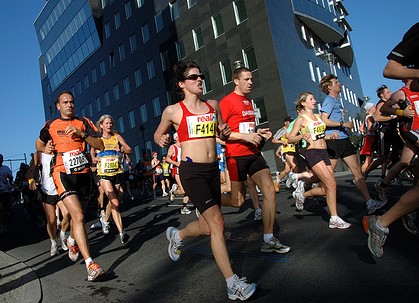
When I was in high school, I ran cross country and track for a couple of seasons. Running was not fun for me back then. I ran to hang out with my friends. I did not run to set any records. I never imagined that I would like running, and I certainly never imagined that I would run a marathon (or three marathons).
Maybe you are like me. You are starting to run longer distances. Your friends are starting to encourage you to run a longer race. Maybe you are even starting to like running for the first time in your life.
Maybe you are thinking about running your first marathon. If this is you, here are some things for you to know:
Ten Things Every Aspiring Marathon Runner Should Know
- Running a marathon is NOT the hardest part of completing your first marathon. Training is actually the hardest part of the whole process. You will need to spend hours and hours logging many miles in order to prepare for your first marathon. If you put the training time and miles in, the marathon will be easier.
- Running a marathon requires unbelievable determination. There were many times during my training and during the actual marathons I wanted to quit. You will most likely experience these same feelings. You need to have focus and determination to get through the whole experience. You can do it. And the marathon experience will teach you a lot about yourself and about life.
- A training program is critical to completing your first marathon. You will not be prepared to run a marathon without a training program. Whether it’s a runner’s group at the YMCA or like Team in Training or it’s simply an on-line or written plan like one from Hal Higdon, I think these programs can help keep one focused on doing the right mileage and exercise and rest to prepare for a longer race. I used a modified Hal Higdon plan when I prepared for all three of my marathons. As a numbers guy, I created spreadsheets to help track by progress through my training. I tracked distance and time, and I tracked details about each of my runs and workouts about how I felt, where I ran, and what the weather was like. It was amazing to watch my mileage build up from week to week. (I’ve been tracking my mileage this year, and I’ve run 653.6 miles in 2014 to date.)
- Accountability is a major help in preparing for your first marathon. I found a friend to train with for many of my shorter runs, and I asked several people to ride their bike alongside me for a few of my longer runs. They carried my water and gel packs, but they also provided conversation to distract me when the mileage was getting the best of me. It also helps to have people who will ask me about my training. I have a few people at work and several friends who held me accountable to completing my training. Even though I’m not marathon training right now, they still keep me accountable to keeping up with my running.
- Cross training and rest are essential to completing your first marathon. These are important to build your strength and cardio capacity without overdoing it. I like to ride my bike as one of my cross training activities, and I would recommend swimming and lifting as great cross training activities. I look forward to my scheduled rest days. These give me a chance to recharge. These are just as important as the exercise days. If you run every day, you will most likely burn yourself out.
- Hydration and fueling is important for completing your first marathon. You should practice hydrating and fueling on your longer training runs. While marathon training, I ran with a belt with four water bottles. I filled one or two of the bottles with an energy drink like Accelerade. Practicing eating a gel shot or energy bar in the middle of your longer runs. Find out what works for you and your stomach. I learned that certain gel packs don’t work with my stomach. It’s best to learn this lesson while training and not during your race.
- Setting goals can be very helpful in completing your first marathon. A first goal would be to make it through your training and to the starting line of the race. Next, your goal should be to finish the race. Then, you can start adding time related goals – overall finish time, negative splits, etc. Finally, you might want to add a stretch goal that you can go after if you’re really feeling good.
- Running a marathon can be expensive. Many marathons carry a fee. These fees cover expenses related to promoting and supporting the race. Be prepared to pay over $100 to enter most marathons. (My third marathon, The Thanksgiving Day Marathon in the Bronx, did not have an entry fee, but this is a rare exception.) You also should account for hotel costs, food costs, and any additional race swag you may want to purchase at the pre-race expo. In addition, you will most likely go through a couple of pairs of shoes during your training. Don’t buy cheap shoes. Take the time to go to a running store. They will do a gait analysis, and they will help you find the shoes that work best for you and your feet. If you live in the Collegeville, PA area, I would recommend you check out the Valley Forge Running Company. They have done a great job supporting the running efforts of our family.
- Running your first marathon will likely lead to other marathons and running adventures. After finishing my first marathon, The Philiadelphia Marathon, I was already starting to think about running a second marathon. There is something strangely habit-forming about this experience. If you are getting ready to complete your first marathon, beware – you will likely consider a second marathon.
- Running a marathon is a lot of fun. Embrace the fun part of running your first marathon. The running community is great – before, during, and after the race. Talk to other runners. Find out what works for them. Ask them about their favorite races. Cherish each moment.
Have you ever run a marathon? What did you learn through the experience?
Have you ever thought of running a marathon? What is stopping you from running your first marathon?
Whether you are a runner or not, I’d encourage you to check out my book, On Track – Life Lessons from the Track & Field. You might learn a little bit about running, and you will definitely learn something about keeping your life On Track.
3 Ways to Stretch Yourself Starting TODAY

The last few days, I’ve been dealing with soreness and tightness in my right leg. I think I may have overdone it a bit on a quick run with my daughter on Sunday. As the soreness begins to subside, I am reminded that I need to keep stretching. Stretching is essential to maintaining flexibility and to recovering more quickly following strenuous activity.
A friend from work heard about my tightness, and he send me over some stretching exercises he has been using for the past year. The exercises can be found on the Runner’s World website by clicking here.
I did these exercises for the first time yesterday morning for the first time following my run. By the evening, I could definitely tell there was a difference. My leg wasn’t as tight as it had been the day before.
It makes me chuckle to realize I’ve been slacking on my stretching following my runs. After all, shouldn’t a guy named Stretch be more diligent in his post run stretching?
Stretching is important for all of us. Obviously, we need to stretch to maintain our flexibility. We also need to stretch ourselves to keep growing and developing into the people we are called to be. With this in mind, here are some suggestions for ways you can stretch yourself this week:
3 Ways to Stretch Yourself Starting TODAY
- STRETCH yourself by reading a book or listening to a podcast. You can stretch your mind by intentionally filling it with good things. There are many great books, blogs, and podcasts worth checking out. I’m currently reading a book called Buy This Land
about Chinese-American who found his calling in Guatemala. What are you reading? How are you stretching your mind?
- STRETCH yourself by trying something new. If you are like me, it’s easy to fall into the trap of routine. It doesn’t have to be skydiving, but it could be something else that stretches you outside your comfort zone. As I’ve mentioned recently, I joined Toastmasters in an effort to work on my public speaking and leadership. This is a new adventure, and it’s definitely stretching me. What is something new you are doing in your life? How is this stretching you?
- STRETCH yourself by serving someone else. We get self-focused. It’s important to get outside your box and to help others. You don’t have to go to Guatemala to serve someone. It could start in your office, your school, your neighborhood, or even your home. Someone needs a helping hand or a kind word, and you have the opportunity to be the helping hand or kind word for this person. What is one way you can serve someone else today? How do you think serving others could stretch you?
This morning, I’ll be out running again. When I finish my run, I’ll stretch again. When this is over, I’ll be finding ways to keep stretching myself throughout the day. How about you?
What is one thing you will do TODAY to stretch yourself?
How Do I Get My Life On Track? Interview with Matt McWilliams

Yesterday, I had the privilege of being interviewed by Matt McWilliams over at his site. I’d greatly appreciate it if you headed over to his site to listen to the interview. Also leave a comment to join the conversation and for a chance to win a copy of On Track.
Click here to head over.
When was the last time you had an interview?
On Track Kindle Version Deal Starts Today

Today starting at 8AM (Eastern Time), the Kindle version of On Track – Life Lessons from the Track & Field is being at a reduced price for a limited time. The deal will not last long, so you want to act fast. Here’s the scoop.
Starting at 8AM today (5/20/2014), the Kindle book is available for $0.99.
On Thursday (5/22/2014), the Kindle price will go up to $1.99.
On Saturday (5/24/2014), the Kindle price will go up to $2.99.
And on Monday (5/26/2014), the Kindle price will go back to the regular price of $3.97.
Spread the word to your family and friends. Help others get a copy of On Track for Kindle at a reduced rate. Let’s see if we can help others get “On Track!”
Here’s what J.C. Sheridan had to say about On Track: “Jon gives a fun and encouraging read that relates running to issues we face. Each chapter as questions at the end which gives the reader a chance for personal reflection. This book is worth the read and can be used by an individual or small group.” (as reviewed on Amazon.com)
Do you read book’s on Kindle or another digital reader? Do you prefer digital books or physical books? What is the last book you read?