
The Discipline Of Boundaries


Daring to set boundaries is about having the courage to love ourselves, even when we risk disappointing others.
Brene Brown
When I arrived at work yesterday morning, I took some time to write a “To Do List” on the white board behind my computer monitors. The list helped provide a structure – a “document” – of some of the things I needed to get done yesterday. As an operations manager at my company, my days can become chaotic as I deal with the natural interruptions of helping my team members. Providing support to my team members is part of my job, and it comes with some disruption. But there are also many things I have to get done in addition to the things that come up in the spur of the moment. My white board “To Do List” is one of the tools I use to stay focused and productive throughout my day. Before I left the office last night, I erased my white board and started my “To Do List” for today.
Yesterday, one of my team members came to me for some advice (and help). He has several projects in his backlog that require his project management attention and design engineering attention. I remember the feelings I had when I was in a similar position many years ago. I often thought “Where do I start?” and “How do I keep all these plates spinning?” My team member constantly gets phone calls from customers and installation staff with “urgent” requests for assistance. This is a problem many project managers face, and the problem has only gotten worse in today’s “Gotta Have It Now” world where we are all connected instantaneously through smart phones and email. We have conditioned our customers to expect an immediate response. This isn’t all together bad. After all, we want to bring a superior level of customer service to our customer base. However, without appropriate boundaries, we set ourselves up for failure. We will never accomplish the important things, because we are busy attending to the urgent things.
You may disagree with me, but I suggested to my team member that he shut his email and his phone off for a period of time to focus on some of the things on his “To Do List” that needed attention. Before lunch and before the close of the day, he can turn them back on to check in on any messages that he may have received. This will give him the chance to get work done and then to address any “urgent” needs of his customers.
We all need boundaries in our lives. As a matter of fact, I would suggest we need to practice the discipline of boundaries in our daily lives. Boundaries mean thinking through the list of goals you have and creating fences around your time and your commitments to make sure you can hit these goals. Boundaries also protect us from going to unhealthy places in our lives.
I would challenge you to consider what boundaries you need to set in your life. What needs to go? What needs to stay?
How would your world be different if you made the decision to practice the discipline of boundaries? How have boundaries made a difference in your life?
The Discipline of Laughter – 4 Ways To Develop The Discipline Of Laughter


A day without laughter is a day wasted.
Charlie Chaplin
Life can be challenging. In fact, life can be downright depressing.
We have bills to pay. We have deadlines to hit. We have demands crushing us in from every side. With all this pressure, it sometimes seems as though it would be easier to crawl in a corner and give up.
But we are called to so much more.
Life has so much to offer us if we learn to smile, if we learn to laugh, and if we learn to push ahead with a positive attitude.
I’ve always been known as a pretty serious individual. I admittedly don’t smile enough. I too often have tunnel vision on what I’m trying to accomplish (or what I’m trying to get through). The interesting thing is that I also have a sense of humor. I’d like to think it comes through my Grandpa Stolpe who also had a corny sense of humor.
Humor is a good thing. We all need to laugh.
Developing the discipline of laughter is important to seeing the bright side of every obstacle. It’s important to help us through when we can’t carry on. And it’s good for the soul.
Proverbs 17:22 says:
“A cheerful heart is good medicine, but a crushed spirit dries up the bones.”
I don’t know what you are going through, but I’m guessing you could use some laughter in your life. Here are some ways to develop the discipline of laughter in your life:
4 Ways To Develop The Discipline Of Laughter
- Enjoy a funny movie or funny television show from time to time. There are so many great comedies out there that will bring a smile to your face. Here are some of my favorites: Grumpier Old Men, Mrs. Doubtfire, Happy Gilmore, Cheers, and Bill & Ted’s Excellent Adventure. What funny movies or television shows make you laugh?
- Attend a stand-up comedy night. I’ve gone to a few of these, and they make me role. One word of caution, some of the comedy can be pretty raunchy, so be careful with which comedy night you decide to attend. I’ve attended a couple of these nights with Michael Jr., Tim Hawkins, and Gabriel Iglesias.
- Hang out with friends who make you laugh. There are friends who drag you down, and there are friends who lift you up. Choose wisely, and make a habit of hanging around with friends who encourage you to laugh.
- Watch other people. People do and say the funniest things. Sit on a bench in the mall. Attend a kids sporting event. Learn to observe what is going on around you. You will learn, and you will laugh.
How would your world be different if you made the decision to practice the discipline of laughter? How has laughter made a difference in your life?
The Discipline Of Taking Inventory On Our Lives


We have so much room for improvement. Every aspect of our lives must be subjected to an inventory… of how we are taking responsibility.
Nancy Pelosi
In fifteen days, I will be leaving for my annual pilgrimage to the Poconos with a few of my friends. This is a tradition I have been keeping for over twenty years. Each year about this time, I start reviewing my packing list. I start with last year’s spreadsheet. I erase the things I didn’t need last year, and I add new things that I think will be useful this year. One of the things on my list is my tackle box. This week, I’ll be doing inventory on my fishing gear. I’ll take the opportunity to throw out a few items, and I’ll consider a few fishing lures and accessories that I think will enhance my fishing experience on this year’s trip.
Taking inventory on my fishing gear reminds me about another important stretching discipline.
It’s important to do inventory from time to time in our lives.
The discipline of taking inventory on our lives is a healthy opportunity to analyze our priorities, to consider our past, and to reset our vision for the future.
Many of us reserve this discipline for the new year (in late December or early January), but this is a discipline we need to practice with greater frequency.
I challenge you to take inventory on your season each quarter. I challenge you to take inventory on your month every month. I challenge you to take inventory on your week each weekend. And I challenge you to take inventory on your day at the end or beginning of each day.
Teach us to number our days, that we may gain a heart of wisdom. Psalm 90:12 (NIV)
If I could rephrase this verse, it would say: We should practice the daily discipline of taking inventory on our lives, so we can stretch ourselves and grow in wisdom.
How would your world be different if you made the decision to practice the discipline of taking inventory on your life? How has taking inventory on your life made a difference in your life?
The Discipline Of Rest – For When You Feel Weary


Rest when you’re weary. Refresh and renew yourself, your body, your mind, your spirit. Then get back to work.
Ralph Marston
I came home last night from work, and I felt weary.
Do you ever feel this way?
Weariness happens in this human life. We all deal with it from time to time. Part of it comes from our own misguided efforts to climb the ladder or to keep up with the Jones’. And some of it comes from the trials and tribulations of life.
Whatever the case may be, I think we must take time to refresh and renew ourselves. We must learn the discipline of rest. For only when we rest (and find true rest in the Completer of Life) can we overcome weariness in our pursuit of stretching and in our pursuit of becoming effective – effective leaders, effective employees, effective friends, and effective family members.
As I was thinking about the subject of weariness, these passages came to mind. May they encourage you to have hope when the weariness of life has you down.
He gives strength to the weary and increases the power of the weak. Even youths grow tired and weary, and young men stumble and fall; but those who hope in the Lord will renew their strength. They will soar on wings like eagles; they will run and not grow weary, they will walk and not be faint. Isaiah 40:29-31
” I will refresh the weary and satisfy the faint.” Jeremiah 31:25
“Come to me, all you who are weary and burdened, and I will give you rest. Take my yoke upon you and learn from me, for I am gentle and humble in heart, and you will find rest for your souls. For my yoke is easy and my burden is light.” Matthew 11:28-30
Let us not become weary in doing good, for at the proper time we will reap a harvest if we do not give up. Galatians 6:9
How would your world be different if you made the decision to practice the discipline of rest? How has resting made a difference in your life?
To The Rescue


I’d like to rescue people in trouble, like Superman.
Sheridan Smith
When I was a toddler, my parents lived in the town of Carol Stream, IL. Carol Stream is a western suburb of Chicago. We lived in a three bedroom ranch home with a crawl space underneath the house. I have fond memories of climbing the giant willow tree in the backyard of this house. What I don’t remember is the time our neighborhood flooded. The water on our street kept going up and up and up until it crested at the floor level of our house.
It wasn’t a safe condition, and there wasn’t an easy way for us to get to higher ground. My Mom, my Dad, our dog, and I were trapped inside our house uncertain of the future. Would the water keep rising? Would we have enough food to last a few days? Would we be safe? (I don’t remember having these thoughts, but I’m sure my parents must have been very scared. After all, this was long before the days of the cell phone.)
As the water reached the high point, a rescue team showed up at our front door in a boat. Our family was taken to higher ground where my Grandpa was waiting for us to take us to his house which was not endanger of flooding.
We all need to be rescued.
You may not realize it, but you are either on the edge of incredible danger or you once were at some point in your life.
I was listening to the story of a friend the other day who was recovering from a very deep valley in his life. As I heard his story, I realized I how blessed I was to be where I am today. I also realized how close I was to my own deep, dark valleys in the journey of my life.
For one reason or another, I have been protected. This doesn’t mean I can let my guard down. It doesn’t mean I haven’t faced trials and tribulations of my own. It does mean I should be thankful for the blessing of being rescued.
I think and talk a lot about living a life on mission – about having a mission mindset.
This has to be our natural response to the rescue we have experienced in our own lives.
In John 3:16, Jesus says “For God loved the world so much that He gave His one and only Son, and whoever believes in Him will not perish but will have eternal life.” (my own paraphrasing)
God sent His Son on a rescue mission for you and for me.
Because we have experienced rescue in our lives, we should have a mindset to help rescue others.
How have you experienced rescue in your life?
How Discipline Helps Keep You Going When You Feel Like Giving Up


Good habits formed at youth make all the difference.
Aristotle
I had every intention of sleeping in last Thursday morning. I’ve been getting up every day at 4:00 AM for a while (on weekdays). I’m typically at the gym by 5:00 AM. When I went to bed Wednesday night, I set my alarm clock back to 5:15 AM, so I could sleep in a while 75 minutes.
I wish I could tell you my internal alarm clock did the same thing. At 4:00 AM, I was wide awake. I looked at the clock and tried to go back to sleep. It didn’t work. At 4:30 AM, I was still awake, and I thought to myself, “No one is going to go to the gym for me. If I don’t go someone else is getting ahead of me.”
This is where discipline kicks in. Even when you feel like giving up or just taking a break, discipline spurs you on. It reminds you to keep going, and it even carries you when you feel like you can’t do it anymore.
When you consider the disciplines or habits you want to keep, consider wisely. These decisions along with your initial willingness to act will carry you along the journey of life.
Choose your rut wisely, because you will be in it for a long, long, time.
Choose disciplines for your life that will stretch you and help you grow.
What disciplines do you need to develop in your life? What disciplines in your life have helped you grow? How have you seen disciplines or habits carry you when you didn’t feel like moving forward?
The Discipline Of Taking Risks


Only those who will risk going too far can possibly find out how far one can go.
T. S. Eliot
When was the last time you took a risk?
What ultimately led to you taking the risk?
I don’t know about you, but I’m not a big risk taker. In fact, my natural inclination away from risk seems to grow more and more as I age.
I was listening to a podcast the other day, and someone said “The biggest risk is not taking a risk.”
Do you agree or disagree with this statement?
Being risky doesn’t have to mean doing something stupid, but it does mean getting outside your comfort zone. It could mean taking a calculated risk. According to dictionary.com, a calculated risk is:
a chance of failure, the probability of which is estimated before some action is undertaken.
This type of risk requires discipline. If we don’t learn to take calculated risks from time to time we will live a life of regret and wonderment. We’ll be left to wonder what could have been.
Three years ago, I was imprisoned by a fear of failure and a fear of the unknown. I missed out on many opportunities because I lacked the courage and faith to step into the unknown. This is about the time my friend, Adam Flora, asked me to join him on a missions trip to Guatemala. It would have been much easier to simply say “no” than to go through the anxiety of saying yes and worrying about the potential outcomes.
Fortunately, I decided to take the risk. I calculated the chance of failure, and I made the leap of faith to go along on the adventure of a lifetime. This trip changed my perspective on short-term missions, on Guatemala, and on the importance discipline of taking risks.
Several years ago, Jason Fountain guest posted on my blog, and he shared an interested story in his post. Here’s an excerpt from that post:
John Maxwell relates a story shared by sociologist Anthony Campolo. Campolo tells about a group of 50 people over the age of 90 years old who were asked one question: If you could live your life over again, what would you do differently?
The question was open-ended and the people’s answers were varied. However, three ideas consistently emerged.
1. If I had it to do over again, I would reflect more.
2. If I had it to do over again, I would risk more.
3. If I had it to do over again, I would do more things that would live on after I am dead.
Number two on this list was all about risk. As I watch my daughter preparing for college, I am reminded how quickly life moves forward. I don’t know about you, but I don’t want to end up like the people in Tony Campolo’s survey. When I get to the end of my life, I want to know for certain I lived my life to the fullest. While it may stretch me, I want to practice the discipline of taking risks.
How about you?
How would your world be different if you made the decision to practice the discipline of taking risks? How has risk-taking made a difference in your life?
The Discipline of Discipline – Why We All Need A Little Discipline In Our Lives


Discipline is the bridge between goals and accomplishment.
Jim Rohn
When I played basketball in junior high, my coaches made me take hundreds of free throw shots during practice. I would take them at the beginning of practice. I would take them in the middle of practice. And I would take many more at the end of each practice. If you were a professional basketball player, you would most likely take thousands of free throw shots in practice.
Why?
Players take thousands of free throw shots in practice to prepare for free throw situations in games. When you practice the free throw over and over again, these shots become second nature. You know the feel of the shot. You release the ball the same way each time. It rotates off your fingertips and into the air toward the basket the same way each time.
It takes discipline to take thousands of shots during practice. And it’s a discipline that pays off when it really matters.
I am part of a weekly men’s group. More than once, I have been described by the other men in the group as being a person of discipline. They know I get up at 4 AM every morning. I spend time in God’s Word every day before I do anything else. I go to the gym and am exercising by 5 AM. I eat the same thing for breakfast every day. For some people, these disciplines seem impossible and a bit crazy. For me, they seem natural. These are all part of my normal rhythm of life.
The past several days, I have been posting about various disciplines – the discipline of showing up, the discipline of being present, the discipline of celebration, the discipline of unplugging, the discipline of gratitude, and others.
Why do I write about these disciplines?
Hopefully, I can encourage you, the reader, through these posts to pick up a new discipline.
But just as important, these are the disciplines that stretch me. These are all disciplines that don’t yet come natural to me. I want to keep growing. I want to become the person I was created to be. I want to live life to the fullest. In order to hit these marks, I recognize the need for these other disciplines in my life. Just like Paul, I want to reach the finish line of life and hear “Well done.” Here’s what Paul had to say about self-discipline in his first letter to the Corinthians:
Do you not know that in a race all the runners run, but only one gets the prize? Run in such a way as to get the prize. Everyone who competes in the games goes into strict training. They do it to get a crown that will not last, but we do it to get a crown that will last forever. Therefore I do not run like someone running aimlessly; I do not fight like a boxer beating the air. No, I strike a blow to my body and make it my slave so that after I have preached to others, I myself will not be disqualified for the prize. I Corinthians 9:24-27
What discipline do you need to inject into your life to stretch you and to qualify you for the prize?
(Photo credit: crypto via Flickr)
The Discipline Of Gratitude

Gratitude can transform common days into thanksgivings, turn routine jobs into joy, and change ordinary opportunities into blessings.
William Arthur Ward
Be honest with me for a moment. Do you struggle with gratitude?
Seriously, when was the last time you expressed your appreciation to someone (and really meant it)?
You would think that gratitude would come naturally to all of us. After all, we have a lot for which to be thankful. We woke up this morning. We probably ate three meals yesterday. We are so blessed, and yet, we too often forget to say thank you.
The past several days, we have been discussing stretch disciplines. These are disciplines that will stretch you and make you a better person.
We would all miss out if we left out the discipline of gratitude.
Yes. I believe gratitude requires discipline. I believe it’s an attitude and a skill we can develop with practice.
Here are three simple ways to develop the discipline of daily gratitude in your life:
3 Ways To Develop The Discipline Of Daily Gratitude
- Keep a thankful journal. Thanks to my wife, we have a journal on our kitchen table. Each night when we sit down for dinner, each of us takes turns writing down one thing for which we are grateful.
- Say “Thank you” at least once a day. It helps to actually tell someone you appreciate them or something they did.
- Join the “Thank You Revolution.” I’ve talked about this before. Matt McWilliams started the Thank You Revolution a couple of years ago. As part of the revolution, he encourages others to write at least once thank you note every week (typically on Thursday). For more information on how to join the TYR (Thank You Revolution), click here.
How would your world be different if you made the decision to practice the discipline of gratitude? How has gratitude made a difference in your life?
The Discipline Of Unplugging

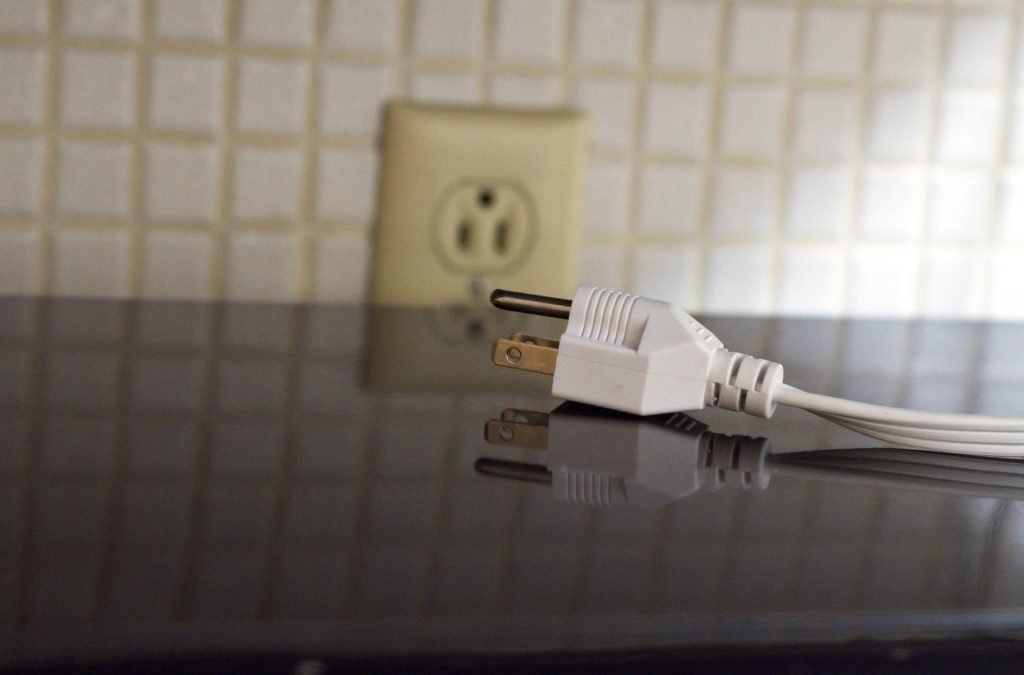
In barely one generation, we’ve moved from exulting in the time-saving devices that have so expanded our lives to trying to get away from them – often in order to make more time. The more ways we have to connect, the more many of us seem desperate to unplug.
Pico Iyer
This weekend was jam-packed. I don’t think I stopped other than to sleep for a few hours each night.
Saturday morning, we drove down to Kennett Square to see Hannah run the mile at the Nike Unionville Track & Field Invitational Meet. This meant we spent an hour in the car each way, and we hung out in the cold stands watching a few of the events before and after Hannah’s race. When we arrived home, we did a little bit of work in the yard before heading over the New Hope to watch Isaac perform in the Cavalcade of Bands Jazz Championships. This meant we spent an hour in the car each way, and we hung out in the New Hope Solebury High School auditorium watching the other bands. Isaac didn’t arrive home until well after midnight which meant I was up later than normal as I waited to pick him up. Sunday after church, we headed over to Isaac’s annual piano recital. Then it was on to youth group for the evening.
Like I was saying before, I really didn’t have any downtime.
It was great to participate in each of these events and activities, but it is also important to slow down. Part of slowing down means unplugging. We don’t unplug enough in today’s fast-paced, have-to-stay-connected world. I think there is something healthy about practicing the discipline of unplugging.
Here are three important reasons to unplug:
3 Reasons to Practice the Discipline of Unplugging
- Unplugging provides a necessary break. I’ve been going a million miles a minute. I work hard at work, and I do a lot of things outside of work. I run. I write. And I keep up with a busy family. I stay connected to a world of emails, blog posts, and social media connections. I don’t give me self a chance to rest, and I’m guessing I’m not alone. We all need the opportunity to rest. Sometimes this means disconnecting from the world – even if it’s just for a day.
- Unplugging provides an opportunity for new inspiration. While we are racing from one thing to the next, we are missing out on the beautiful world God gave us. There’s inspiration right in front of our eyes. We just need to stop and look from time to time.
- Unplugging provides time to reconnect with what is important. The rush of life can sometimes take us away from what is important. The computer world and the world of television can become consuming. We need to put it in perspective.
I challenge you to unplug. It may seem hard at first, but you can start small. Start with a minute each hour. Then try an hour each day. When you have this down, unplug for a day each week. Finally, unplug for a weekend or even a week. I guarantee you’ll be refreshed, inspired, and reconnected.