
One Way To Become A Better Coach For Your Team


A month ago, I attended the Foundation Leadership Program with 22 other colleagues from North and South America. (To read more about my experience, click here.) It was the best week I’ve had in my 20+ years with the company. One of my biggest takeaways from the experience relates to how I coach others.
Coaching others isn’t about giving the answers.
Coaching is about helping others discover the answers for themselves.
I’m a fixer, so I naturally want to dive in and figure out the exact steps necessary to overcome a challenge. Here’s the problem: Our team members don’t need a fixer. They don’t need someone else to do the work for them. They don’t need someone to do the thinking for them. When we as leaders jump in to fix things, we take away valuable opportunities for our team members to think for themselves and to take action.
As leaders, we need to give our team members the opportunity to learn, to think, to take action, to succeed, and to fail.
To effectively coach our team members, we should use the GROW Model for handling the discussions with our team members.
Here’s what Wikipedia has to say about the GROW Model:
The GROW model (or process) is a simple method for goal setting and problem solving. It was developed in the United Kingdom and was used extensively in corporate coaching in the late 1980s and 1990s.
There have been many claims to authorship of GROW as a way of achieving goals and solving problems. While no one person can be clearly identified as the originator, Graham Alexander, Alan Fine, and Sir John Whitmore all made significant contributions. Max Landsberg also describes GROW in his book The Tao of Coaching. Other similar models include collaborative helping maps in family therapy and Gabriele Oettingen‘s WOOP model.
This is what I learned in my leadership program:
- G stands for Goal. When coaching your team members start with the goal. The goal may change as the discussion moves along, but it is the starting point for your coaching discussion.
- R stands for Roadblocks. It’s helpful to identify the things that are standing in the way of achieving your goal.
- O stands for Options. What options does one have to overcome the roadblocks that stand in the way of achieving the goal? When discussing the options, it may become obvious that the goal needs to be re-calibrated. When the goal shifts, we have to go back and look at the roadblocks standing in the way of achieving the new goal.
- W stands for Will. Is your team members willing to take action on the identified options? If the answer is no, it’s time to go back to the drawing board (or end the discussion). If the answer is yes, the discussion transitions into action.
Who are you leading? Maybe you are leading in your business or place of employment. Maybe you are leading in your community. Or maybe you are leading in your home.
Whatever the case may be, it’s time for you to help your team members GROW (or STRETCH as I like to say). Learn to become a better coach, and discover a path to greater success among those you lead.
What methods have you used to help your team members tackle their problems? What step(s) do you need to take TODAY to help your team members? Share your thoughts in the comments.
If you’re looking for more ways to STRETCH yourself, sign up TODAY for the 7 Week Stretch Challenge:




 Recently, I had the privilege of being on the “Hot Seat” in my Mastermind Group. When it’s my turn to be on the Hot Seat, other members of the group provide input on a business problem, challenge, or idea I am facing. I’ve had the opportunity to be on the Hot Seat before, but this time was different. My fellow mastermind group members encouraged me and pushed me to consider STRETCHING myself even further in my pursuit of helping others. And the conversation demonstrated to me the power of plugging into others who can collaborate with you.


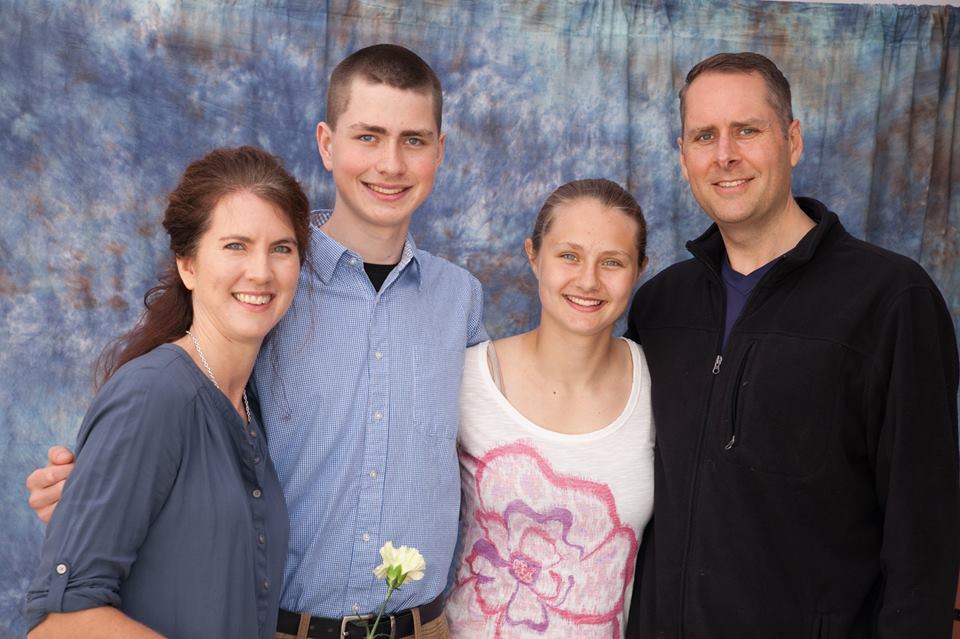


 Hannah is on track to graduate from high school in June. Last week, she completed her last official day of classroom time, and she moves into a three-week period of career study. She will be working alongside a Spanish teacher at one of the area elementary schools. I’m sure this will give her fantastic opportunities to see what it might be like to be a Spanish teacher.
 Hannah’s moving into a period of time in which we celebrate the past and look ahead to the future. She has received a few scholarships already, and we’re looking forward to celebrating the end of her high school career at several picnics and parties over the next few weeks. It’s just hard to believe I have a child old enough to graduate from high school. It seems like yesterday, Leanne and I were bringing Hannah home from the hospital for the first time. We are proud of who she has become.