
Book Review: SELAH by Joseph Iregbu

What does SELAH mean? I’ve seen the word before. If you read the Psalms, SELAH is a word often found at the beginning of a Psalm, and the word is sometimes used in the middle of a Psalm as if to break up the passage.
I looked up SELAH in a couple of dictionaries, and they both indicated that the translation of this Hebrew word wasn’t completely clear. I get the picture that SELAH is meant to indicate pause or break. It’s a call to attention – “stop, be alert, pay attention!”
My friend, Joseph Iregbu, recently wrote a new 90-day devotional eBook called SELAH. In the book, readers are encouraged to stop for a moment and to pay attention to the grace and hope in our lives. In a world where we are bombarded with messages of despair, destruction, and ridicule, SELAH refreshes the sole with brief, daily messages that point readers to the grace and hope that comes as we put our faith in God.

If you are looking for a way to rekindle your faith – if you are going through a time of discouragement – if you simply need something new in your daily experience to point you to the truths of grace and hope, I’d recommend that you pick up a copy of SELAH. The book is available on Amazon starting tomorrow. For more information on SELAH, check out the book’s website by clicking here.
When was the last time you stopped and paused long enough to be refreshed and to hear from God?
(Note: I am part of the launch team for SELAH. I received this book for free. As part of the launch team, I was not required to write a positive review for this book. I truly enjoyed the book, and I’ve even used it to lead devotions for my small group.)
Love Works Wednesday Linkup Week 7 – Forgiving
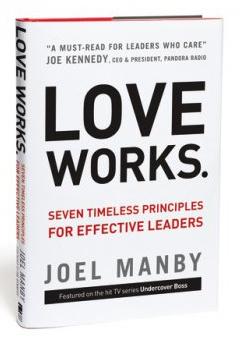
We continue the Wednesday series based on Love Works by Joel Manby. In today’s post, Bill Grandi (The Cycleguy) and I are discussing the eighth chapter (Forgiving: Release The Grip Of The Grudge). Check out Bill’s take by clicking here.
As a reminder, Manby’s premise is that leadership is best when it comes from a position of agape love based on I Corinthians 13 (“…[love] keeps no record of wrongs”). Since I already read the book, I thought it would be interesting to highlight some of the sentences I underlined when I read the book initially:
- “I am not suggesting that we toss out our organizational standards and goals – simply that we keep our hearts soft enough to be open to forgiveness.” (p. 140)
- “Forgiveness releases you, not the person you are forgiving.” (p. 146)
- “An act of forgiveness is a pebble in the pond, and the ripples can continue far beyond our ability to know.” (p. 146)
Forgiveness is an interesting topic when it comes to the marketplace. So much of the corporate world is cut-throat and leaves little time for forgiveness and restoration. If something or someone isn’t working out, they are quickly discarded. And if someone wrongs the company, they are removed and their reputation is run through the mud.
As a manager in the corporate world, I see both sides of the forgiveness fence. I have a responsibility to be a good steward of the company’s resources, and I am tasked with making decisions for the betterment of the company. I am sometimes faced with employee issues that require tough decisions, disciplinary action, and removal from the company. I also have a responsibility to my team. I need to support them, to help them succeed, and to push them to improve performance.
I’m proud to work at my company and in my department. Within the department management team, I have seen a desire for restoration whenever possible. In the restoration process, forgiveness happens to the extent that an employee is encouraged to progress past previous lapses. When an employee is open to personal changes, it is often possible to retain an employee, to forgive them, and to restore them to good standing.
Obviously, there are times when this isn’t possible. If an employee is intentionally harming the company or threatening the well-being of fellow employees, it may be necessary to release an employee from the company. Even when this happens, we can learn to forgive.
Failure to forgive can leave us crippled by the past. How we respond with forgiveness impacts our own leadership in the office, at church, or in the home. As leaders, we are an example. I want to model forgiveness for those I lead.
Over the next two weeks, Bill and I will continue to explore love based leadership. I hope you’ll read along, jump into the comments, and maybe even change the way you lead. Until then, consider getting a copy of Love Works for yourself, and see how this book might change you and your leadership.
What is one thing you can do differently this week to become a more forgiving leader? How have you been led with forgiving, love-based leadership?
Truth: Love Works Wednesday Link Up Week 6 – Truthful
Today is Day 3 of Truth Week here on The Stretched Blog, and we continue the Wednesday series based on Love Works by Joel Manby. In today’s post, Bill Grandi (The Cycleguy) and I are discussing the seventh chapter (Truthful: Define Reality Corporately And Individually). Check out Bill’s take by clicking here.
As a reminder, Manby’s premise is that leadership is best when it comes from a position of agape love based on I Corinthians 13 (“…[love] rejoices with the truth”). Since I already read the book, I thought it would be interesting to highlight some of the sentences I underlined when I read the book initially:
- “If we love our team, it is critical that their talented voices are heard and their opinions considered.” (p. 118)
- “Most people don’t leave because of poor performance; they leave because they don’t feel valued.” (p. 118)
- “Leading with love also means doing the best thing for the organization to protect or add as many jobs as possible for those we care about.” (p. 118)
- “A healthy organization does the most good for the greatest number of people.” (p. 118)
- “[People] need truthful, direct feedback and follow-up to help them refine their performance and attitude to become fantastic – not just good – leaders.” (p. 121)
- “Leading with love means caring enough about an individual or a team to give and solicit truthful feedback. When leaders provide their teams with the truth about their performance as well as the tools to be successful, regardless of personal feelings, this is a sure sign of leading with love.” (p. 122)
- “There is almost no greater gift in life than honest friends, and all leaders need to hear the truth about who they are and the nature of their strengths and weaknesses.” (p. 130) [Great follow-up to yesterday’s post – Truth: Truth Or Dare.]
- “Leading with love begins with an honest assessment of yourself, and self is the one person you can never be absolutely honest with.” (p. 130) [Ties into Monday’s post – Truth: You Can’t Handle The Truth.]
Getting truthful feedback and giving truthful feedback is essential to leading well.
Leaders who hole themselves up in their “ivory” offices or cubicles without mingling with their team will soon lose touch with the truth they need to hear, and they’ll fail to get their messages of truth across with any kind of effectiveness.
Honestly, I have felt this way at times in my own leadership in the corporate world. Policies and procedures easily become the focal point instead of people. Our leadership loses its way when policies push aside people. This is the same for companies, schools, churches, and government.
When it comes down to it, leaders must open their ears to hear what their employees have to say. They must open their mouths to extend truthful feedback to their team members. And they must take action in a way that demonstrates they have listened and in a way that models desired behavior.
Here are five simple suggestions for encouraging truth in your organization:
- Provide a platform for team members to voice their ideas, concerns, and questions. This could be an employee survey, a department meeting, a suggestion box, or a one-on-one meeting. As Manby shares in this chapter, this step is absolutely critical so our team members know that they are valued.
- Be truthful with your team members. On a broader level, share details that impact the whole team. This could be done at a Town Hall meeting, a department meeting, or through an e-mail. On an individual level, meet with team members on a regular basis. Use this time to provide updates on performance progress and to address any specific corrections. Don’t shy away from these opportunities as they provide an opportunity to help team members grow and develop.
- Take action and draw team members into the solution. When ideas or problems come up that require action, get your team involved to brainstorm ideas and to implement steps for correction or improvement. This will show the team that you care and it will help team members to embrace the solution.
- Don’t rest on your laurels. Just because something worked at one time doesn’t mean it will continue to work without attention. Being true to our organizations, team members, and to ourselves requires continuous monitoring and continuous improvement.
- Document. Document. Document. It’s so important to document feedback to and from team members. This is one method for holding each other accountable to actions required of the truths uncovered along the way. Following up with e-mailed meeting minutes is a great way to capture truth and to make sure everyone is in agreement.
Part of leading with love involves leading with truthfulness. As leaders, we have a tremendous opportunity and responsibility to make sure truth prevails in our organizations.
Over the next three weeks, Bill and I will continue to explore love based leadership. I hope you’ll read along, jump into the comments, and maybe even change the way you lead. Until then, consider getting a copy of Love Works for yourself, and see how this book might change you and your leadership.
What is one thing you can do differently this week to become a more truthful leader? How have you been led with truthful, love-based leadership?
Love Works Wednesday Link Up Week 5 – Unselfish
Today, we continue the Wednesday series based on Love Works by Joel Manby. In today’s post, Bill Grandi (The Cycleguy) and I are discussing the six chapter (Unselfish: Think Of Yourself Less). Check out Bill’s take by clicking here.
As a reminder, Manby’s premise is that leadership is best when it comes from a position of agape love based on I Corinthians 13 (“…[love] is not self-seeking”). Since I already read the book, I thought it would be interesting to highlight some of the sentences I underlined when I read the book initially:
- “Being unselfish doesn’t mean thinking less of yourself – it means thinking of yourself less.” (p. 88)
- “If we are unable to be selfless in our personal life, we are unlikely to be unselfish as a leader, and unselfishness is a key component of leading with love.” (p. 93)
- “The crazy thing about giving is this: when we give, we never know what might happen. Often giving provides the giver with unexpected blessings – as well as making the world a better place.” (p. 95)
- “Being unselfish isn’t just for individuals – it’s for organizations too. As leaders we’ve been blessed with resources, and part of our responsibility is to pass it on or “share it forward.” The gift of leadership brings with it the awesome responsibility of giving properly of our time and resources but also of being a steward of giving for the organization.” (p. 98)
- “Giving time and talent to develop internal leaders is another important reflection of being unselfish in an organization.” (p. 100)
- “If we become numb to the needs of our employees, their performance and ability to satisfy our customers will diminish over time, compromising the very “numbers” we were obsessed with.” (p. 101)
- “’Do for one what you wish you could do for everyone.'” (p. 102)
- “Unselfishness sometimes means letting others lead.” (p. 106)
This is a tough one. I don’t know many people who aren’t at least a little self-centered. We live in a “look at me” culture. Most of us have tunnel vision on what is best for ourselves.
We don’t put others first. It takes focus and discipline to look past our own desires to the needs of others.
And it doesn’t take long to see this in the world around us. Sports stars on the field or on the court pound their chests after a play as if to say “Look at me; I’m the man.” Most politicians are looking out for their own interests instead of finding ways to compromise for the betterment of society as a whole. And in the business world, it’s a dog eat dog world where people climb over one another to get to the top even if it means stepping on someone or even ruining someone’s career.
I probably shouldn’t state this as a blanket statement as I have met tremendous people who clearly have the interest of others in mind, but this doesn’t seem to be the norm.
I’m guilty of being selfish, and I bet if you’re honest with yourself, you’re guilty of selfishness as well. I don’t want to be this way. I want to be known for thinking of others first. I want to treat others the way I would want to be treated. So how do we do this? Instead of coming up with a seven step process for becoming unselfish, I think it really comes down to one thing:
Follow Jesus.
That’s it. You see he was a servant. He put others first. He put the interests of others ahead of his interests. He was unselfish.
Therefore if you have any encouragement from being united with Christ, if any comfort from his love, if any common sharing in the Spirit, if any tenderness and compassion, then make my joy complete by being like-minded, having the same love, being one in spirit and of one mind. Do nothing out of selfish ambition or vain conceit. Rather, in humility value others above yourselves, not looking to your own interests but each of you to the interests of the others.
In your relationships with one another, have the same mindset as Christ Jesus: Who, being in very nature God,
did not consider equality with God something to be used to his own advantage;rather, he made himself nothing by taking the very nature of a servant, being made in human likeness. And being found in appearance as a man, he humbled himself by becoming obedient to death—even death on a cross! Therefore God exalted him to the highest place and gave him the name that is above every name, that at the name of Jesus every knee should bow, in heaven and on earth and under the earth, and every tongue acknowledge that Jesus Christ is Lord, to the glory of God the Father. Philippians 2:1-11
And this is how we should lead and live our lives. If we follow Jesus in selfless living, we will change our homes, our schools, our places of employment. And we will change the world.
Over the next four weeks, Bill and I will continue to explore love based leadership. I hope you’ll read along, jump into the comments, and maybe even change the way you lead. Until then, consider getting a copy of Love Works for yourself, and see how this book might change you and your leadership.
What is one thing you can do differently this week to become a more unselfish leader? How have you been led with selfless, love-based leadership?
Love Works Wednesday Link Up Week 4 – Trusting
Last week, I continued a Wednesday series based on Love Works by Joel Manby. (Click here to read my first post in this series, click here to read the second week’s post based on Patient Leadership, and click here to read last week’s post which focuses on Kind Leadership). A blogging friend of mine, Bill Grandi (The Cycleguy), recently challenged readers to consider linking up with him for several weeks with posts related to this excellent leadership book. To read Bill’s introductory post for this series, click here. And to read his post from last two weeks, click here and here.
For today, Bill and I (and anyone else who’s linking up with us) will be posting about the fifth chapter (Trusting: Place Confidence In Someone). Check out Bill’s take by clicking here.
Manby’s premise is that leadership is best when it comes from a position of agape love based on I Corinthians 13. Since I already read the book, I thought it would be interesting to highlight some of the sentences I underlined when I read the book initially:
- “When you don’t listen to others, it sends them a very negative and unflattering message.” (p. 72)
- “Interrupting is a sign of distrust.” (p. 73)
- “1. Don’t say, ‘I understand how you feel, but …’ 2. Instead summarize what you heard. 3. If you go in a different direction, articulate why.” (p. 73-74).
- “Listening well is critical because it demonstrates trust and builds a team’s sense of camaraderie and cohesion.” (p. 74)
- “One of the best ways a leader can demonstrate trust and respect is to listen to and involve team members in the decisions that affect them.” (p. 76)
- “If we want our organizations to display trust and respect, we need to make sure everyone is involved in the decisions that affect them. The best decisions are always made with, not for, and showing that kind of trust is a true attribute of leading with love.” (p. 78)
- “Let others make the decisions for which they are responsible.” (p. 84)
- “Avoid overruling decisions that have been made.” (p. 85)
Trusting our teams and listening to our teams can be a real challenge. I experience that as a leader at my job and as a leader in my home. It’s easy to fall into the trap of doing things myself, because I know it will be done right. It’s also easy to fall into the mode of a benevolent dictator – “I’ll make the decisions. You’ll listen and follow. End of discussion.” This is completely contrary to what Manby suggests in today’s reading, and it doesn’t show team members that we are confident in them.
A trusting leader must learn to involve others in decisions and must listen to team members. When I say listen, I don’t mean just let them speak. I mean really listen and digest what them. How will team members know that you’re listening? They’ll know by our actions. Here are seven ways to improve your listening skills:
- Get rid of distractions. At home, turn off the television and the music. At the office, get away from the computer, and go into a closed office if necessary.
- Shut your mouth and open your ears. You can’t listen when your mouth is moving. In the first chapter of James, it says to “be quick to listen, slow to speak….”
- Take notes. Taking notes helps you remember what is shared in the conversation.
- Restate what was shared to check for understanding. “This is what I heard you say…. Do I understand you correctly?”
- Follow through with action. Assuming the idea or comment is valid, take action to address what was shared.
- Follow-up with your team member. After taking action, follow-up with your team member to make sure they know their concern has been addressed and to make sure it has been addressed appropriately.
- Repeat. This is not a one time event. It must happen over and over and over again. Trust will develop over time if our team members know we are really listening.
I don’t know about you, but I know this is something I need to work on with my team. I want my team to know that they are trusted, and I want them to know that I’m confident in their ability to do their jobs. This starts with listening well.
Over the next five weeks, Bill and I will continue to explore love based leadership. I hope you’ll read along, jump into the comments, and maybe even change the way you lead. Until then, consider getting a copy of Love Works for yourself, and see how this book might change you and your leadership.
What is one thing you can do differently this week to become a more trusting leader? How have you been led with trust and love-based leadership? What other suggestions do you have for improving your listening skills?
Love Works Wednesday Link Up Week 3 – Kind
Last week, I continued a Wednesday series based on Love Works by Joel Manby. (Click here to read my first post in this series, and click here to read last week’s post based on Patient Leadership). A blogging friend of mine, Bill Grandi (The Cycleguy), recently challenged readers to consider linking up with him for several weeks with posts related to this excellent leadership book. To read Bill’s introductory post for this series, click here. And to read his post from last week, click here.
For today, Bill and I (and anyone else who’s linking up with us) will be posting about the fourth chapter (Kind: Show Encouragement and Enthusiasm). Check out Bill’s take by clicking here.
If you recall from last week, Manby’s premise is that leadership is best when it comes from a position of agape love based on I Corinthians 13. Since I already read the book, I thought it would be interesting to highlight some of the sentences I underlined when I read the book initially:
- “Kindness doesn’t mean being nice all the time; leaders must hold people accountable. However, kindness does mean that encouraging and leading are two sides of the same coin and that words of affirmation and support can be infectiously effective.” (p. 52)
- “Making someone’s day better is contagious and increases the energy, effectiveness, and productivity in any organization. Even when leaders feel concern for what lies ahead, we must give off positive impressions and encouragement if we want our teams to thrive.” (p. 55)
- “’Loyalty today is no longer a function of rote or duty, but rather passion. You must do things so astonishingly well that customers become not merely loyalists, but rather outright apostles.'” Skip LeFauve – CEO of Saturn (p. 58)
- “’Treat the customer as if it was your own mother buying'” Skip LeFauve (p. 58)
- “Make their day better – not because you have a mushy need to be liked or to be softhearted, but because it works!” (p. 59)
- “The enthusiasm of the guest experience can never rise any higher than the enthusiasm of your own employees.” (p. 60)
- “Kindness is about intentionally creating and maintaining the right environment in your organization so that frontline employees can deliver an enthusiastic guest experience. Management is kind to employees, employees are kind to customers, and customers are loyal and enthusiastic.” (p. 60)
- “Kindness isn’t an add-on – it’s a critical component of any well-run organization.” (p. 61)
- “Money can never buy contentment at home; nor can it buy passion at your job. Working with an enthusiastic team and being supported by kind, loving coworkers is priceless.” (p. 64)
- “Spend part of ever day actively encouraging behavior you want to reinforce!” (p. 66)
- “Kindness in the context of leading with love begins with you – encouragement and enthusiasm start at the top whether you run the local PTA or a Fortune 500 company.” (p. 67)
- “Being kind starts with you and is a key attribute of leading with love.” (p. 67)
I don’t know anyone who doesn’t like to be treated with kindness. Yet, there are so many unkind words and actions exchanged by leaders, co-workers, colleagues, and even customers. Wouldn’t it be much better if we all practiced the golden rule? Treating other people the way we would like to be treated is such a simple idea, but it often seems to be forgotten. Maybe it’s the hustle and bustle of the busy schedules we all keep. Maybe it’s the scars left by wounds of the past. Maybe it’s a complete numbness to the reality around us.
Whatever the reason, kindness isn’t put into practice as often as it should. We run over each other on the way to the next meeting or on our way to the next rung of the corporate ladder. When will it stop?
Here’s an idea: It can start TODAY with you and me. That’s right, whether you hold a leader position or not, you can decide today to be kind to those around you – in your workplace, in your church, or in your home. Don’t wait for others to be kind first. It may never happen. Instead, take a step of kindness today, and watch what happens. Kindness is contagious. Be the start of something amazing!
Over the next six weeks, Bill and I will continue to explore love based leadership. I hope you’ll read along, jump into the comments, and maybe even change the way you lead. Until then, consider getting a copy of Love Works for yourself, and see how this book might change you and your leadership.
What is one thing you can do differently this week to lead people with more kindness and love than before? How have you been led with kindness and love-based leadership?
Ice Breaker – Reading
Each week on The Stretched Blog, we ask an ice breaker question. The questions are designed to help us get to know each other here in The Stretched Community. I’ll provide my answer to the question here in the post, and then you can leave your response in the comments. While you’re in the comments section, see how others answered the ice breaker question.
Question: What are you reading now?
My Answer: I just finished Quitter by Jon Acuff (see my review by clicking here). I’m reading Selah a new 90 day devotional eBook by Joseph Iregbu that will be coming soon. The devotional focuses on GRACE and HOPE – two great topics. I’ll share more about the book in the coming days as I finish reading the book and participate in the launch team for this soon to be released resource. What’s next? Platform by Michael Hyatt is one of the books on my nightstand waiting for me.

There you have it – my answer. Now, it’s your turn. Answer this week’s ice breaker question by leaving a comment. I look forward to reading your response!
Book Review: Quitter by Jon Acuff

Quitter by Jon Acuff has been on my “to read list” for a while now. I’ve followed Jon Acuff for several years now as he made the transition from corporate employee and at-home blogger and speaker to full-time writer and speaker with the Lampo Group (Dave Ramsey’s company). As a blogger myself who works in the corporate world during the day, I was curious to hear more about Jon’s journey and about his advice for someone like me.
In Quitter, you’d expect to hear Acuff push readers to quit their day jobs and jump right into their dream jobs. His advice isn’t quite so dramatic. He encourages readers to stay with their day job and to find reasons to like their day jobs. Then he challenges readers to chase their dreams outside of work with a focus and hustle that will allow the dream to develop to the point of being self-sustaining. He also shares valuable perspective on balancing our dreams and the rest of our lives. His confessions of failure along the way hit home for me as he shares how he juggled his dream with his family life, social life, and day job life.
As a blogger, I can obviously relate to Jon Acuff’s personal story. But I think the book applies to anyone whether your dream is writing, becoming a pastor, joining the circus, entering the education field, or selling cotton candy at your favorite baseball stadium. I would definitely recommend Quitter to anyone who has a dream they are chasing.
While I’m not anticipating a change in my day job anytime soon, I appreciated the information and stories in Quitter. The book definitely encouraged me to continue to pursue writing through the blog and through other outlets. Quitter also confirmed my place in my day job. And most importantly, Quitter reminded me about the importance of having my spouse on board as I go after my dreams.
What’s your dream? What’s your day job? How are you working towards your dream? When was the last time you quit a job?
(Special thanks to Joe Lalonde. I received Quitter from him as a reward for being one of his top commenters a couple of months ago. For great tips and life and leadership, check out Joe’s blog by clicking here.)
Love Works Wednesday Link Up Week 2 – Patient
Last week, I kicked off a series of posts based on Love Works by Joel Manby. (Click here to read my first post in this series). A blogging friend of mine, Bill Grandi (The Cycleguy), recently challenged readers to consider linking up with him for several weeks with posts related to this excellent leadership book. To read Bill’s introductory post for this series, click here.
For today, Bill and I (and anyone else who’s linking up with us) will be posting about the third chapters (Patient: Have Self-Control In Difficult Situations). Check out Bill’s take by clicking here.
If you recall from last week, Manby’s premise is that leadership is best when it comes from a position of agape love. As the book unfolds, he uses I Corinthians 13 as the springboard to talk about love-based leadership.
If I speak in the tongues of men or of angels, but do not have love, I am only a resounding gong or a clanging cymbal. If I have the gift of prophecy and can fathom all mysteries and all knowledge, and if I have a faith that can move mountains, but do not have love, I am nothing. If I give all I possess to the poor and give over my body to hardship that I may boast, but do not have love, I gain nothing.
Love is patient, love is kind. It does not envy, it does not boast, it is not proud. It does not dishonor others, it is not self-seeking, it is not easily angered, it keeps no record of wrongs. Love does not delight in evil but rejoices with the truth. It always protects, always trusts, always hopes, always perseveres.
Love never fails. But where there are prophecies, they will cease; where there are tongues, they will be stilled; where there is knowledge, it will pass away. For we know in part and we prophesy in part, but when completeness comes, what is in part disappears. When I was a child, I talked like a child, I thought like a child, I reasoned like a child. When I became a man, I put the ways of childhood behind me. For now we see only a reflection as in a mirror; then we shall see face to face. Now I know in part; then I shall know fully, even as I am fully known.
And now these three remain: faith, hope and love. But the greatest of these is love.
Since I already read the book, I thought it would be interesting to highlight some of the sentences I underlined when I read the book initially:
-
“Embracing patience is not about ignoring poor performance.” (p. 36)
-
“The principle of patience means behaving with self-control in difficult situations.” (p. 36)
-
“I determined never to publicly admonish people in a way that would diminish their dignity.” (p. 39)
-
“Whenever possible a reprimand should be given in private, and it should be given in a way that maintains a person’s dignity. When we admonish our employees in private and in a patient, respectful manner, we go a long way toward ensuring our employees remain motivated and continue to grow.” (p. 39)
-
“We must always admonish with patience and respect. Our goal isn’t simply performance; it’s to protect the dignity of the people on our team. Whether we correct and train our employees in public or in private, our goal is always to do so with respect and love. After all, that’s exactly how we want to be treated.” (p. 41)
-
“For praise to be effective, it needs to be delivered by a leader who is patient enough to observe what his or her team has actually been doing and waits for the right moment to deliver that assessment.” (p. 42)
-
“It takes patience to praise with specifics, and praise without specifics can be worse than no praise at all.” (p. 43)
-
“To be truly effective, praise must be legitimate and pointed.” (p. 46)
-
“Admonish in private whenever possible; be stern but avoid malice; be specific; get people “back on the horse” with pointed praise; move on without a grudge.” (p. 49)
Bill’s post focuses on utilizing self-control/patience when reprimanding someone. This chapter in Love Works clearly gives some great insight and advice for addressing poor performance. Another side of the patience spectrum mentioned in this chapter is how we choose to praise someone for a job well done. Have you ever received a compliment that seemed vague and unspecific? It kind of seems like you’re being coddled – that someone is just trying to suck up to you. Manby reminds us that we need to be thoughtful and specific in complimenting someone. This takes self-control and patience to deliver a message that is meaningful and deserved.
I have been learning how to apply this type of praise as I’ve joined and participated in Matt McWilliams‘ Thank You Thursday Revolution. In Matt’s initial post about the revolution, he encourages leaders to write handwritten Thank You Notes to deserving team members. He charges readers and Thank You Thursday Revolutionaries to be specific in reasons for providing appreciation. As leaders, we obviously need to reprimand, but we must not forget to praise our team members. There’s amazing power in simple and specific gratitude and it starts with us!
As we continue with Love Works Wednesday, I want to challenge you to think about your leadership from a whole new perspective. Whether you lead in the business world, the church world, or in another pocket of the world, try leading with love. Not love the feeling, but with love the action. Lead in a way that puts other first. Lead in a way that represents how you’d honestly like to be treated by others. Lead in a way that preserves the dignity of others. Over the next seven weeks, Bill and I will continue to explore love based leadership. I hope you’ll read along, jump into the comments, and maybe even change the way you lead. Until then, consider getting a copy of Love Works for yourself, and see how this book might change you and your leadership.
What is one thing you can do differently this week to lead people with more patience and love than before? How have you been led with patient and love-based leadership?
Love Works Wednesday Link Up Week 1
“Love isn’t a feeling but an action, an action by which leaders and entire organizations can experience almost unimaginable success and personal fulfillment.”
Joel Manby – Love Works
A couple of months ago, I read and reviewed Love Works by Joel Manby. (Click here to read my overall review). A blogging friend of mine, Bill Grandi (The Cycleguy), recently challenged readers to consider linking up with him for several weeks with posts related to this excellent leadership book. I thought I would give it a try. To read Bill’s introductory post regarding this series, click here.
For today, Bill and I (and anyone else who’s linking up with us) will be posting about the first two chapters (A Hard Day’s Night and The Jedi Masters). Check out Bill’s take by clicking here.
Since I already read the book, I thought it would be interesting to highlight some of the sentences I underlined when I read the book initially:
- “I wanted, in short, to be the same person all the time: at work, with my family, at my church, and when I was alone.” (p. 21)
- “Love isn’t a feeling, but an action, an action by which leaders and entire organizations can experience almost unimaginable success and personal fulfillment.” (p.22)
- “Profits are a product of doing the right thing – over and over again.” (p. 22)
- “Leadership is about the bottom line AND…and loving the people you work with. and making your community a better place. and feeling a sense of satisfaction at the end of every day. and leading employees who can’t imagine working anywhere else…. The bottom line is best served when leaders lead with love.” (p. 23,24)
- “It’s not okay to achieve profit growth and destroy our culture as a ‘great place to work for great people.’ It is also not okay to focus on being a ‘great place to work’ without achieving our financial objectives.” (p. 29)
- “For the culture to survive, it must be defined AND adhered to or the organization could lose its way.” (p. 29)
- “Treating someone with love regardless of how you feel about that person is a very powerful principle.” (p. 31)
- “Agape love is the foundation for the best and noblest relationships that humans are capable of. It is deliberate and unconditional love that is the result of choices and behaviors rather than feelings and emotions.” (p. 32)
I am a leader. I’m definitely in a leadership position in my company as an operations manager. My team members include project managers, engineers, technicians, union pipe fitters, and miscellaneous support staff. I’m in various leadership roles in my church. I’m a youth leader, I co-lead a small group with my wife, and I lead a Foundations class once or twice a year. I’m in a leadership position at home. As a parent, my wife and I have the responsibility to lead our children.
Leadership is an interesting thing. It takes energy, thought, and action. When you hear the word leadership, what comes to your mind? Power? Fame? Notoriety? Influence? Wisdom? Many words probably come to mind, but love is not the word we usually think of when we hear the word leadership. However, when you see how Joel Manby frames love and leadership in the first two chapters and in the quotes above, you get the sense that love is essential in order for leadership to be truly successful.
As we kick-off Love Works Wednesday, I want to challenge you to think about your leadership from a whole new perspective. Whether you lead in the business world, the church world, or in another pocket of the world, try leading with love. Not love the feeling, but with love the action. Lead in a way that puts other first. Lead in a way that represents how you’d honestly like to be treated by others. Over the next eight weeks, Bill and I will continue to explore love based leadership. I hope you’ll read along, jump into the comments, and maybe even change the way you lead. Until then, consider getting a copy of Love Works for yourself, and see how this book might change you and your leadership.
What is one thing you can do differently this week to lead people with more love than before? How you have you been led with leadership by others?