
Book Review: Quitter by Jon Acuff

Quitter by Jon Acuff has been on my “to read list” for a while now. I’ve followed Jon Acuff for several years now as he made the transition from corporate employee and at-home blogger and speaker to full-time writer and speaker with the Lampo Group (Dave Ramsey’s company). As a blogger myself who works in the corporate world during the day, I was curious to hear more about Jon’s journey and about his advice for someone like me.
In Quitter, you’d expect to hear Acuff push readers to quit their day jobs and jump right into their dream jobs. His advice isn’t quite so dramatic. He encourages readers to stay with their day job and to find reasons to like their day jobs. Then he challenges readers to chase their dreams outside of work with a focus and hustle that will allow the dream to develop to the point of being self-sustaining. He also shares valuable perspective on balancing our dreams and the rest of our lives. His confessions of failure along the way hit home for me as he shares how he juggled his dream with his family life, social life, and day job life.
As a blogger, I can obviously relate to Jon Acuff’s personal story. But I think the book applies to anyone whether your dream is writing, becoming a pastor, joining the circus, entering the education field, or selling cotton candy at your favorite baseball stadium. I would definitely recommend Quitter to anyone who has a dream they are chasing.
While I’m not anticipating a change in my day job anytime soon, I appreciated the information and stories in Quitter. The book definitely encouraged me to continue to pursue writing through the blog and through other outlets. Quitter also confirmed my place in my day job. And most importantly, Quitter reminded me about the importance of having my spouse on board as I go after my dreams.
What’s your dream? What’s your day job? How are you working towards your dream? When was the last time you quit a job?
(Special thanks to Joe Lalonde. I received Quitter from him as a reward for being one of his top commenters a couple of months ago. For great tips and life and leadership, check out Joe’s blog by clicking here.)
Love Works Wednesday Link Up Week 2 – Patient
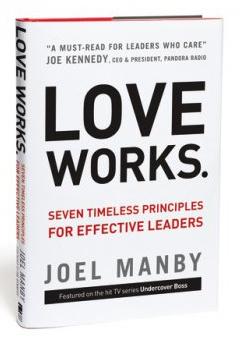
Last week, I kicked off a series of posts based on Love Works by Joel Manby. (Click here to read my first post in this series). A blogging friend of mine, Bill Grandi (The Cycleguy), recently challenged readers to consider linking up with him for several weeks with posts related to this excellent leadership book. To read Bill’s introductory post for this series, click here.
For today, Bill and I (and anyone else who’s linking up with us) will be posting about the third chapters (Patient: Have Self-Control In Difficult Situations). Check out Bill’s take by clicking here.
If you recall from last week, Manby’s premise is that leadership is best when it comes from a position of agape love. As the book unfolds, he uses I Corinthians 13 as the springboard to talk about love-based leadership.
If I speak in the tongues of men or of angels, but do not have love, I am only a resounding gong or a clanging cymbal. If I have the gift of prophecy and can fathom all mysteries and all knowledge, and if I have a faith that can move mountains, but do not have love, I am nothing. If I give all I possess to the poor and give over my body to hardship that I may boast, but do not have love, I gain nothing.
Love is patient, love is kind. It does not envy, it does not boast, it is not proud. It does not dishonor others, it is not self-seeking, it is not easily angered, it keeps no record of wrongs. Love does not delight in evil but rejoices with the truth. It always protects, always trusts, always hopes, always perseveres.
Love never fails. But where there are prophecies, they will cease; where there are tongues, they will be stilled; where there is knowledge, it will pass away. For we know in part and we prophesy in part, but when completeness comes, what is in part disappears. When I was a child, I talked like a child, I thought like a child, I reasoned like a child. When I became a man, I put the ways of childhood behind me. For now we see only a reflection as in a mirror; then we shall see face to face. Now I know in part; then I shall know fully, even as I am fully known.
And now these three remain: faith, hope and love. But the greatest of these is love.
Since I already read the book, I thought it would be interesting to highlight some of the sentences I underlined when I read the book initially:
-
“Embracing patience is not about ignoring poor performance.” (p. 36)
-
“The principle of patience means behaving with self-control in difficult situations.” (p. 36)
-
“I determined never to publicly admonish people in a way that would diminish their dignity.” (p. 39)
-
“Whenever possible a reprimand should be given in private, and it should be given in a way that maintains a person’s dignity. When we admonish our employees in private and in a patient, respectful manner, we go a long way toward ensuring our employees remain motivated and continue to grow.” (p. 39)
-
“We must always admonish with patience and respect. Our goal isn’t simply performance; it’s to protect the dignity of the people on our team. Whether we correct and train our employees in public or in private, our goal is always to do so with respect and love. After all, that’s exactly how we want to be treated.” (p. 41)
-
“For praise to be effective, it needs to be delivered by a leader who is patient enough to observe what his or her team has actually been doing and waits for the right moment to deliver that assessment.” (p. 42)
-
“It takes patience to praise with specifics, and praise without specifics can be worse than no praise at all.” (p. 43)
-
“To be truly effective, praise must be legitimate and pointed.” (p. 46)
-
“Admonish in private whenever possible; be stern but avoid malice; be specific; get people “back on the horse” with pointed praise; move on without a grudge.” (p. 49)
Bill’s post focuses on utilizing self-control/patience when reprimanding someone. This chapter in Love Works clearly gives some great insight and advice for addressing poor performance. Another side of the patience spectrum mentioned in this chapter is how we choose to praise someone for a job well done. Have you ever received a compliment that seemed vague and unspecific? It kind of seems like you’re being coddled – that someone is just trying to suck up to you. Manby reminds us that we need to be thoughtful and specific in complimenting someone. This takes self-control and patience to deliver a message that is meaningful and deserved.
I have been learning how to apply this type of praise as I’ve joined and participated in Matt McWilliams‘ Thank You Thursday Revolution. In Matt’s initial post about the revolution, he encourages leaders to write handwritten Thank You Notes to deserving team members. He charges readers and Thank You Thursday Revolutionaries to be specific in reasons for providing appreciation. As leaders, we obviously need to reprimand, but we must not forget to praise our team members. There’s amazing power in simple and specific gratitude and it starts with us!
As we continue with Love Works Wednesday, I want to challenge you to think about your leadership from a whole new perspective. Whether you lead in the business world, the church world, or in another pocket of the world, try leading with love. Not love the feeling, but with love the action. Lead in a way that puts other first. Lead in a way that represents how you’d honestly like to be treated by others. Lead in a way that preserves the dignity of others. Over the next seven weeks, Bill and I will continue to explore love based leadership. I hope you’ll read along, jump into the comments, and maybe even change the way you lead. Until then, consider getting a copy of Love Works for yourself, and see how this book might change you and your leadership.
What is one thing you can do differently this week to lead people with more patience and love than before? How have you been led with patient and love-based leadership?
Love Works Wednesday Link Up Week 1
“Love isn’t a feeling but an action, an action by which leaders and entire organizations can experience almost unimaginable success and personal fulfillment.”
Joel Manby – Love Works
A couple of months ago, I read and reviewed Love Works by Joel Manby. (Click here to read my overall review). A blogging friend of mine, Bill Grandi (The Cycleguy), recently challenged readers to consider linking up with him for several weeks with posts related to this excellent leadership book. I thought I would give it a try. To read Bill’s introductory post regarding this series, click here.
For today, Bill and I (and anyone else who’s linking up with us) will be posting about the first two chapters (A Hard Day’s Night and The Jedi Masters). Check out Bill’s take by clicking here.
Since I already read the book, I thought it would be interesting to highlight some of the sentences I underlined when I read the book initially:
- “I wanted, in short, to be the same person all the time: at work, with my family, at my church, and when I was alone.” (p. 21)
- “Love isn’t a feeling, but an action, an action by which leaders and entire organizations can experience almost unimaginable success and personal fulfillment.” (p.22)
- “Profits are a product of doing the right thing – over and over again.” (p. 22)
- “Leadership is about the bottom line AND…and loving the people you work with. and making your community a better place. and feeling a sense of satisfaction at the end of every day. and leading employees who can’t imagine working anywhere else…. The bottom line is best served when leaders lead with love.” (p. 23,24)
- “It’s not okay to achieve profit growth and destroy our culture as a ‘great place to work for great people.’ It is also not okay to focus on being a ‘great place to work’ without achieving our financial objectives.” (p. 29)
- “For the culture to survive, it must be defined AND adhered to or the organization could lose its way.” (p. 29)
- “Treating someone with love regardless of how you feel about that person is a very powerful principle.” (p. 31)
- “Agape love is the foundation for the best and noblest relationships that humans are capable of. It is deliberate and unconditional love that is the result of choices and behaviors rather than feelings and emotions.” (p. 32)
I am a leader. I’m definitely in a leadership position in my company as an operations manager. My team members include project managers, engineers, technicians, union pipe fitters, and miscellaneous support staff. I’m in various leadership roles in my church. I’m a youth leader, I co-lead a small group with my wife, and I lead a Foundations class once or twice a year. I’m in a leadership position at home. As a parent, my wife and I have the responsibility to lead our children.
Leadership is an interesting thing. It takes energy, thought, and action. When you hear the word leadership, what comes to your mind? Power? Fame? Notoriety? Influence? Wisdom? Many words probably come to mind, but love is not the word we usually think of when we hear the word leadership. However, when you see how Joel Manby frames love and leadership in the first two chapters and in the quotes above, you get the sense that love is essential in order for leadership to be truly successful.
As we kick-off Love Works Wednesday, I want to challenge you to think about your leadership from a whole new perspective. Whether you lead in the business world, the church world, or in another pocket of the world, try leading with love. Not love the feeling, but with love the action. Lead in a way that puts other first. Lead in a way that represents how you’d honestly like to be treated by others. Over the next eight weeks, Bill and I will continue to explore love based leadership. I hope you’ll read along, jump into the comments, and maybe even change the way you lead. Until then, consider getting a copy of Love Works for yourself, and see how this book might change you and your leadership.
What is one thing you can do differently this week to lead people with more love than before? How you have you been led with leadership by others?
Book Review: A Train Called Forgiveness by Dan Erickson
Over the past couple of years, I’ve met some tremendous people through the blog world. Each person has their own stories and unique perspectives on life. Dan Erickson is one of those people who I’ve met on-line who has a unique story to tell. You can follow Dan on his blog at danerickson.net. (Dan wrote a guest post here a couple of months ago titled Musical Stretch.)
Per Dan’s Twitter bio, Dan is an author, songwriter, musician, teacher, and single dad who saves the best for last. If you follow his story, you’ll soon discover that Dan grew up in a cult. This part of Dan’s story had a huge impact on the book he wrote called A Train Called Forgiveness.

I had the privilege of reading Dan’s book, and it’s a story I couldn’t put down. I received the book for free from Dan as one of his top commenters last month. He didn’t ask me to write a review, and I certainly wasn’t required to write a positive review, but I couldn’t help it.
In A Train Called Forgiveness, Dan tells the story of Andy Burden. Andy is now in his late twenties. The story details a train trip from Seattle to Nashville and from Nashville to New Orleans and back to Seattle. During the trip, Andy burden deals with the personal demons left by a youth tarnished by a religious-based cult. The story flashes back and forth between Andy Burden’s time in a cult and his present reality of trying to move on.
The book takes the reader on a journey that wrestles with forgiveness and judging others. I don’t know how closely the story mirrors Dan’s own experience, but A Train Called Forgiveness definitely left me with a lot to think about. How does our upbringing and previous experiences impact our perspective on life and on others? How do we struggle with forgiving those who have deeply wronged us? How do we get past these wounds? Can there be any hope for healing when we’ve been wronged in such a damaging way?
I’d recommend A Train Called Forgiveness to anyone who is interested in exploring the topic of forgiveness. The story will challenge anyone to open their eyes, arms, and hearts to others. I’m thankful that I had the opportunity to read this book.
How have you experienced forgiveness in your life? Who do you need to forgive? Have you every taken a trip that has changed your life?
S-E-X on the Big Blue Bus (A Guest Post by Shawn Smucker)
Today, I have the privilege of presenting guest blogger, Shawn Smucker. Shawn is a fellow blogger from the great state of Pennsylvania. I have enjoyed connecting with Shawn over the last year or so. His writing is inspiring and thought-provoking. Today is a special day for Shawn as his newest book officially releases today. How To Use A Runaway Truck Ramp is a collection of thoughts and stories from the adventure of a lifetime that he took with his family last year in a big blue bus. After reading Shawn’s post below, consider picking up the new book. You won’t be disappointed.

The woman who still feels like a girl sometimes tires of digging through the bottom of the bus for the kids’ shoes or wondering if the next Laundromat will have a change machine. The man who still feels like a boy is weary of emptying the waste tank and worrying about getting the bus stuck. The third month of a four-month trip is the 21st mile of a marathon.
The woman looks for a movie for the kids while the man makes popcorn. She bends over and sweeps Legos out of the way, then opens the small drawer under the couch. The man pinches her butt. She laughs and looks over her shoulder.
“What movie are you picking, Mom?” one of the four kids shouts.
They have been in very close quarters for over ninety days. Moments of intimacy for the parents are few and far between. The man gives the woman a signal.
Meet me in the back in two minutes.
They walk back the long bus hall, closing the two doors. They are giddy, like high schoolers trying to find a place to park late at night. Unfortunately, the bedroom door has a gaping hole in the bottom where a large vent used to be, so the man blocks it with an oversized plastic storage container. It seemed like a good idea at the time.
She moves the dirty clothes on to the floor, and he jumps into bed. More Legos greet him, like tiny sea urchins. They sigh and pull back the sheets and pick out the Legos and doll clothes and Matchbox cars.
When the bed is clear, they lay down. He smiles. She smiles. He kisses her. Then, they hear the tiniest of voices from the other side of the storage bin blocking the door. He looks over his shoulder, and a small head peaks up through the narrow space.
“Guysh, what are you doing?” It is their four-year old. She has long blond hair and blue eyes, and her s’s come out like sh’s (think Sid from Ice Age). She wants a drink. The man shakes his head in disbelief.
“How do you even fit through there?” he asks, walking toward the door.
“Are you guysh naked in there?” she asks them.
He tries not to laugh. She keeps asking questions.
“Did you lock the door sho that no one would shee you when you’re naked?” she asks again.
“I wish,” he says, leaning down and pushing her head gently back through the vent. “Now, go ask your brother for a drink. And don’t come back in here until the door is open. Understand?”
“Of coursh.”
He goes back to the bed and lies down beside the woman. And suddenly the woman and man are boy and girl again. They look at each other – she giggles, and he laughs. They hold hands and stare at the ceiling. She suddenly remembers, in the time it takes a lightning bug to flash on and off, that this is the greatest adventure of their life together. He recalls the first time they held hands in that movie theatre in Camp Hill, PA. He remembers how he hadn’t wanted to be anywhere but there.
They hear the voices of their children in the front of the bus: how’d it happen so fast? How could those two people holding hands fifteen years before be in any way connected to these very different but same people, holding hands in Yellowstone while their four children argue over popcorn rights in the front of the bus?
Outside, a few miles away, herds of bison and elk wander through Haydn Valley. A bear swims through icy Yellowstone River, her cub following desperately behind. Downstream, water crashes through the gorge, wearing away another layer of time.
But in the big blue bus, for just a moment, time has stopped.
(This piece first appeared at Tamara Out Loud)
When was the last time you felt like time had stopped? How has parenting been different than what you imagined?

Shawn Smucker is the author of How to Use a Runaway Truck Ramp and Building a Life Out of Words. He lives in Lancaster County, PA with his wife Maile and their four children. You can find him on Twitter and Facebook, and he blogs (almost) daily at shawnsmucker.com Maile blogs at mailesmucker.blogspot.com
Book Review: Love Works by Joel Manby
“Love isn’t a feeling but an action, an action by which leaders and entire organizations can experience almost unimaginable success and personal fulfillment.”
Joel Manby – Love Works
Love Works by Joel Manby is a must read for leaders.
In Love Works, Manby offers “seven timeless principles for effective leaders.” These tips are primarily based on I Corinthians 13 and are the same principles Manby uses to lead Herschend Family Entertainment (HFE) where he is the President and CEO. Last year, Joel and HFE were featured on Undercover Boss. That week, it was the second most watched show in America (led only by American Idol), and the response was amazing. Americans wanted to be a part of a company with the type of culture and leadership that was represented at HFE – a culture and leadership based on love. Based on the response of the show, Manby decided to write Love Works as a way to get these principles in the hands of leaders around the country.
In Love Works, Manby explains that agape love is the key to leading effectively. Throughout the book, he interweaves in stories from his own experience at HFE, at Saab, at Saturn, and at home with seven lessons designed to help leaders. Each story builds on one another to give the reader a picture of a leadership based on love – a leadership that is patient, kind, trusting, unselfish, truthful, forgiving, and dedicated.
I found myself underlining words, phrases, and sentences on most pages as I digested what Manby shared. I will keep a copy of Love Works on my desk as a reference and reminder, and I will definitely recommend Love Works to aspiring leaders. If you are a leader at work, in church, at home or in other arenas of life, consider picking up a copy of Love Works for yourself!
How have you experienced love at work? How would things be different for you if your leadership was based on love or if you were led out of love?
eBook Review: Community Wins by Bryan Allain

Stop over TODAY at Amazon to pick up a FREE copy of Bryan Allain‘s latest eBook, Community Wins. After today, it will no longer be FREE.
If you’re a blogger, a writer, a product developer, or someone who is simply interested in building an on-line community, I would recommend you check out Allain’s eBook. Community Wins is a short yet power-packed workbook full of wisdom and activities designed to get you thinking of building and strengthening your community.
This is a resource that I will go back to again for my own community building efforts and projects. The book is broken up into 21 short chapters which each include an action step for readers to follow. Some of the actions are quick and easy, but many of the actions will require more time, energy, and effort.
I appreciate the way Allain put Community Wins together. He seems to understand the world we live in with shorter attention spans and big dreams. It’s my honor to recommend Community Wins to The Stretched Community. Go out and get it today!
Book Review: Kingdom Journeys by Seth Barnes

I’ve promoted Kingdom Journeys
Kingdom Journeys
Throughout the book, Barnes weaves in teaching with stories from his own experiences and from the experiences of those who have embarked on their own kingdom journeys through his missions organization, Adventures in Missions. The stories restlessness, abandonment, brokenness, and dependence stir the reader to consider how they are living and where they are serving. The book will inspire you to think again about the importance of going out on your own kingdom journey.
In a way, I felt like I was being spoken to from two angles. The book is clearly written to young adults who are at a crossroads of education and career. In some parts of the book, I wondered if I was too old to be reading the book. Having just come back from an Adventures in Missions trip to Guatemala this summer, I realized that Seth Barnes was speaking to me. I’m still young! From the other angle, I realized that I have an important role as an apparent and “older” adult. It’s my responsibility to release by kids and to help other young people as they follow their own kingdom journeys.
Kingdom Journeys

I would give Kingdom Journeys
When was your last kingdom journey? What’s holding you back from taking a kingdom journey of your own?
Note: Kingdom Journeys
(Please note: There are affiliate links in this post. Should you purchase Kingdom Journeys (or Wrecked or Love Does) by clicking one of these links, I receive a small percentage of the purchase. These funds are used to support The Stretched Blog and to extend ministry and missions to Guatemala. Thank you!)
WIN a New Book: Kingdom Journeys by Seth Barnes
I have the privilege of being part of the launch team for a brand new book by Seth Barnes. Kingdom Journeys is all about encountering God through the spiritual discipline of journeys. As the president of Adventures in Missions, Barnes is obviously coming from a perspective that encourages missions, but Barnes also implies that kingdom journeys could simply be about going to places we need to, but don’t want to go.
Please go check out this book. Buy a copy of the book today. Discover what it means to take kingdom journeys.
Today, I’m excited to announce that I will be giving away a copy of Kingdom Journeys to one lucky winner. In order to win, you must do the following:
1. Share the following on Twitter and/or Facebook: Win a copy of Kingdom Journey by @SethBarnes! Stop by Jon Stolpe Stretched to learn more – http://ow.ly/dZZts
2. Leave a comment here indicating you did step 1 and answering the following question: What journey have you most recently taken?
Unstoppable: The Incredible Power of Faith in Action by Nick Vujicic
If you’re looking for an inspiring read, you might want to check out Unstoppable by Nick Vujicic. You can pick up a copy of the first chapter by clicking here. In the meantime, check out this video about the book.
Have you ever felt like you’ve fallen and you couldn’t get up?