 Jon Stolpe

Jon Stolpe
Your Best Year Ever – 3 Ways To Practice Everyday Gratitude

If you’ve been following the blog world the past several weeks, there have been countless posts about setting goals and making plans for a great year. Michael Hyatt launched a goal-setting campaign called Best Year Ever. I think there is a lot of merit to setting goals, and I’m certain Hyatt’s curriculum is excellent and effective for helping subscribers to take action which will lead to a better year.
Today, I’d like to offer one simple mindset shift which will greatly improve your chances of having the “best year ever.” It starts with two words: THANK YOU!
Yes. Your best year ever starts with gratitude.
I’m not talking about an occasional “thanks.”
I’m talking about developing a discipline of everyday gratitude.
Learning to be thankful and to express it regularly will lead to a much better year – perhaps, your best year ever. Here are a few simple steps you can take to practice everyday gratitude:
3 Ways To Practice Everyday Gratitude
- Keep a thankful journal. Thanks to my wife, we have a journal on our kitchen table. Each night when we sit down for dinner, each of us takes turns writing down one thing for which we are grateful.
- Say “Thank you” at least once a day. It helps to actually tell someone you appreciate them or something they did.
- Join the “Thank You Revolution.” I’ve talked about this before. Matt McWilliams started the Thank You Revolution a couple of years ago. As part of the revolution, he encourages others to write at least once thank you note every week (typically on Thursday). For more information on how to join the TYR (Thank You Revolution), click here.
What step(s) are you taking to have your best year ever? What action(s) can you take to practice everyday gratitude?
All Things New
It’s a new year! (It’s January 17th. I can still say that, right?)
Too often we let the world pass us by. We fall into the trap of the same-old, same-old. We fail to notice what is new right around us.
I don’t want this to be the case for me, and I don’t want it to be the case for you either.
With this in mind, here are some of the NEW things I experienced this week:
- Leadership Answer Man – Real World Leadership Solutions with Dr. Hans Finzel.
- I stumbled upon this fantastic podcast, and it is quickly becoming a favorite. Don’t let leadership just happen. Invest in yourself with great leadership material like this podcast!

- I stumbled upon this fantastic podcast, and it is quickly becoming a favorite. Don’t let leadership just happen. Invest in yourself with great leadership material like this podcast!
- 1 Day Business Breakthrough – Helping Entrepreneurs Discover Their Next Big Idea Today with Pat Flynn and Chris Ducker
- I’ve only listened to one episode so far of this brand new podcast. With my wife starting her own business and my desire to develop my writing and speaking, it can be helpful to get insights about entrepreneurship. Podcasts like this are helpful.

- I’ve only listened to one episode so far of this brand new podcast. With my wife starting her own business and my desire to develop my writing and speaking, it can be helpful to get insights about entrepreneurship. Podcasts like this are helpful.
- The Brand You Podcast with Mike Kim
- I’ve been reading Mike’s blog for several months, but I didn’t start listening to his podcast until this week. Wow! Another fantastic listen. I tuned in to get ideas for helping my wife with her life coaching business. I think this podcast will be helpful.

- I’ve been reading Mike’s blog for several months, but I didn’t start listening to his podcast until this week. Wow! Another fantastic listen. I tuned in to get ideas for helping my wife with her life coaching business. I think this podcast will be helpful.
- Restoring a backup to your Mac is easy if you know the file structure.
- I spent several hours Thursday night and Friday trying to restore information to our Mac from an external hard drive. I don’t use this machine very often, so I’m not very familiar with how the Mac is set up. Our Mac was running very slowly. We added virus protection which found 5 or 6 pieces of malware. We added memory. And we wiped the machine clean. When I went to restore the files, it appeared that the backup didn’t backup some very important documents. After hours of trying things out myself, I took the machine to The Geek Squad at our local Best Buy. Within minutes, Ryan (the Geek Squad member who helped me) had located the missing files on our external hard drive, and we were back in business. Watching Ryan as he navigated around our Mac taught me some new things.

- I spent several hours Thursday night and Friday trying to restore information to our Mac from an external hard drive. I don’t use this machine very often, so I’m not very familiar with how the Mac is set up. Our Mac was running very slowly. We added virus protection which found 5 or 6 pieces of malware. We added memory. And we wiped the machine clean. When I went to restore the files, it appeared that the backup didn’t backup some very important documents. After hours of trying things out myself, I took the machine to The Geek Squad at our local Best Buy. Within minutes, Ryan (the Geek Squad member who helped me) had located the missing files on our external hard drive, and we were back in business. Watching Ryan as he navigated around our Mac taught me some new things.
- Networking With Purpose Live with John Corcoran, Mark Sieverkropp, and Matt McWilliams
- I was talking to a friend the other day about building my e-mail list. He asked me why I wanted to do this. He didn’t think it was necessary. When I mentioned that I would like to take my next book project up a notch, he nodded his head in agreement that a bigger e-mail list is important. I don’t want to grow my network just to be rich and famous. I have a purpose for wanting to get my material in the hands of a larger audience. For this reason, I’m excited about this event coming up February 10th. The event features three dynamic practitioners who are sure to provide great information for growing your network. Click here to find out more and register for yourself.

- I was talking to a friend the other day about building my e-mail list. He asked me why I wanted to do this. He didn’t think it was necessary. When I mentioned that I would like to take my next book project up a notch, he nodded his head in agreement that a bigger e-mail list is important. I don’t want to grow my network just to be rich and famous. I have a purpose for wanting to get my material in the hands of a larger audience. For this reason, I’m excited about this event coming up February 10th. The event features three dynamic practitioners who are sure to provide great information for growing your network. Click here to find out more and register for yourself.
These are just a few of the NEW things I experienced this week. Now it’s your turn!
What NEW thing did you experience this week?
Ice Breaker – 5 Books

Fridays are Ice Breaker days here on The Stretched Blog. Before we get to this week’s question, I want to ask you to help me out by answering five questions related to short-term missions. The survey was initially presented on the blog last week, but I understand some had trouble completing the survey on the blog. After answering the Ice Breaker below, please click here to go directly to the survey. It will only take a minute (I promise).
Each week on The Stretched Blog, I ask an ice breaker question. The questions are designed to help us get to know each other here in The Stretched Community. I’ll provide my answer to the question here in the post, and then you can leave your response in the comments. While you’re in the comments section, see how others answered the ice breaker question.
(I’m always looking for Ice Breaker question ideas. If you have an idea, send me an email at jon@jonstolpe.com. If I use your question, I’ll give you credit and share your links.)
With the start of a new year comes a renewed desire to read some books. I love hearing about books that other people are reading, and today’s question provides an opportunity to get up to speed on the latest reading trends or plans of The Stretched Community.
Question: Name the five books you read most recently or the five books you plan to read in 2015.
My Answer:
- Rich Kids: How to Raise Our Children to Be Happy and Successful in Life
by Tom Corley (Read my review by clicking here.)
- Redefine Rich: A New Perspective on the Good Life
by Matt Ham
- The $100 Startup: Reinvent the Way You Make a Living, Do What You Love, and Create a New Future
by Chris Guillebeau
- Moment Maker: You Can Live Your Life or It Will Live You
by Carlos Whittaker
- Fairness Is Overrated: And 51 Other Leadership Principles to Revolutionize Your Workplace
by Tim Stevens
Answer this week’s ice breaker question by leaving a comment. I look forward to reading your response! (As always, feel free to share links.) And keep Stretching!
As a reminder, please take a minute to fill out the short-term missions survey. To get to the survey, click here.
5 Lessons I Learned By Studying The Life of Joshua

Seven years ago, a mentor of mine challenged me to study the life and character of Joshua. I’m in the process of preparing for a speaking opportunity in which I’ll have the chance to talk about leadership, delegation, and leaving a legacy. As I’ve been putting my thoughts together for my speech, I started thinking about the leadership path of Moses and Joshua, and I was reminded of this study. I think we can learn a lot if we take time to dive in and learn. Here’s what I learned by studying Joshua.
Joshua was the son of Nun (Ex. 33:11, Num. 11:28) from the tribe of Ephraim (Num. 13:8). He was born in Egypt into slavery. His name was originally Hoshea (Num. 13:16), and Moses called him Joshua which means “Savior” or “the person by whom God will save.” This name is equivalent in the Greek to “Jesus” which also means “Savior.” He lived for approximately the first 40 years of his life in Egypt in slavery. He lived in the wilderness with the Israelites for 40 years, and he lived in The Promised Land until he died at the age of 110 (Joshua 24:29). He probably lived during the late Bronze Age around 1200 B.C.
Joshua, then called Hoshea, was the commander of the first military campaign following the exodus from Egypt against the Amalekites (Ex. 17:8-16). Joshua was Moses’ right hand man. He was the only one who accompanied Moses on his visit up Mount Sinai (Ex. 24:12-13). He also was responsible for staying in the Tent of Meeting during the Israelites time in the wilderness (Ex 33:7-11). He was one of the 12 spies initially sent out to see Canaan (Num. 13:1, 8). He along with Caleb was one of the only two spies to bring back a positive report (Num. 14:6-8).
Joshua was appointed the leader of the Israelites by Moses after 40 years of mentoring in the wilderness, and he led the Israelites into the Promised Land (Deut. 31:1-8). He was also responsible for dividing up the land amongst the tribes of Israel (Joshua 13:8-21:45).
Joshua was reliable. This was obvious in the responsibilities that Moses heaped upon Joshua during his life and as he approached his death. Joshua was a strong leader. In Joshua 1:16, the Israelites committed themselves to following Joshua just as they had followed Moses. Joshua was a man of faith. Joshua’s positive report after spying in the land of Canaan provides an example of Joshua’s faith (Num. 14:6-8). Joshua stood up for what was right even if it seemed ridiculous as exemplified in the fall of Jericho (Joshua 5:13-6:27). He was dedicated to doing the right thing as was obvious through his response to Achan who disobeyed God’s instructions for the defeat of Jericho (Joshua 7:1-26). Joshua was humble before the Lord (Joshua 7:6-9; 8:30-31). He knew that God was responsible for his success and the success of the Israelites. Finally, I’m convinced that Joshua was strong and courageous. Multiple times Joshua is either told to be strong and courageous (Joshua 1:6,7,9) or he his encouraging the Israelites to be strong and courageous as they enter the Promised Land, and his final remarks even demonstrate this commitment to strength and courage (Joshua 23:6).
Joshua may have been a people pleaser. Despite God’s earlier instruction to completely destroy all the Canaanites, he caved into the lies and wishes of the Gibeonites and permitted them to live in the Promised Land alongside the Israelites (Joshua 9:1-27).
Overall, Joshua had a positive impact on others. He was the leader who helped the Israelites realize the promises originally given to Abraham. He led in a fair way and in a direct way.
(Obviously, Joshua had a negative impact on the Canaanites as they were almost completely destroyed by the Israelites under Joshua’s leadership.)
Joshua had a close relationship with God similar to his predecessor, Moses. Throughout the book of Joshua, it states “The Lord said to Joshua…” (Joshua 1:1; 3:7; 4:15; 5:2,9; 6:2; 7:10; 8:1; 11:6; 13:1; 20:1)
Overall, Joshua’s spiritual life seems to be fairly consistent. As indicated in the references above, he seemed to be in close communion with God. But Joshua was human, his spiritual life or connection with God seemed to be on vacation when he made the treaty with the Gibeonites. He relied on the feedback from his fellow Israelites instead of consulting with the Lord.
Joshua died at the age of 110 (which was considered the perfect age by the Egyptians – see the death of Joseph in Genesis 50:22-26). He provided a beautiful sendoff speech before he died (Joshua 23); however, he failed the Israelites by not bringing up a successor. Unlike Moses who apparently planned for what would happen when he passed on (Deut. 31:1-8), Joshua left Israel without a leader. This would soon lead to Israel’s decline and departure from God’s ways (Judges 2:10-15).
“As Josephus puts it in an editorial comment (Ant. 3.49) which has no biblical basis, Joshua possessed five crucial qualities: He was extremely courageous, valiant in endurance of toil, highly gifted in intellect, highly gifted in speech, and distinguished for piety in worshiping God. Again, when summarizing his qualities upon Joshua’s death (5.188), Josephus singles out four qualities – his supreme intelligence, his supreme skill in speaking lucidly to the multitude, his stout-heartedness and great daring, and his utmost dexterity in directing affairs in peacetime and his adaptability to every occasion.” (Feldman, Louis H. “Josephus’s Portrait of Joshua.” The Harvard Theological Review, Vol. 82, No. 4 (Oct., 1989), pp. 351-376.)
Joshua, the son of Nun, from the tribe of Ephraim, was a military commander of the Israelites, faithful servant and apprentice of Moses, consistent leader of the Israelites, and a humble and faithful servant of the Lord. He left Egypt along with the rest of the Israelites after years of slavery, and he entered the wilderness with an anticipation of the Promised Land like few others. He patiently served the Israelite nation for 40 years as the right hand man of Moses. He succeeded Moses, as the leader of Israel, and he deliberately led the people of Israel into the land of Canaan destroying the Canaanites and establishing Israel in the land that had been promised to them through Abraham. He followed God’s commands directly revealed to him and directed to him through Moses and the Law of Moses.
5 Lessons I Learned By Studying The Life of Joshua
I have learned several things by studying Joshua.
- Leadership development takes time. Moses mentored Joshua for 40 years in the wilderness before Joshua took over.
- Developing leaders is important in continuing the legacy. Moses did an excellent job of this, but Joshua perhaps missed the boat on this by not bringing up a successor.
- Doing the right thing and standing up for it is always best.
- Keeping a positive attitude is essential to successful leadership.
- Do you not know that in a race all the runners run, but only one gets the prize? Run in such a way as to get the prize. I Corinthians 9:24
- Not that I have already obtained all this, or have already been made perfect, but I press on to take hold of that for which Christ Jesus took hold of me. Brothers, I do not consider myself yet to have taken hold of it. But one thing I do: Forgetting what is behind and straining toward what is ahead, I press on toward the goal to win the prize for which God has called me heavenward in Christ Jesus. Philippians 3:12-14
- I believe this is the kind of attitude that Joshua had as he approached the Promised Land, and I believe that we as followers of Christ and as leaders need to have this attitude as we seek to fully follow Christ.
- Keep God first in everything. Joshua did this through most of his leadership, and God caused him to succeed. Whether or not we succeed in man’s eyes, we as leaders need to keep God first in everything.
I’m glad I looked back at my notes.
What else do you think we could learn from Joshua?
If you could ask Joshua one question, what would you ask him?
Called To Love

We are called to love.
“‘Love the Lord your God with all your heart and with all your soul and with all your mind.’ This is the first and greatest commandment. And the second is like it: ‘Love your neighbor as yourself.’ All the Law and the Prophets hang on these two commandments.” Matthew 22:37-40
Christ did not come into the world to condemn the world, but to save the world.
For God did not send his Son into the world to condemn the world, but to save the world through him. John 3:17
As Christians, we have been quick to judge. We turn people away from Christianity, because we pass judgement rather than demonstrate love.
Don’t get me wrong. We need to flee from sin. There is right, and there is wrong. But we must be careful to love first.
“A new command I give you: Love one another. As I have loved you, so you must love one another. By this everyone will know that you are my disciples, if you love one another.” John 13:34-35
For God so loved the world…
For God so loved the world that he gave his one and only Son, that whoever believes in him shall not perish but have eternal life. John 3:16
…God loves the world. And we must learn to love as He first loved us.
We love because he first loved us. I John 4:19
God, teach me to love.
How can you love today better than yesterday?
Book Review: Rich Kids by Tom Corley (@RichHabits)
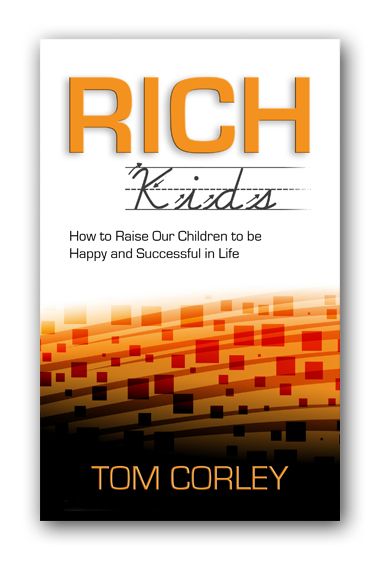
What does it mean to be rich and how do you get there?
I’m reading two books in the early part of this year that are forcing me to think about this question. The first book is Redefine Rich: A New Perspective on the Good Life
The second book is Rich Kids: How to Raise Our Children to Be Happy and Successful in Life
This book is not written from a religious perspective. Rich Kids uses an easy-to-read story to provide practical tips for developing habits that will lead you to a rich life. It would be easy to think this is only meant for those who want to have monetary wealth, but I think the principles and habits suggested in this book are great tools for anyone who want to live life to the fullest.
Here are a few of the things I captured as I was reading Rich Kids:
- “Learn as many new skills as you can when you’re young.” Keep learning. Keep growing. Keep stretching!
- “You can’t be successful in life if you don’t have a passion for what you do for a living, and you can only find your passion in life by pursuing creative activities.” Life is too short to live without passion. So many people fail to find and follow their passion. I don’t want to waste my life.
- “Success is not easy. Success takes time, persistence, passion, and an obsessiveness that borders on fanaticism. Successful people are fanatics. They are obsessed. They understand that success is a process.” Get rich quick schemes don’t work in the long run.
- “When you find your main purpose in life you stop worrying about the ‘how.’ The ‘why’ is all that matters. The ‘why’ is your main purpose. Once you find your ‘why,’ the ‘how’ magically appears.”
- “Success takes time. Realizing your goals in life just takes time. Life is a marathon.” In a culture of “I want it now,” we have to remember that good things come to those who are patient.
- “Having a mentor in life is like someone depositing millions and millions of dollars into your bank account. Mentoring is critical to success.” Who is you mentor?
- “You can’t become successful if you’re always blaming others for your circumstances.” Many don’t want to hear this one.
- “Always focus on the other person and resist that human tendency to put yourself first.”
- “Life is all about rising above your self-interest and getting into the habit of treating the other person as important.”
- “Wherever you go, carry around a notepad, and when you meet anyone you want to get to know, don’t be afraid to ask them their birthday.”
- “Making the effort to remember someone’s name tells them that they are important to you.”
- “Parents need to lead by example.”
- “Start by making a point to find something to be grateful for each day.”
- “Always be grateful for the smallest things in life as well as the big stuff.”
These are just a few of the things that stood out to me as I read this book. Having a “rich” life starts by making choices and taking actions that lead us down the right path. Rich Kids will get you started down the right path.
What is one habit you have implemented that helps you have a “rich” life? What is one habit you need to implement to have a “rich” life?
(Please note: I received a copy of Rich Kids for free as part of a giveaway from Matt McWilliams. I was not required to provide a favorable review. I truly believe this book can be a helpful reminder to any reader in helping them to take steps to become successful – at work, in the community, at church, and at home.
Also to note: There are affiliate links in this post. Should you purchase Rich Kids or Redefine Rich by clicking one of these links, I receive a small percentage of the purchase. These funds are used to support The Stretched Blog and to extend ministry and missions to Guatemala. Thank you!)
It’s All About Love – Notes From @BobGoff

As I mentioned last week, Bob Goff came and spoke at our church yesterday. As expected, he delivered in amazing ways, and I even had the opportunity to meet him. He is so friendly!
Listening to Bob Goff speak is like hooking your head up to a firehouse and turning on the water full blast. I took quite a few notes as Bob shared. I may dissect them later, but I thought the best way to start reflecting on Bob’s message might be to simply share my notes. Here they are:
- Bob is a hugger. He’s not into handshakes. If you meet Bob, you are now is friend, and friends don’t shake hands – they hug. (Sure enough, Bob hugged me when I introduced myself to him.)
- Before he started Bob proclaimed, “This is Jesus’ room.”
- He repeated several times, we don’t need to agree with Jesus. We need to go do it.
- He’s not into Bible studies; he’s into Bible doings.
- Galatians 1:6 – “LIVE IN GRACE.”
- I John 1:6 – This is love that we follow God’s command and that we WALK IN LOVE.
- Stop trying to win. LIVE IN GRACE and WALK IN LOVE.
- Jesus wants you to be his friend, and He wants you to follow Him.
- We have to be more fearless to follow Him.
- Jesus made himself more available to others. (This is part of the reason Bob left his cell phone number for all to read at the end of his book. He wants to follow Jesus by being available to people. I almost called him during the service.)
- Living a life following Christ means constant interruptions.
- Don’t be right. Be humble.
- We fly under the banner of Christ.
- Proverbs 4:23 – “Above all else guard your hearts.”
- We are porters. How can I help you?
- We’re supposed to help people get home.
- Love everybody.
- God wants us to live on the edge of “Yikes.”
- God doesn’t’ want us to be comfortable.
- Give them love.
- Don’t stand in love. WALK IN LOVE.
- God wants to blow your minds.
- God wants to use the foolish things of life (I Corin.).
- “Be not afraid.”
- If you have a guide you can trust, you don’t worry about the path. (We have the best guide ever – Jesus.)
- Look how far you’ve come. Not, look how far you have to go.
- God makes people. People make issues. God doesn’t make issues. God loves people.
- Renew your vows with Jesus everyday.
All this in 30 minutes, and it went by so quickly.
If you were there on Sunday or you’ve read Love Does, what have you learned from Bob Goff?
When was the last time you heard someone speak who totally captured your attention?
Ice Breaker – Year of Stretch

Fridays are Ice Breaker days here on The Stretched Blog. Before we get to this week’s question, I want to ask you to help me out by answering five questions related to short-term missions. The survey was initially presented on the blog yesterday, but I understand some had trouble completing the survey on the blog. After answering the Ice Breaker below, please click here to go directly to the survey. It will only take a minute (I promise).
Each week on The Stretched Blog, I ask an ice breaker question. The questions are designed to help us get to know each other here in The Stretched Community. I’ll provide my answer to the question here in the post, and then you can leave your response in the comments. While you’re in the comments section, see how others answered the ice breaker question.
(I’m always looking for Ice Breaker question ideas. If you have an idea, send me an email at jon@jonstolpe.com. If I use your question, I’ll give you credit and share your links.)
Many of us set goals for the new year. Just over a week ago, you probably started or restarted some healthy routines. Hopefully, you are still at it. This week’s Ice Breaker question provides an opportunity to cast vision for your future.
Question: What will it look like for you at the end of 2015 if you are really stretched this year?
My Answer: I could go several different directions in answering this week’s question. Looking ahead to the end of 2015, I will be stretched, and it will look something like this: (1) I will have dunked a basketball again (see last week’s Ice Breaker), (2) I will have written my second book, and (3) I will have helped to build another house in Guatemala.
All three of these are major stretches for me. I can barely touch the rim right now on a ten foot basket, and I’ll have to gain back nine inches or so to my vertical leaping ability. After writing my first book last year, I now understand the work it takes to write a book. This goal scares me, and I know it will be a stretch to complete this before the end of 2015. Finally, I don’t currently have a trip planned to Guatemala, yet I believe God has given me a vision to impact others by building homes in Guatemala. We’ll see what happens.
Answer this week’s ice breaker question by leaving a comment. I look forward to reading your response! (As always, feel free to share links.) And keep Stretching!
As a reminder, please take a minute to fill out the short-term missions survey. To get to the survey, click here.
Short-Term Missions Survey
Powered by Typeform
Bob Goff Is Coming – A Speaker You Don’t Want To Miss

“I used to be afraid of failing at something that really mattered to me, but now I’m more afraid of succeeding at things that don’t matter.”
Bob Goff, Love Does: Discover a Secretly Incredible Life in an Ordinary World
This coming Sunday, my church is hosting a guest speaker, and I am pretty excited.
I love the pastors at my church and what they bring to my church week after week. Sometimes, they need a break, and they look for someone to fill in. The leadership and worship planning teams did an unbelievable job planning for Justice Day at my church this Sunday. I’m not sure how they did it, but they arranged to have author, speaker, lawyer, and founder of Restore International, Bob Goff, in to speak at all three services at my church this Sunday, January 11, 2015.
I came across Bob a few years ago when friends in the blogging world introduced me to his book, Love Does: Discover a Secretly Incredible Life in an Ordinary World
If you happen to be in and around the Philadelphia area this Sunday, I would encourage you to find some friends and come up to Christ’s Church of the Valley in Royersford, PA. Service times are 9:00AM, 10:15AM, and 11:30AM. Hope to see you there!