 Jon Stolpe

Jon Stolpe
Building A House: The Schedule
Being part of the construction industry for over 18 years (wow, that makes me sound old), I realize that it is extremely important to have a project schedule in order to keep everyone on task and moving toward the ultimate goal of completing the project on time and under budget. Over the years, I’ve seen projects fail when schedules didn’t exist, weren’t correct, or just weren’t followed. I’ve also seen extremely complicated building projects come together quite smoothly thanks to a well thought out schedule that everyone followed.

When we were in Guatemala, we were told we had three days to completely build a house from the ground to the roof. We didn’t have a written schedule, but we had a “construction manager” from Casas por Cristo who kept us informed and on task.
Josh Crabbs (the “construction manager”) travels back and forth between El Paso, TX where he lives to building sites in Mexico and Guatemala to lead teams in building houses. On our last day together in Guatemala, I told Josh that he has one of the best jobs in the whole world – he gets to build things, he works with teams, and he helps to dramatically change the world for so many needy families.

During our home build project, one of the kids asked Josh a question that was on the minds of many of us on our team: “Josh, are we on schedule?” We all wanted to make sure we would complete the project on time. In fact, we wanted to know if we’d finish it up a little early. I love Josh’s response, “Yep! We’re right on God’s schedule.” Building a complicated building is one thing, but building a house for Christ (Casas por Cristo) means something else when it comes to schedule.
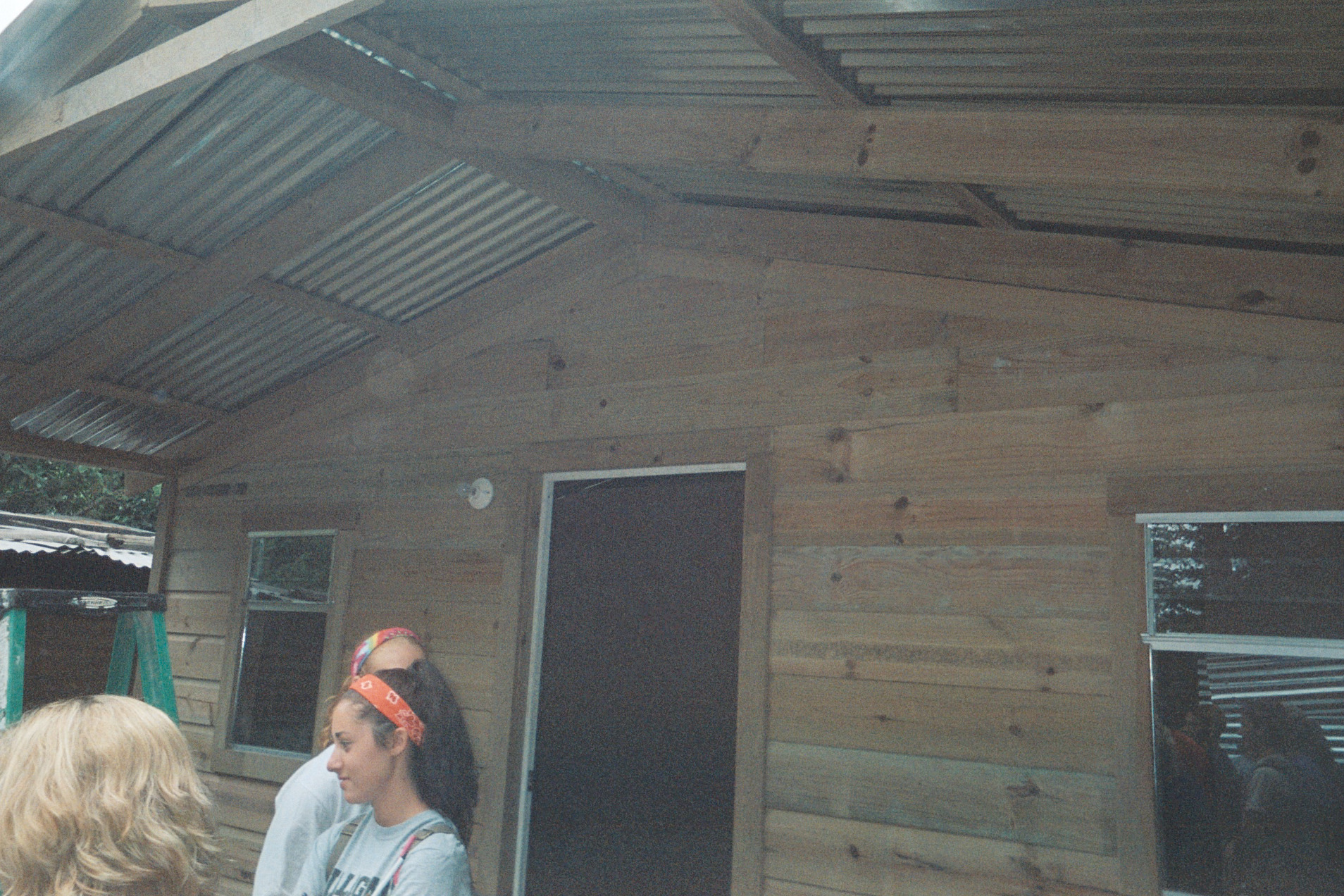
I think Josh was trying to remind our team that God has opportunities all around us if we just open our eyes. The house will be completed when it needs to be completed. When you’re building a house for someone like this, it’s not just about finishing the physical floor, walls, and roof. It’s about bringing hope and light into a family’s life. It’s about being open to God’s voice as He speaks to us and teaches us through the experience.

I’m sure there were moments when Josh was frustrated with our progress on certain tasks, but I also think he knew we would complete the house at some point on day 3 of our build. He knew that it was so much more than keeping up with a schedule. It was about changing lives – the lives of the family and the lives of our team.

As it turned out, we actually finished the house before lunch on the third day. Our team did a fabulous job working together, following directions, and staying on God’s schedule.

When have you had to rely on God’s schedule in your life?
Breaking the Cycle – Sometimes It’s Healthy to Get Out of Your Routine

I know that this post goes against my nature and against things I may have posted in the past. I still stand by my comfort level in having a dependable routine, and I still believe that routines are important for establishing healthy patterns that need to be repeated. Routines can also help to put an end to bad habits.
But sometimes the reverse is true. Sometimes it’s healthy to get out of your routine.
My recent trip to Guatemala was certainly a change from my typical schedule and way of doing things. This was good in opening my eyes, ears, and heart to the new things that God had to show me.
This week my routine is once again compromised while our kids are away at “Camp Grammy and Pappap”. This has meant taking the dogs out and taking them for walks instead of heading out for my morning run. It’s meant taking the trash down to the street and other chores that the kids have picked up over the past few years. But it’s also been a welcome change in the evenings as it has provided for one-on-one time with my wife. We’ve gone on a picnic, played tennis, and enjoyed dinner together. In this case, the change in routine has been great for our marriage, and I think it will ultimately benefit our parenting when our kids return later this week.
I hate change, but sometimes it is so worth it! Here are a few suggestions for playing with your routine this week:
- Drive a different way to or from work this week. If you’re like me, you could drive to work with your eyes closed (if it weren’t for the other cars and the traffic lights). Taking a different path could show you something new and different.
- Eat something new. I don’t like tomatoes despite the fact that we grow them in our garden. Last night, I actually tried a couple of pieces of tomato that my wife had prepared with fresh basil and mozzarella cheese. It wasn’t my favorite, but it also wasn’t as bad as I expected.
- Spend time with God in a new location. For those of us who have regular “quiet times” with God, we often go to the same location and have the same routine. This isn’t necessarily bad, but sometimes it can be refreshing to get with God somewhere new and to try a new routine. Perhaps this means going to a park and sitting by a lake or stream. Maybe it means exploring a new section of the Bible or praying in a different way. Whatever you decide to do, consider taking your journal along with you. Write down your thoughts on how God spoke to you through this change in routine.
Change isn’t always bad. Sometimes it can be a good thing to break the cycle of our routine.
Because of the Lord’s great love we are not consumed, for his compassions never fail. They are new every morning; great is your faithfulness. Lamentations 3:22-23
What other suggestions to you have for getting out of your routine? How have you broken the cycle of your own routines? Was that a good experience or not? Why?
Building A House: The Walls

In America, we take for granted that we have solid walls in our homes that protect us from the sun, wind, rain, snow, and other elements along with intruders. We all have windows and doors in our homes that lock and keep us safe.
In Xenacoj, Guatemala, many of the homes are built with walls that are made of cornstalks woven together. There are no windows or closing/locking doors on homes with this wall type. If you are more wealthy, your home might be built with cinder blocks.

The home we built was built with wood framed walls and was covered with wood tongue and groove siding. This was definitely a rare form of construction for this neighborhood, but it will make all the difference for the family who received this house. Along with wooden walls to protect them from the elements, the house had three windows and a front door that closed and locked.

I had the pleasure of working with a couple of teams that installed the wooden siding on the houses. This was a fun project as we could rapidly see the house coming together through the efforts of our labor.
All the kids did a tremendous job throughout the entire project, so the story I’m about to share isn’t meant to slam their efforts or craftmanship. I simply share the story to help me remember a valuable truth that we learned while working on one side of the house.

The back wall of the house was twenty feet long which meant we needed to install a minimum of two pieces of siding for each row of siding that made its way up the side of the house. Before we started, a chalk line was used to mark the top of the first row of siding. I’m not sure if the chalk line wasn’t quite correct or if we just had trouble the first row. At any rate, a small unevenness in the first two pieces of siding made it a real challenge to complete the rest of the side of the house. As the team continued to install pieces of siding, it was obvious with each row that something wasn’t quite right. By the time we finished the side, we were able to make the necessary corrections to finish the side, but we learned some great lessons along the way.

First, we learned to measure twice and cut once. I don’t think we wasted many pieces, but there were a few times where we needed to make slight adjustments to cuts because a measurement wasn’t quite right.
Second, we learned that teamwork can have an amazing impact. Working together, I saw teams perform a task that they had never dreamed of completing before. As I stated before, these walls went up pretty quickly – especially when everything went right.
Third, it’s important to get started on the right foot. This is my best advice to anyone who is starting something new – like college, a new hobby, a home improvement project, a new job, and even a new year of school. Getting started well makes things a lot easier down the road. But we also shouldn’t lose hope if we got off on the wrong foot. It may take a lot more work and even some rework, but things can be fixed. It just isn’t the most efficient or effective way to get things done.
I’m so thankful for the lessons learned while building walls for the house!
What do you have coming up in your life that could benefit from a good start? What kind of walls do you have on your house?
Building A House: The Foundation

When I was in Guatemala, I worked with a team of 25 teenagers and six adults to build a Casas por Cristo house in two and a half days. In the next couple of days, I’ll go into some detail about this experience. Today, I start with the foundation.

I was part of the site preparation and foundation team. From the start of work until lunch time on day one, our team worked diligently on clearing the location of the house, setting up the forms for the foundation, and making sure the forms were completely square and firmly set in place. We also leveled the location of the slab, and we installed rebar strategically along the perimeter of the slab to sure up and strengthen the foundation. Finally, before we mixed and dumped one load of concrete, we installed a wire mesh across the surface of the entire slab. Again, this would be used to firm up the concrete.

After lunch, we setup two concrete mixing stations. With the teamwork of two groups bringing sand, concrete, rocks, and water. We mixed many, many loads of concrete which were dumped inside the forms and smoothed out to form the foundation and slab of the house we built. (The slab was 16 feet by 18 feet which would form the base for a three room house. I’ll give more details in a future post.)
When we finished the house, the foundation and slab were the least visible piece of the house. It was completely covered by a brand new house. The foundation however was the key element in building a house that will last a long time in Guatemala where most homes are built with dirt floors. 40% of the time required to build the entire house was spent making sure the foundation was just right. If we didn’t get this part right, the house wouldn’t go together correctly – it would be crooked, and it would eventually fall down. Those of us who worked on the foundation wanted to get onto the more glamorous work of hammering nails and putting up walls, but we had an important part to play in building a house that will last.

Our lives and our spiritual growth are like this as well. We want to get onto the glamorous parts of our spiritual growth curve without making sure things are structurally sound in the fundamental things. This is one of the reasons that I’ve been excited to teach a class at our church called Foundations. It’s a class designed to help people establish some foundational elements to their spiritual toolbox.

I learned many things about construction while we built this house, but I was also reminded of some life-truths that will stick with me for a while.
What areas of your life have thrived because you put the work in for a good foundation? In what areas of your life do you need to go back and firm up your foundation?
3 Thumbs Up! August 11th, 2012

It’s been a while, but here are my 3 thumbs up for this week.
Thumbs Up Number 1: Chris Cannon Music. I met Chris on my recent trip to Guatemala. He was one of our team leaders who worked for AIM (Adventures in Missions). Each night, Chris lead our team in worship up on the roof of the compound where we stayed. For his last night in Xenacoj, Guatemala, he shared his story with our team. Part of Chris’s story includes a song that he wrote following the death of a friend. I’ve been listening to the song (Called Home) over and over again this week. As Chris heads back to the United States to finish up his schooling, he will also be working on an album that he hopes to release in the coming months. To get a taste of his music style, go to iTunes and purchase his song. Great stuff!

Thumbs Up Number 2: Adventures in Missions. This was the organization that our Guatemala team worked with during our time in Xenacoj. I was very impressed by the organization and the team of four leaders that led and served our group. While I was there, I learned that Adventures in Missions (A.I.M.) offers trips for youth groups, families, and young adults in the United States and all around the world. If you’re interested in pursuing a short-term trip from a week to a year, you should check out A.I.M. at adventures.org.
Thumbs Up Number 3: RobSorbo.com. Rob Sorbo blogs about missions every Wednesday. It’s appropriate that I would highlight Rob and his blog this week as I focus on missions and my recent trip to Guatemala. Rob grew up as an MK – Missionary Kid, so he has some experience to back up his writing. Go check out Rob’s blog to see what I’m talking about. Leave him a comment, and tell him that I sent you.

What else deserves a thumbs up this week?
Ice Breaker – Highs and Lows
It’s been a few weeks since our last Friday Stretched Ice Breaker. Did you miss it?
For those of you who don’t know what I’m talking about, here’s the scoop. Each week here on the Stretched blog, I ask an ice breaker question. Ice breaker questions are designed to help us get to know each other a little better. Over the past year, it’s been fun to learn about others in The Stretched Community through this weekly tradition. As part of the tradition, I answer the question in the blog post, and the readers answer the question by leaving a comment. Let’s give it a try!

This week’s Ice Breaker comes from my experience in Guatemala. Each day our AIM (Adventures In Missions) team leaders led us in a morning devotion and an evening thought that related to sound. One day early in the trip, we talked about sound waves. They reminded us that waves have high points and low points. And they taught us that remembering the high points and low points was a healthy exercise that helps us see how God shows up and speaks into our lives. Each day on the trip, we asked each other to recall our high point and our low point for the day. With this in mind, here is this week’s Ice Breaker:
Question: What was your high this week? What was your low this week? How do you think God is speaking to you through your high and low?
My answer: My high and low both deal with work. It was definitely a high for me this week to be able to return to work and to tell my story. Some people at my office don’t know that I went to Guatemala last week, but many do know and they want to hear about the trip. It’s been fun to share! My low was also returning to work. For one, my body is still adjusting to the return to my normal life. I’ve definitely felt more tired this week. I also miss the people I hung out with in the town of Xenacoj, Guatemala and the work we were able to do in Xenacoj. The high reminds me that I have a story to tell. God’s placed me right where I’m at to give people a glimpse into the joy of serving and the satisfaction in sacrificially sharing the message of hope. The low reminds me that my trip overseas to serve shouldn’t be a one time activity. I should make serving at home and overseas a regular part of my routine. The low also reminds me that I’m not invincible. I need sleep and exercise to sustain me.
That’s my simple answer. Now, it’s your turn. Share your answer in the comments. I look forward to reading your response!
I Am A Missionary…And You Can Be One Too!
Eighteen years ago when I graduated from college, I wrestled with the decision of my career choice. Should I enter the “mission field” by serving in “full-time ministry” or should I enter the workforce? I was graduating from an excellent school with a mechanical engineering degree and roughly $12,000 in student loans. I knew I needed to pay off these loans, and I knew that God had given me knowledge and skills that would be useful in the traditional workplace.
As I wrestled through this decision, I came to the conclusion that I needed to use my skill in the workplace with an engineering job in the United States. I could utilize the financial gain from this decision to pay off my student loans and to help support missionaries who were serving away from home. I also believed that there were plenty of non-Christians in and around the workplace who needed to learn of God’s love. I believed I could share this through my words and especially through my actions – my example.

Fast forward 18 years, I go on a short term missions trip to Guatemala. Most of the kids who came on the trip weren’t even born when I graduated from college. (Yes, this trip made me feel old in some ways, but that’s another blog post!) In leading up to this trip, it was the prompting of my wife and our youth pastor that encouraged me to take the leap of faith to go on this trip. Having never been on an overseas missions trip of any kind, I thought my ultimate decision to go was the noble decision to make. After all, I would have the chance to be a missionary!
I had that chance. You’ve been reading about it the past few days, and I’m sure I’ll share more stories from this adventure in upcoming blog posts. I built a house for a family; I installed stoves for those in need; and I shared the love and message of Jesus Christ with complete strangers in a foreign land. How cool is that? How do you not feel good about yourself after jumping into this kind of adventure? Talk about a sacrifice. (Do you sense the pride and lack of humility in these questions?)
Don’t get me wrong when you hear what I’m about to share. God needs missionaries in foreign lands. Missionaries have an opportunity to improve the lives of those in poverty and to bring a message of hope to people who need this message. I definitely plan and hope to go on other overseas missions trips again in the future.

But I re-discovered something when I came back home. When our group exited the Newark airport on the way home, we were trying to get one last group photo before we got on the bus to go home. As we stood outside the baggage claim, there were hundreds of people walking by us. We just needed one of them to take a picture for us. We asked one person who responded, “No, I’m in a hurry.” We asked a second person who responded, “I’m in a rush, sorry.” We asked a third, fourth, and fifth person, and we received similar responses. Finally, someone reluctantly agreed to snap a picture of our group. When I came back into work on Monday, I heard people yelling and cursing about there present circumstances. I listened as people treated each other with anger and disdain.
What did I re-discover when I came back home? The mission field is right around me where I live and where I work. I am called to be a missionary right where I am. In words and especially in actions, I have a message to share with others, and so do you. I am a missionary! And you can be one too! Will you join me?
When you think of the word missionary, what image comes to mind? Where are you serving these days?
Creative Expressions – Creatively Tapping Into Our Creator
The trip to Guatemala has so many different aspects to reflect on and to remember. We were hosted and led by a team of young adults from Adventures in Missions. This team of four worked together to pick us up at the airport, arrange our serving opportunities in the town of Xenacoj, keep us on time and in the right place, and feed us. They did an incredible job at these important activities. They were also responsible for leading us in worship and in teaching us throughout our time together.

One of my favorite parts of my time in Xenacoj was our nightly times of worship and sharing on the roof of our compound. Each night, Chris Cannon (you should check out his music) led our team in singing and then a time of “creative expression”. The time of “creative expressions” was an opportunity to pray or listen to God in a way that was different from our normal routine of praying and reading the Bible.
For example, one night we used the Korean prayer style to pray. As instructed, we all prayed out loud at the same time. This was definitely different especially for some of our students who had never prayed out loud.

Another night, we prayed blind prayers. This was a moving experience for me. Initially, I was given the opportunity to be prayed over by two people who didn’t know who I was – they were “blind”. It was amazing to have one of these people pray for me about taking a leap of faith. This was a theme for my blog and my thoughts as I headed into this trip, and this person would have had no idea that this was the case. There was really a sense that God was speaking through this individual. Then, I had the opportunity to close my eyes and pray for two individuals who I didn’t know. For one of them, I prayed specifically for their family and the impact of this trip on their loved ones. When I opened my eyes at the end of the prayer time, I received a giant, tearful hug from a student who had earlier shared with me about her challenging family and home situation. I had a clear sense that God could speak through me.
On the last night, the students were given the opportunity to pray (Korean style) over the leaders. I have no idea what they prayed about, but it was a moving experience to hear ~35 people praying for me and the other leaders simultaneously.
In each of these cases, it was a little uncomfortable. But it was also good. I don’t like change. I don’t like to get out of my comfort zone. This trip reminded me that it’s okay and important to get out of my comfort zone. God can speak to me and use me in new ways when I take that step out of my comfort zone. And it doesn’t take a trip to Guatemala to get out of my comfort zone. It can happen right here where I live. The trip was just a great reminder of this fact.
When was the last time you got out of your comfort zone? How did it feel? Have you ever done prayer in a different way? How did that look?
Community Can Change The World
Processing is a process. I continue to process thoughts and feelings that have resulted from my recent trip to Guatemala. My trip to Xenacoj, Guatemala has sparked many things to process that I don’t want to forget. Documenting this processing process is a healthy exercise to help me hang on to the things I experienced and the things I learned by taking this journey.
Yesterday, I shared about the hope for the “younger” generation that I discovered as part of my adventure in Guatemala.
Today, I want to tell you about a truth that I re-learned during this trip.
There is power in community to make a difference in this world.
It was the Stretched Community that banded together to pay for a house. (Thank you!) Sure, one person could have stepped up to pay the entire $8,000 price tag required to pay for the materials needed to build a house in Guatemala. But it was multiple people who stepped up and sacrifice. It is an incredible feeling to share this gift with a community.

It was a group of 25 teenagers and six adults who worked together to construct this house in 2 1/2 days. Perhaps, one or two people could have built this house in a much longer span of time. But together, we were able to change the lives of a family in just 2 1/2 days. There was such a sense of satisfaction and accomplishment in completing this task together.

It was this same group of adults and teenagers that combined together to install nearly 40 new stoves in the homes throughout the town of Xenacoj. This may not sound like a big deal, but these stoves which cost $125 are easily the most expensive material item in the homes of these Guatemalans. These stoves which exhaust smoke through the roof of each home will make a huge difference in the health of those who live and cook in these homes. Most of the townspeople cook their food over an open fire inside their “kitchens”. The smoke plays havoc on the respiratory systems of the home owners. These stoves can literally extend lives by years. Our group worked in community to change these lives.
Sometimes, it’s easy to forget the truth that working in community can change lives. We get caught up in the me first/me focused way of life. We seek individual glory. We get thought thinking that we’re better off working alone.
My trip to Guatemala that this is not true. Working in community is way better than working in isolation. And working in community can make a huge difference in the world!
How have you seen a difference made by working in community?
Re-Entry Reality – Back Home From Guatemala

We made it home from Guatemala on Friday night!
I’m so glad to be home, but there is so much to process.
I’m definitely tired. The two-hour time difference, the travel, and the lack of sleep the night of our travel day are major contributors to my overall feeling of fatigue.
My brain is still partially in Guatemala. A few of my dreams even have me speaking Spanish to residents of the town of Xenacoj – the town where we served. It’s hard to believe that a town of ~8,000 located ~2,500 miles away from home could hold such a place in my heart.

I have a lot to think about and process as I go through the reality of re-entry to the life I know here in Schwenksville, PA. Over the next few days, I’ll do my best to share these thoughts with you.
Let me give you a small glimpse today of how this trip has transformed me.
When I thought of going on this trip, I knew that I’d have a chance to have an impact on the people of Guatemala, and I figured that they would have an impact on me. What I didn’t fully imagine was the impact that the students on this trip would have on my. Our team consisted of 25 students who were in high school or who had just graduated from high school. This trip gave me the opportunity to hear their stories. So many of these young men and women have dealt with so much already in their short lives – broken homes, parental infidelity, rejection, emotional problems, and other issues. Each of them has a unique story to tell of how God has worked in their lives despite life’s challenges.
I had the opportunity to hear these stories and to see these young people in action. They built a house in 2 1/2 days. They installed over 30 stoves in the homes of Xenacoj. They taught kids about the love of Jesus. And they prayed with complete strangers. This generation represents hope for the future. This generation has the ability to make a change for the good. This generation has a story that needs to be heard.
If you are a student or young person, don’t underestimate the ability and opportunity that you have to make a difference in this world. Don’t let your fears or insecurities or youth be a deterrent to share your story and to take action. You can do it. You deserve to be heard.
If you are not a student or you’re a bit older, open your eyes and ears to the potential that lies in this group of young people. Consider how you can invest in their lives. Consider how you can provide opportunities to help them get their story out there. Consider how you can help them take action. Consider how you can encourage this generation to make a difference.
It seems kind of crazy that I would have to travel ~2,500 miles to figure this out, but this is one of my biggest take homes from this adventure to Guatemala.
Thank you for your thoughts, prayers, and financial support for making this trip happen. I look forward to sharing more in the days to come.
How have you seen this younger generation making a difference? What can you do to encourage this generation?